



























Editor's Note
This article is based on an interview held at the Workplace Ministry Issue Network’s Lausanne Workplace Forum for Africa & the Middle East.
There are seven generations alive in the world today. Five of them are actively shaping the modern workforce, sitting in boardrooms, drafting policy, filling pulpits, and building companies. Global conferences are convened in their name. Strategic frameworks are built around their productivity. And in nearly all of it, one generation is missing from the room: the children.
Today’s Gen Alpha and the newly arriving Gen Beta are rarely invited into the conversations about work, calling, and faith.
Today’s Gen Alpha and the newly arriving Gen Beta are rarely invited into the conversations about work, calling, and faith, yet they are the ones who will inherit whatever framework we hand them, intact or broken.
Scripture has always insisted otherwise on where children belong in the life of the church.
Then people brought little children to Jesus for him to place his hands on them and pray for them. But the disciples rebuked them. Jesus said, “Let the little children come to me, and do not hinder them, for the kingdom of heaven belongs to such as these.” When he had placed his hands on them, he went on from there. (Matthew 19:13–15)
The disciples’ instinct was to shield an important work, that is, Jesus’ teaching and his ministry to the crowds, from the interruption of children. Jesus reversed the instinct entirely. The kingdom, he said, belongs to such as these. If that is true of the kingdom, it should be true of how we think about discipleship, vocation, and the sacred/secular divide as well. Yet much of the church’s work in this area still stops at the workforce generation, treating children as a future audience rather than a present one.

A Worldview We Are Already Passing Down
I put this to Rev. Joseph Gyebi (National Director and West Africa Regional Ministry Director) whose work sits at the intersection of discipleship and the next generation. His answer was direct: “Since we [the workforce generation] have this mindset…” of a sacred and secular divide “…we need to be more intentional in breaking it in the next generation.”
The problem, as Joseph frames it, is not simply that children are unaware of the divide. It is that the adults discipling them already carry it. “Our curricula for child discipleship do not address this issue,” he said, and a worldview that isn’t named in a curriculum doesn’t stay absent from a child’s formation. It is simply transmitted another way: by example, by the unspoken hierarchy of what counts as “ministry” and what counts as “just a job.”
Generation discipled without a unified vision of faith and work grows into a workforce that needs the same workplace forums.
Left unaddressed, this becomes a closed loop rather than a solved problem. A generation discipled without a unified vision of faith and work grows into a workforce that needs the same workplace forums, the same faith-and-work seminars, the same remedial conversations their parents needed — not because the church failed to teach them, but because it taught them the divide before it taught them anything to replace it with.
Curbing the Cycle
Joseph offers a few practical starting points for curbing this cycle:
- Making direct changes to child discipleship curricula, rather than treating the sacred/secular divide as a workforce-stage problem
- Adding supplementary content that exposes children to a unified Christian worldview in which work itself is a form of worship
- Strategically engaging Christian professionals, particularly teachers, to model the integration of faith and work in front of children, not just talk about it in front of adults
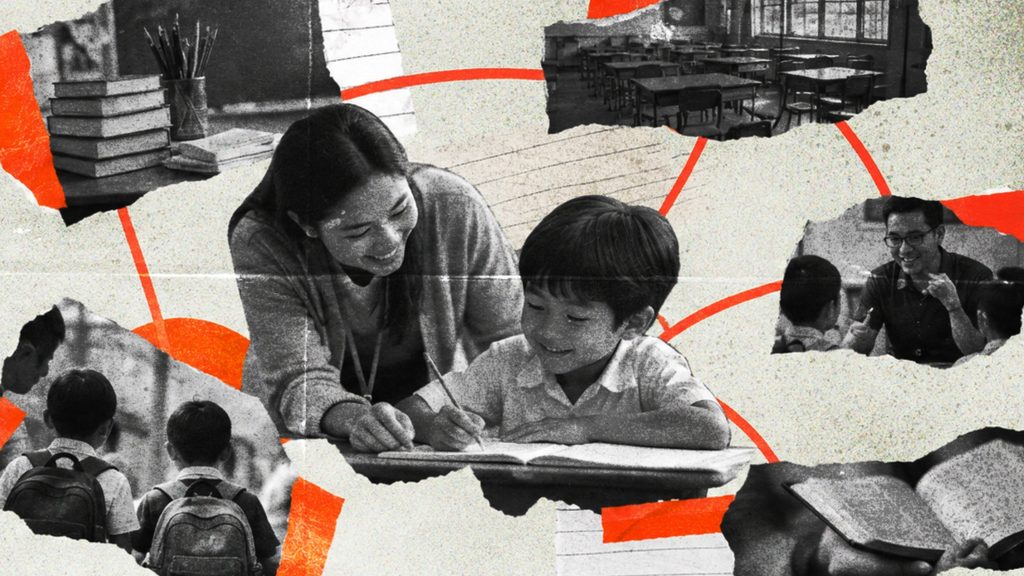
Of the three, Joseph returns most often to the educators, “How will professional school teachers understand that the school is that marketplace where they are going to make the most impact?” he asked, a question aimed less at children than at the adults standing in front of them every day.
It is worth pausing on why, specifically, teachers are so important. Current statistics show that schoolteachers spend more contact hours with a child than that child’s own parents do across a typical week. Work ethic, character, and — whether we account for it or not — theology are shaped in that classroom in ways few other institutions can rival.
If the sacred/secular divide is going to be dismantled anywhere in a child’s early life, the classroom is not an optional venue. It may be the primary one.
A Model Already Given to Us
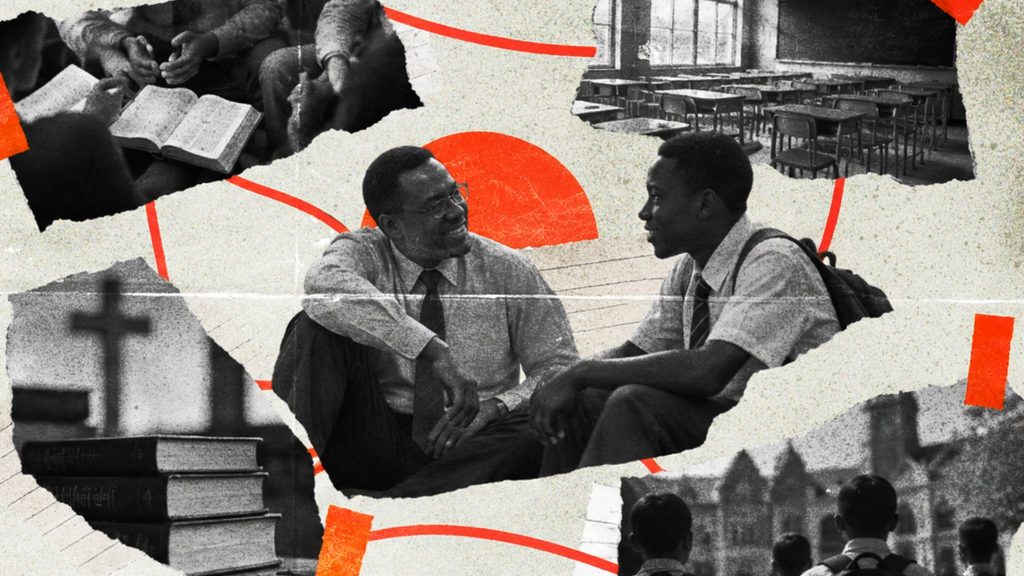
The church does not need to invent this model from scratch. Boadi-Siaw, in his book Changed by the Word, tells the story of Rev. Gottfried Osei-Mensah (who would go on to become the first executive secretary of the Lausanne Movement) and a Bible study he was invited to as a student, before his own conversion.
Clifford Sims, then headteacher of Prempeh College, was leading it. When Gottfried arrived late, and there was no seat left, Sims (the headteacher, the institution’s authority) sat on the floor to make room for him.
It is a small gesture in the telling, but it carried an unmistakable message: that faith and vocation were not two separate rooms in Sims’s life, one for the classroom and one for the Bible study, with different postures required in each.
The man who commanded the authority of headmaster in the daytime knelt on the floor in the evening, and the same character governed both.
Osei-Mensah, who would later help shape a global movement for world evangelization, first witnessed the unity of faith and work in that unremarkable gesture from a schoolteacher.
That kind of witness needs to be modeled to children as early as possible and not reserved for the moment they enter the workforce or old enough to attend a conference about it.
For children raised in Christian homes, it deepens and enriches a faith they are already being formed in. For children in non-Christian homes, it is not instruction; it is direct testimony. They are watching the character of Jesus lived out in a teacher long before they hear a sermon about him.

The Game Changer
This raises a further question, and it may be the more important one: could children themselves come to see their school as their workplace?
This is the game changer. When Christian children are discipled to see their classrooms, playgrounds, and laboratories not as neutral ground but as places of witness, they stop waiting for adulthood to begin living out a unified faith.
This is the game changer. When Christian children are discipled to see their classrooms, playgrounds, and laboratories not as neutral ground but as places of witness, they stop waiting for adulthood to begin living out a unified faith. They present a living, generationally relevant Christ to their non-Christian friends now, in the one institution where they already spend most of their waking hours.
There is a second layer to this work beyond curriculum and modeling: helping the tutors themselves locate Christ inside the subjects they already teach.
Joseph described one such partnership: “I work with a partner called Edify. Edify works with Christian schools to help them deepen their discipleship there. One of the questions they help answer is: as a maths/biology teacher, how do you bring out Christ in your teaching of maths?” The foundational truths of the Christian faith are laid first in the hearts and minds of students, and from there, the subjects themselves become a second, ongoing witness, taught by teachers who no longer separate what they know from what they believe.
This, I believe, is the bridge our generation is responsible for building: a faith-and-work framework unified early enough that Gen Alpha and Gen Beta never have to unlearn the divide we grew up inside.
The alternative is simpler to describe and harder to live with — that we hand our children the same debris we were handed, and call it discipleship.