




























Editor's Note
This article is published in partnership with Lausanne's Children and Family Issue Network. Email cnfnetwork@lausanne.org for more information.
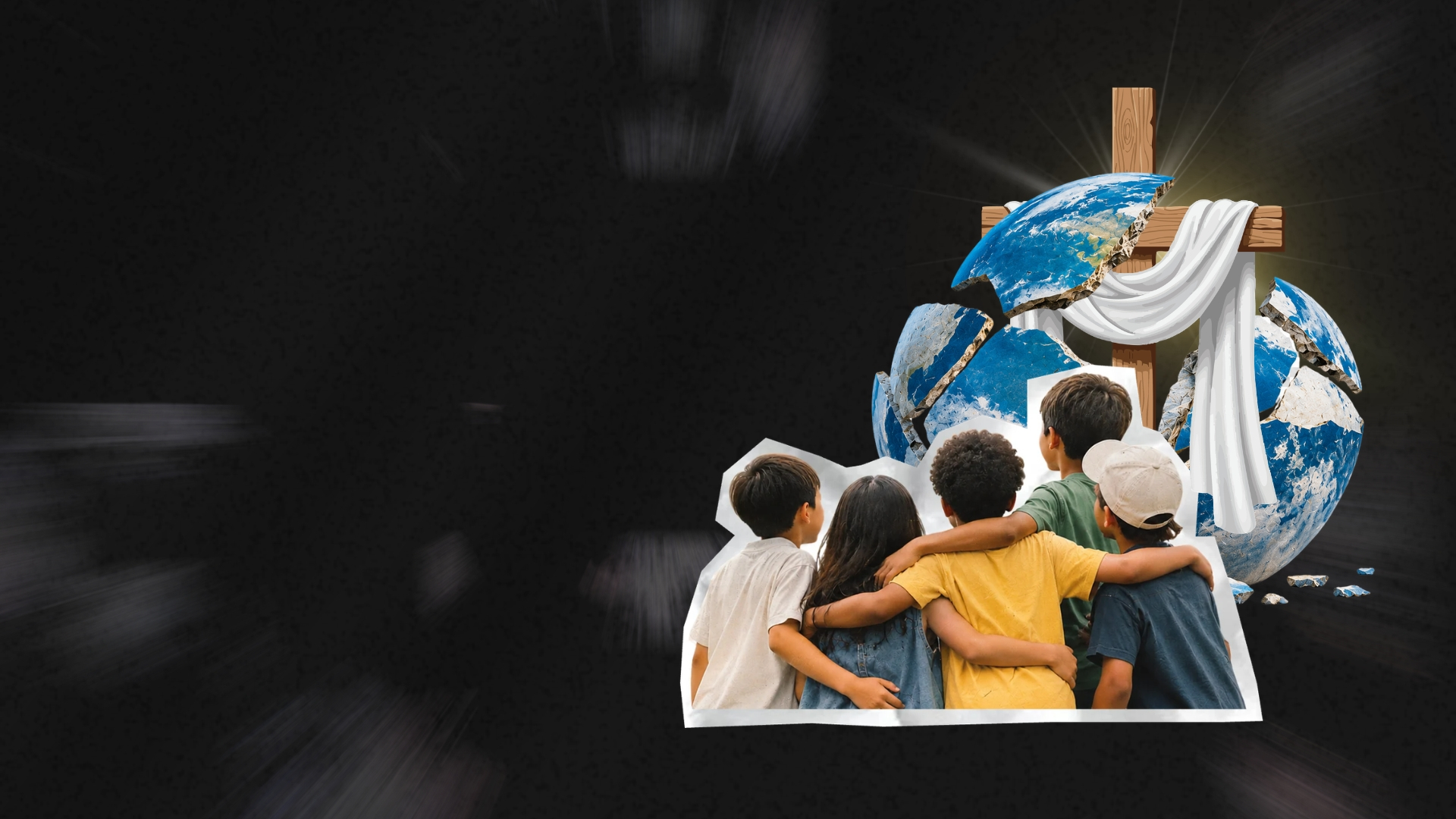
What would change if the church stopped speaking about children as merely the future of its mission and began to receive them as living members of the Body of Christ today, image-bearers, faith-bearing disciples, shaped by suffering and wonder, and already drawn into the life and mission of God? The question is not first about children’s ministry. It is about the church itself: about what the church believes, how it worships, whom it listens to, and what it is willing to become when a child stands in its midst.

Children at the Center of the Church
In most congregations children are loved and served, yet that care often stays at the edge of the church’s life, so that ministry to children becomes procedural rather than central. Children are given programmes, lessons, songs and safe spaces, but they are not always received as persons whose presence carries theological weight, whose questions can deepen adult faith, and whose participation helps the whole community see the Kingdom of God more truthfully. To nurture children spiritually, then, is not to run a better programme. It is to become a particular kind of church: one that receives children as Christ receives them, protects them as image-bearers, listens to them as participants, and accompanies them as disciples learning to belong, believe and become within the household of faith.
This is one expression of Integral Mission. The gospel Jesus proclaims is good news for the whole person and the whole of life. And the child is not an exception to that wholeness but one of its clearest tests. A hungry child, a displaced child, a grieving or frightened child cannot be discipled by a faith that treats prayer, protection, education, healing and belonging as separate compartments. Spiritual nurture is therefore not an optional ministry the church adds when resources allow, nor merely a strategy for evangelism; it is an essential expression of Integral Mission, one of the ways the church embodies the gospel, forms disciples, and participates in God’s mission, with children not at the margins but at the centre. To locate spiritual nurture here, at the heart of mission rather than the edge of programming, is already to begin the transformation this article commends.
A child’s dignity does not depend on age, maturity, status or usefulness.
Scripture presses the church toward this centre. In Genesis, every human being is created in the image and likeness of God, and the child’s dignity does not depend on age, maturity, status or usefulness. In the gospels, Jesus does not merely improve children’s ministry; he re-orders his community around the ones it would overlook. When he sets a child in the midst of the disciples, who measured greatness by status, authority and power, he teaches that greatness in the Kingdom is inseparable from humility, hospitality toward the vulnerable, and dependence on God. The same reversal appears when he welcomes children, blesses them, and refuses the disciples’ instinct to keep them away: “Let the little children come to me, and do not stop them, for it is to such as these that the kingdom of heaven belongs.” This welcome is missiological. Children are not waiting outside discipleship until adulthood; they are already held within the community of faith that would come to be called the church.
Children are not merely recipients of mission but participants whose lives and perspectives shape the church’s witness.
The idea of children belonging in theological reflection, and not only as its objects, is confirmed when the church listens to them. World Vision’s listening work with children on the Kingdom of God1 shows that they are able to understand, imagine and participate in Kingdom life through their own experiences of vulnerability, faith, culture and community. Lausanne’s reflection on children’s participation in the Missio Dei2 affirms the same: children are not merely recipients of mission but participants whose lives and perspectives shape the church’s witness. Adults may not therefore opt out; they must opt in more intentionally, to a discipleship that honours children’s agency while safeguarding their vulnerability.
Belonging, Believing and Becoming
Three interconnected movements name how this discipleship takes root. Within World Vision’s Let the Children Come initiative, these movements have been expressed through the framework of Belonging, Believing and Becoming (BBB), a discipleship and values-formation approach that seeks to help children experience God’s love, grow in faith and participate in God’s mission. Rather than a program in itself, BBB offers a way of understanding how spiritual nurture unfolds within the life of the church and community. Together these three movements trace both the journey of the child and the shape of the church. Belonging is the church’s ecclesiology, the koinonia into which a child is received. Believing is the church’s discipleship, the faith into which a child is formed. Becoming is the church’s participation in the Missio Dei — the mission in which a child already shares. None of the three is the achievement of adults; each is the work of the Holy Spirit, who forms the child and, through the child, re-forms the church.
Belonging: A community that Receives Children
Belonging comes first, because before a child can speak the language of faith with confidence, that child must know they are welcomed, known, safe and held in a community where their presence is never an interruption. In the household of faith, belonging is not earned by good behaviour, right vocabulary or quietness; it is received as grace — and grace is the Spirit’s gift. This is an ecclesial claim: the church is not the Body of Christ in its fullness while children are hidden from its worship. Koinonia includes the child with a disability, the child displaced by war, the child carrying trauma, and the child whose family arrives heavy with need.
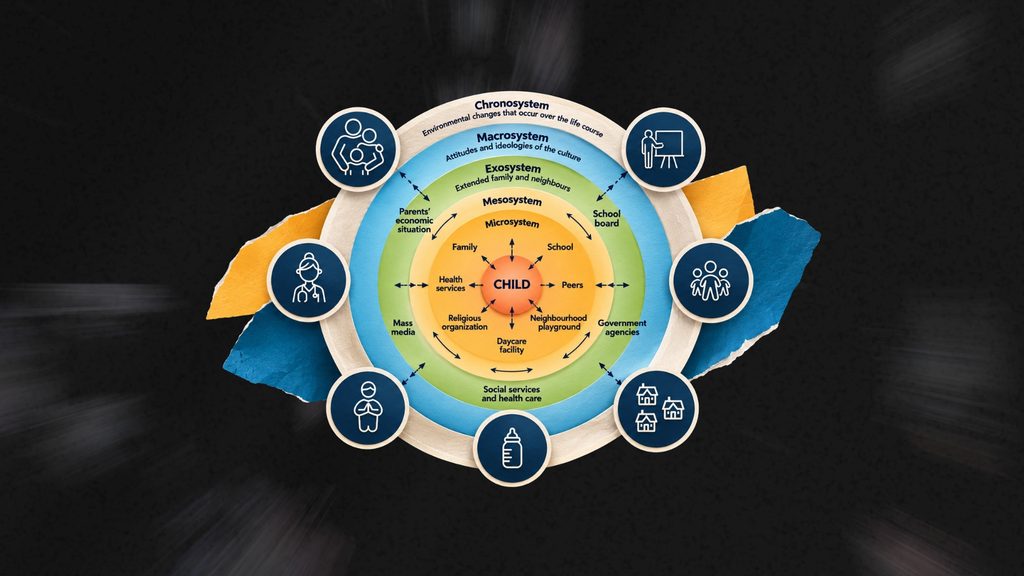
As belonging is ecclesial, it is also shared. Research that informed World Vision’s ‘Let the Children Come’ framework highlights the importance of the wider ecology surrounding the child. The responsibility for nurturing children does not fall to a children’s worker alone but to the whole community — parents and caregivers, pastors and teachers, neighbours and older generations — each carrying a distinct part, and the church is strongest when these parts are joined rather than fragmented. Faith leaders shape a vision that values children; parents nurture daily rhythms of prayer and trust; children’s workers offer age-appropriate discipleship and pastoral care; communities build protective environments; and older generations offer memory, wisdom and intercession. This is the ecology in which a child is spiritually nurtured and holistically strengthened — and it is itself a picture of the church the child helps to form.
As belonging is the church’s identity, safeguarding is not a technical addition to ministry but a theological responsibility. If every child bears God’s image, then child protection is part of the church’s worship, witness and obedience — expressed in clear policies, trained and safely recruited leaders, child-friendly reporting, careful supervision, and a culture where concern is taken seriously. A church that cannot keep its children safe cannot claim to receive them as Christ does.
Believing: Formed in Faith
Believing grows from the soil of belonging. Christian faith is not only truth to be taught, though teaching remains essential; it is a life into which children are invited, a story in which they find their place, and a relationship with God nurtured through prayer, worship, scripture, service, silence, lament and gratitude. Children learn faith less by explanation than by witness — when they see adults confess and forgive, reconcile and serve, grieve with hope, and act justly amid suffering. Yet formation is never merely the transfer of adult example; it is the Spirit who awakens faith in a child, often ahead of and beyond anything an adult intends. Scripture keeps this before us: Samuel hears the Lord while still a boy; Josiah seeks God and leads a people back to covenant faithfulness; a boy’s five loaves become, in the hands of Jesus, a sign of abundance. These accounts are not to be romanticised, but they remind the church that God does not wait for adulthood to begin his work — and neither should we.
Becoming: Participating in God’s Mission
Becoming is the ongoing journey of being formed into the likeness of Christ, and it does not begin in adulthood. Children are already becoming: their loves, habits, fears, imagination and sense of God are being shaped daily by the Spirit. This formation bears visible fruit, and here the child steps fully into the missio Dei — learning to care for others and for creation, to practise compassion, to grow in character, to make peace, to pursue justice, to serve their communities, and to worship. Children are not disciples-in-waiting; they are active disciples now. The church that nurtures them is sharing in God’s mission today.
Children are not disciples-in-waiting; they are active disciples now. The church that nurtures them is sharing in God’s mission today.
In contexts of crisis this care matters all the more. Spiritual nurture must never manipulate children, silence their grief, coerce religious expression or press them into adult agendas. Instead it creates safe places where children can be heard, protected and accompanied in faith.
The Church Renewed through Children and Families
To nurture children spiritually, then, is not a secondary ministry the church may quietly opt into or out of. It belongs to the heart of the church’s identity and mission, because to welcome the child is to welcome Christ, and to protect, disciple and listen to children is to bear witness to the Kingdom he proclaimed. And here is the deepest turn: the church that receives children in this way does not only give — it is renewed. When the Body of Christ makes room for its youngest members, it relearns humility, dependence, wonder and hope; it sees the Kingdom more truthfully; it is discipled by those it set out to disciple. The renewal of the church comes not only through ministry to children but through learning with them and from them.
To nurture children belongs to the heart of the Church’s identity and mission, because to welcome the child is to welcome Christ.
So the work begins where Jesus began: not at the margins, not as an afterthought, not as a concern postponed until adulthood, but in the midst of the worshipping, discerning and serving community. There, in the presence of the child, the church is invited again to see the Kingdom of God and to discover that the smallest among us may, faithfully and aptly, lead us back to the heart of Christ.
The renewal of the church comes not only through ministry to children but through learning with them and from them.
Endnotes
- Listening to Children’s Perspectives on the Kingdom of God | World Vision International
- Towards a Biblical and Theological Framework for Child Participation in the Missio Dei – Lausanne Movement
Bibliography
- Chng, Eu-Lee. “Integral Mission: Two Wings of the Same Bird.” World Vision International. Accessed July 1, 2026. https://www.wvi.org/opinion/view/integral-mission-two-wings-same-bird.
- Inter-Agency Standing Committee. IASC Guidelines on Mental Health and Psychosocial Support in Emergency Settings. Geneva: IASC, 2007. https://interagencystandingcommittee.org/sites/default/files/migrated/2020-11/IASC%20Guidelines%20on%20Mental%20Health%20and%20Psychosocial%20Support%20in%20Emergency%20Settings%20%28English%29.pdf.
- Lausanne Movement. “Integral Mission.” Accessed July 1, 2026. https://lausanne.org/network/integral-mission.
- Lim-Tan, Rosalind. Children and the Kingdom of God: A Listening Exercise Initiated by World Vision International and Viva Network. World Vision International and Viva Network, June 2024. https://www.wvi.org/sites/default/files/2024-08/Children%20and%20KoG_Full%20Report.pdf.
- National Council of the Churches of Christ in the United States of America. New Revised Standard Version Updated Edition. 2021. https://www.biblegateway.com/versions/New-Revised-Standard-Version-Updated-Edition-NRSVue-Bible/.
- Sphere Association. The Sphere Handbook: Humanitarian Charter and Minimum Standards in Humanitarian Response. 4th ed. Geneva: Sphere Association, 2018. https://spherestandards.org/wp-content/uploads/Sphere-Handbook-2018-EN.pdf.
- Thompson, Bradley, Christine Karanja, María Alejandra Andrade Vinueza, and Tim J. Davy. “Towards a Biblical and Theological Framework for Child Participation in the Missio Dei.” Edited by Lucy Kajidori. Lausanne Movement, 2024. https://lausanne.org/occasional-paper/towards-a-biblical-and-theological-framework-for-child-participation-in-the-missio-dei.
- World Vision International. “Child Participation.” Accessed July 1, 2026. https://www.wvi.org/our-work/child-participation.