

























Psychiatrist, Dr. Scott Peck, introduced the topic of discipline in one of his compelling literary works with a profound line, “Life is difficult.”1 It was Christ Jesus, however, who first affirmed, “in this world you will have trouble” (John 16: 33). I have a sense, though, that while experiencing trouble is a reality of life in this fallen world, the troubles and difficulties of life take on a different dimension when harm is caused by the people who were supposed to love, protect, and nurture a child. Abuse experienced in the family has the potential to cause long-term harm to affected children. Preventing abuse in all its forms, but child sexual abuse in particular, must therefore become an essential part of the ministry of care that the church provides.
Abuse is closer than many churches realize
I (Joy) often have vivid memories of my father that cause me to cry. Recently, I found myself crying much more than usual to the extent that I had to pull off the road to compose myself, as I was no longer able to see through my tears while driving. I continue to grieve my loss and the fact that my biological father sexually abused me from about age 8 or 9 to age 15, and I lost my virginity to him before I was a teenager.2
I had no vocabulary for this experience, which caused me to suffer in shame, fear and anxiety for more than three decades; which severely threatened my mental health. I tell this, however, not to draw attention to myself, but to give voice to a broader context of child maltreatment with the hidden scourge of incest that has continued for generations. It is also crucial to note that it is not strangers who primarily sexually abuse children. It is people who children know, ‘love and trust’ – people like parents, step-parents, grandparents, aunts and uncles.3
Many women in the church continue to suffer in silence.4 Specifically, 1 in 5 women experienced sexual abuse before the age of 18.5 Notably, the statement that 1 in 3 children globally will experience sexual abuse before the age of 18 is a most worrying one that must concern the church.6 Child sexual abuse is pervasive across geographical, economic and cultural boundaries.7 It would be a travesty, therefore, for churches to assume that a child is safe based on a family’s appearance, income, reputation, or level of involvement in ministry.

Silence leaves children more vulnerable
In 2024, I was overjoyed when a church invited me to teach on Child Sexual Abuse at their Easter Sunday Morning Service. Numerous times, in the over two decades that I have been doing this work, at the end of my teaching, men and women come to seek prayer and counseling for experiences of childhood sexual abuse and incest.
Many churches avoid discussing sexual abuse because the subject feels uncomfortable or inappropriate for a church setting. Suffering childhood sexual abuse is one of the core causes of people suffering mental health problems.8 Churches must therefore have mental health days in which such issues are discussed from the pulpit.9
When churches speak responsibly about child protection, they give parents language, help children understand boundaries, and communicate that such concerns can be brought into the open.
In a few weeks I will be teaching on incest at the Women’s Retreat of a church. When children, men and women in the congregation hear issues like child sexual abuse and incest discussed from the pulpit in church, they will be encouraged to approach their church leaders to seek help for similar experiences which they have suffered.
Silence does not protect children. When churches speak responsibly about child protection, they give parents language, help children understand boundaries, and communicate that such concerns can be brought into the open.
Churches can equip parents
The church could break the silence by inviting specialists to facilitate parenting education seminars on ways to prevent child sexual abuse. Here is some of what Christian Child Psychologist, Dr. Joshua Straub suggests:10
- Teach children accurate, age-appropriate names for their bodies.
- Explain personal boundaries clearly.
- Do not force children to show affection or spend time with someone who makes them uncomfortable.
- Listen when a child expresses fear or resistance.
- Answer children’s questions honestly and appropriately.
- Supervise children carefully.
- Talk about sexuality within the context of God’s good design for the body.
The aim of the proposed parenting education seminars would remain on equipping parents rather than expecting ministry leaders to take over the parental role.
Safeguarding requires more than good intentions
Churches need clear child-protection policies, volunteer screening, supervision standards, reporting procedures, and regular training. Policies should not simply exist in a document. Leaders and volunteers must understand them and apply them consistently.
Culture cannot overrule the protection of children
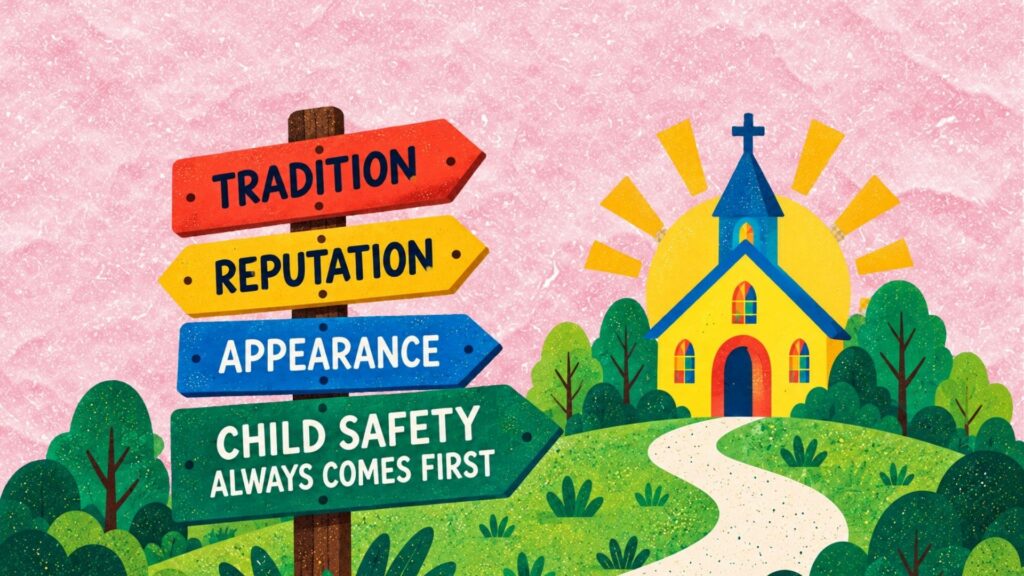
Cultural practices as well as legal and regulatory requirements may differ around the world. Culture and human legislation or regulation could not however be regarded above the exhortation of Christ concerning how children must be cared for (Mk 10: 14; Matt 18: 14; Luke 17: 2). Cultural expectations, family reputation, and institutional loyalty must never take priority over a child’s dignity and safety.

Churches must make difficult subjects speakable
Churches can host parenting workshops, safeguarding training, mental health Sundays, or teaching sessions on abuse and trauma. Speaking about these issues from the pulpit or in ministry settings communicates to survivors and vulnerable children that the church is willing to listen and help.
Speaking about these issues from the pulpit or in ministry settings communicates to survivors and vulnerable children that the church is willing to listen and help.
Practical Takeaway
Here are some issues for consideration:
- Are our child-protection policies clear and consistently followed?
- Are parents being equipped to talk with their children?
- Do our volunteers know how to respond to a concern or disclosure?
- Have we created a church culture where children and survivors feel safe speaking?
The Church Mental Health Summit
Laura Howe answered the call of God, when she conceptualised the Church Mental Health Summit. It is providential that our paths crossed and she graciously invited me to address the Summit. Laura and I talked about the foregoing issues during my presentation on the topic, Supporting Survivors of Sexual Abuse Within Families, at the 2026 Church Mental Health Summit. The Summit presents a tremendous opportunity to the church for ministry leaders to continue learning about trauma-informed, practical, and faith-informed care.

Conclusion
The church cannot prevent every act of harm, but it can refuse to contribute to the silence that allows harm to remain hidden. By preparing leaders, supporting parents, listening to children, and establishing strong safeguards, churches can become safer communities where vulnerable people are protected and valued.
The church cannot prevent every act of harm, but it can refuse to contribute to the silence that allows harm to remain hidden.
Endnotes
- Scott Peck. The Road Less Travelled. 25th Anniversary Edition. A NEW PSYCHOLOGY OF LOVE, TRADITIONAL VALUES AND SPIRITUAL GROWTH. A Touch Stone Book, 1978, 2003, p. 15.
- Joy Wilson. Jesus Removed My Grave Clothes. Tate Publishing, 2012. Xulon Press, 2018 Author Joy Maria Wilson – Christian Publisher Xulon Press
- Joshua Straub. “7 Ways To Protect Your Child From Sexual Abuse. 7 Ways To Protect Your Child From Sexual Abuse – Lifeway Research
- Joy Wilson. Ministering to Victims of Incest: A MODEL FOR CHURCH RESPONSE. Tate Publishing, 2016. Xulon Press, 2017.
- UNICEF, 2024. Over 370 millions girls and women globally subjected to rape and sexual assault as children. Over 370 million girls and women globally subjected to rape or sexual assault as children – UNICEF
- Worldmetrics Report. 2026. Child Sexual Abuse Statistics. Childhood Sexual Abuse Statistics | 2026 Edition
- Ibid, UNICEF, 2024.
- Ibid, UNICEF, 2024.
- American Association of Christian Counselors. “Why Your Church Needs A Mental Health Ministry” Why Your Church Needs a Mental Health Ministry – AACC
- Ibid, Joshua Straub.