


























Editor's Note
Quotations have been lightly edited from the tribute transcript for clarity and readability.
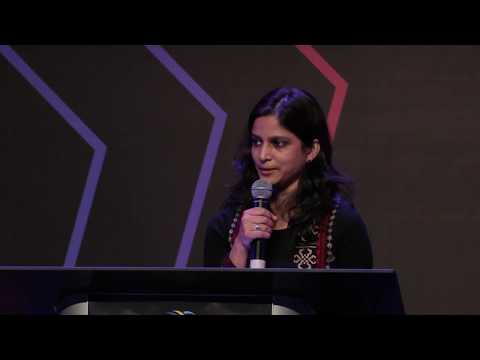
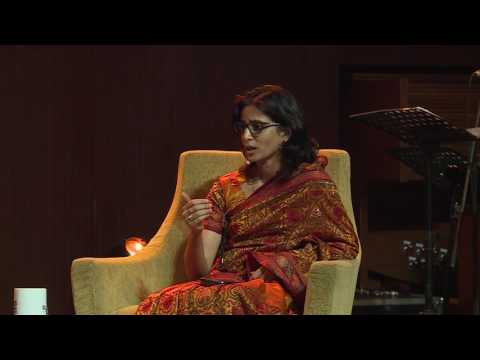
Pranitha Timothy’s gentle voice carried a courageous witness to the justice, compassion, and hope of Jesus. Friends and colleagues from around the world remember a woman who saw those others overlooked and helped many find their place in God’s mission.

A life that pointed to Christ
When friends and colleagues gathered online from across the world to remember Pranitha Timothy on 21 August 2026, their sorrow was unmistakable. So too was their gratitude. They came from different regions, generations, cultures, and areas of ministry, but they were marked by the life of a woman who had become a sister, mentor, colleague, advocate, and friend to so many.
“We will miss her deeply. But we do not mourn without hope. Today, we choose to celebrate a life beautifully and faithfully poured out in the service of our Lord Jesus Christ.” — Mitchelle Rajapakse, Pastor
Born on 19 January 1975, Pranitha was called to eternal rest on 9 August 2026. Many within the Lausanne Movement knew her through her remarkable service as Regional Director for South Asia and as Catalyst for the Freedom and Justice Issue Network. Others first encountered her through her compelling address at the Third Lausanne Congress in Cape Town in 2010, where she spoke about people trapped in modern-day slavery and the gospel’s call to freedom and justice. Many more knew her simply as “Pinky”, a deeply loved wife to Timothy, mother to Diya and David, member of her local church in Chennai, and a friend whose life made people feel seen.
The many tributes that poured in soon after her passing revealed that Pranitha’s pursuit of justice was rooted in the gospel, her courage in dependence on Christ, and her leadership in relationships, generosity, and service.
Lausanne Global Executive Director / CEO, Michael Oh, reflected:
“Behind those roles, and even those public moments, was a woman whose life gave even greater authority to her words. Pranitha embodied the spirit of Lausanne. She held together evangelism and justice, proclamation and compassion, conviction and humility.”
Menchit Wong (Chair of the Lausanne Movement Board) offered four simple declarations that captured this integrated life: “Pranitha saw. Pranitha spoke. Pranitha stood. Pranitha persevered.” They provide a fitting way to remember not only what she did, but how she followed Christ and invited others to follow him with her.
She saw
Pranitha saw people whom the world too easily overlooks. She saw the vulnerability of children, the suffering of people held in modern-day slavery, the potential of women and younger leaders, and the dignity of people living at the margins. She did not see them as projects or problems to solve. She saw people created in the image of God.
Former Lausanne catalyst, Adnan Sandhu, remembered the special gifting with which Pranitha approached very different settings:
“Pranitha carried an unusual combination of strength and gentleness. She could sit with influential global leaders, but she could just as naturally sit beside someone forgotten by society and make the person feel seen, heard, and valued. Sometimes when we met, she would bring us small gifts, handmade cards or crafts prepared by the women she was serving in India. They were very simple gifts, but they told a much bigger story. Wherever Pranitha went, she carried with her the people she loved and served.”
Those gifts told the truth about her leadership. When Pranitha entered influential spaces, she carried with her the lives, creativity, and hopes of those she served. She used access not to enlarge her own profile, but to draw attention to others.
Her compassion also sharpened the vision of those around her. During the planning of a South Asian gathering, she asked whether the event would be accessible to people with physical disabilities. When the answer was no, she insisted that accessibility be addressed. A colleague described the question as a turning point.
This was characteristic of Pranitha. She noticed who was absent, whose needs had not been considered, and whose voice was not being heard. Nana Yaw Offei Awuku (Lausanne Global Director of Generations) expressed it this way:
“Pranitha lived for others. Compassion for her was not a project to activate. It was a life to live. She is a testimony of one who lived the resurrection life in every way.”
Her compassion was not sentimental. It led her towards costly action. Pastor Jeyakaran Emmanuel, from Pranitha’s home church in Chennai, recalled that she helped rescue thousands of people caught in modern-day slavery. Before some raids and rescue operations, she would call her husband Timothy and ask him to pray because she did not know whether she would return home alive.
“Pranitha risked her life for the gospel. There were times when she used to call home and tell her husband, ‘Pray for me, because I don’t know if I’ll return home alive after this raid or this rescue operation.’ She risked her life, and her family too was put at great personal risk.”
For Pranitha, drawing near to people who suffered was not peripheral to Christian mission. It was one of the ways the love and justice of Jesus became visible.

She spoke
Pranitha’s voice was distinctive. Over the years her ill health affected its strength, and over time speaking became increasingly difficult. Yet again and again, contributors remembered the remarkable authority carried by that gentle voice.
At the Third Lausanne Congress, Pranitha spoke to thousands about exploitation, human dignity, and God’s heart for justice. Her words travelled far beyond that gathering. One contributor first heard her speak in Chicago in 2008, and that encounter planted a seed which later contributed to the founding of a community in Manila serving survivors of sex trafficking and their children.
Pranitha’s influence did not come through volume. It came through the harmony between her words and her life. She spoke because she had first listened: to God, to Scripture, and to people experiencing injustice. She spoke with the authority of someone who had drawn near and was willing to bear a cost.
“For her, freedom and justice were not peripheral concerns. They belonged at the heart of the gospel and its call upon the whole church. She reminded us that following Jesus means drawing near to those who suffer, speaking for those whose voices have been silenced, and serving with courage, regardless of the cost.” — Michael Oh
Menchit remembered walking with Pranitha through the halls of the Fourth Lausanne Congress in Seoul in 2024. Pranitha held her arm as they went to meetings together. Even as her health limited what she could do, she remained confident, loving, and grateful. Menchit continues to hear her friend’s encouragement:
“She was always celebrating what she had rather than being intimidated by what she could no longer do. Until today, Pranitha speaks into my heart, and I hear her gently telling me, ‘It’s okay, Menchit. It’s okay to have scars in battle. Get up and keep going.’”
Pranitha’s physical voice became weaker, but her witness did not. As Michael Oh observed, “Even as her physical voice grew weaker, the witness of her life spoke more powerfully. Even as her physical sight diminished, she helped others to see more clearly: the dignity of every person, the suffering of the vulnerable, and the faithfulness of God.”

She stood
Pranitha stood with courage, but she rarely stood alone. She drew people together, connected leaders across regions, and invited others into meaningful participation. Her leadership was not about holding a platform. It was about using whatever influence she had to make room for others.
Tanya Van Horne (Lausanne Global Director for Issue Networks) recalled the generosity and intention Pranitha brought to her leadership across both Lausanne’s regional and issue network spaces:
“She opened doors wide, intentionally making space for connection with generosity, warmth, and intention. Another gift Pranitha offered us was her passion to encourage and empower.”
At the Fourth Lausanne Congress, Pranitha urged leaders to add a dedicated space for women to gather. In a later conversation, she shared her vision for girls and women to be empowered by the Holy Spirit, to move from the margins to the centre of community, and to live out their full potential in God’s purposes. Even while facing serious health challenges, she was looking towards what others could become.
Jocabed Solano Miselis (Catalyst for Freedom and Justice) experienced this personally. At the 2016 Younger Leaders Gathering in Jakarta, Jocabed and several friends longed to hear Pranitha’s story, but her schedule was full. When Jocabed approached her, Pranitha smiled and made time outside the official programme.
She spoke to them from Isaiah 61 and told them how God had confirmed her calling while she was ill in bed. Then she turned the challenge towards the younger leaders before her: if God could use her in her weakness, could they not believe that he had chosen them too?
Pranitha continued to encourage Jocabed, pray with her, seek her perspective, and invite her into the work of the Freedom and Justice Network. Eventually, she nominated her to serve as a Lausanne catalyst.
“She never sought the platform for herself. She made space for young leaders in God’s kingdom. Whatever small contribution I bring to God’s mission today through Lausanne is a direct fruit of the seed she planted in my life.” — Jocabed Solano Miselis
This pattern was repeated across Pranitha’s life. Her Chennai home was open to younger people at all hours. She and Timothy served as youth pastors in their church for more than a decade, investing in people who would themselves become Christian leaders in different spheres. Around the world, she recognised potential, offered encouragement, and entrusted responsibility. Her legacy is not contained in a list of roles, but it continues through people who serve more courageously because she believed God could use them.

She persevered
Pranitha’s perseverance was not the denial of weakness. It was a testimony to the sufficiency of Christ within it. At the Fourth Lausanne Congress in 2024, friends accompanied her through the venue, held her hand, prayed with her, and helped others understand her words. These simple acts of friendship reflected the relational heart of Lausanne that Pranitha herself embodied. She had spent years walking beside others; now others were privileged to walk beside her.
Even during her final years, Pranitha continued to participate in regional meetings, advocate for Christians facing persecution, encourage colleagues, and imagine new ways to serve. Joshua Bogunjoko (Lausanne Global Director for Regions) remembered her as someone who was always planning the next thing and investing in what might still be possible:
“Despite her situation, someone who should probably have been saying, ‘I want to give the minimum that I can,’ she gave the maximum that was possible. She was faithful to the end. Not once did we hear Pranitha complain about what she couldn’t do. She was simply faithful with what she could do, and she did it to the end.”
Pranitha’s perseverance was sustained within a community. Her family carried much of the hidden cost of her service and illness. Timothy’s love and support enabled her to flourish locally and globally. Her children Diya and David walked closely with their mother as communication became more difficult. To honour Pranitha is also to give thanks for those God placed around her.
Her loss is felt deeply by her family in Chennai, by those with whom she served across South Asia, by the Freedom and Justice Network, and by friends throughout the Lausanne Movement and the global church. Yet those who gathered to remember her did so with resurrection hope. They entrusted their beloved sister to the Christ she loved and served, confident that death does not have the final word.
The question now is how those who remain will receive the gift of her witness. Adnan Sandhu offered a clear invitation:
“Perhaps today, the greatest tribute we can give Pranitha is not simply to say we remember her, but to say we will carry forward what God placed in her heart. Let us continue following her legacy.”
To carry that legacy forward is not to imitate every part of Pranitha’s calling. It is to follow the same Lord: to see people whom others overlook; to speak with courage and compassion; to stand with those who suffer; to make room for new leaders; and to remain faithful with whatever God has entrusted to us.
Pranitha saw. Pranitha spoke. Pranitha stood. And through Christ, Pranitha persevered. Through it all, her life pointed others to Jesus.
May her example continue to call us, as Michael Oh prayed, “to see more clearly, to love more courageously, and to follow Jesus more faithfully.”