


























Editor's Note
This article is based on the insights given in the Lausanne Occasional Paper by Dr Ivor Poobalan, ‘Discipleship and the Great Commission’.
Accompanying these insights are relevant stories that were recorded in the Storytelling Booths at the Fourth Lausanne Congress in Incheon, South Korea, in September 2024. These booths served as a sacred space for global participants to share testimonies, prayer requests, and offer ministry insights from their unique contexts. We are honoured to pass these along as glimpses of how God is moving to disciple believers to maturity.
In many parts of the world, the church is growing. The gospel is being preached, and people are coming to faith. Christian witness is emerging in languages and places where the gospel was scarcely heard a generation ago. And we rejoice in the Great Commission (Matt 28:19-20) advancing with undeniable momentum.
And yet beneath this visible growth, a quieter question of sustainability persists:
Are we making disciples?
A Commission That Forms, Not Only Sends
For Dr Ivor Poobalan, a theologian and ministry practitioner, the answer begins with Scripture’s own portrait of discipleship. In his Lausanne Occasional Paper, Discipleship and the Great Commission, Poobalan reminds us that the Great Commission’s main verb is not ‘go’, but ‘make disciples’. This command integrates witness, baptism, and teaching into a single mission of forming mature followers of Christ who walk in obedience to him. In other words, the Great Commission is a call to whole-life transformation.
That insight becomes increasingly urgent when we look at what global Christian leaders are observing today. According to the 2024 State of the Great Commission Report, there is a worrying lack of understanding of the Great Commission amongst Christians.1 Because of this, there is an observable correlation between lack of discipleship and lack of gospel preparedness.2 In many Christian contexts today, disciple-making is still treated as an optional ministry track3—something for specialists, programs, or those with a specific calling. The Report’s conclusion about discipleship is clear: ‘Need for Discipleship was by far the most frequently identified gap in Great Commission efforts.’4
For the Great Commission to be effectively and sustainably completed, disciple-making churches are essential,

This ‘discipleship gap’ is not simply a knowledge gap. It is a formation gap. And formation is not quick or even easy. Effective discipleship is comprehensive and lifelong. In other words, disciple-making is not primarily a task we finish, but a life we join: a life shaped by Christ’s presence and transmitted through communities of faith. For the Great Commission to be effectively and sustainably completed, disciple-making churches are essential, and are the means to close the discipleship gap.
Poobalan speaks of his own journey into truly understanding discipleship. ‘I had to learn how to develop ministry as an integration of witness and discipleship, and so to align it more accurately with the aim of Christ’s Great Commission.’ Paul’s teaching in Colossians, particularly 1:28-29, was his guide: ‘He is the one we proclaim, admonishing and teaching everyone with all wisdom, so that we may present everyone fully mature in Christ. To this end I strenuously contend with all the energy Christ so powerfully works in me’ [emphasis added]. This is intentional discipleship that leads to faithful obedience.
What is at Stake?
Much is at stake! Poobalan notes the dangers that can arise when new believers are not grounded in both truth and obedience – leading to threats like misbelief and misbehaviour.
Misbelief occurs when the essential message of the gospel is confused or reshaped. The New Testament repeatedly warns against this threat (Col 2:4; Jude 3-4). Without grounded teaching, voices that distort the gospel can easily fill the space that should be occupied by faithful shepherds (cf. Titus 2:1).
Misbehaviour follows closely behind. When believers are not trained in obedience, ethical distortions take root and gradually normalise until whole communities lose the ability to discern what dishonours Christ (cf. 1 Cor 5:6).
Disciple-making, then, is not optional. It guards both truth and holiness. If the gospel is to take root among every people and place, discipleship must shape not only what followers believe but how they live.
And God is faithfully raising disciple-making believers and churches— communities that do not simply reach people, but form them into Christlikeness. This is shown in the testimonies of two practitioners whose experiences echo Poobalan’s conviction.
Discipleship as a Way of Life
Seth Crampsey | Grand Rapids
💬 Click the “≫” icon in the top-right corner to open the transcript.
In Grand Rapids, Michigan, Seth Crampsey, a discipleship assistant at Calvin University, describes discipleship not as a program but as a way of life. Amid dorm rooms and classroom hallways, he learned that spiritual formation isn’t something added to ministry—it is the heart of ministry. Intentional rhythms of prayer, Scripture, and accountable community shaped him not just to know Christ, but to live like him. These everyday practices model the kind of lifelong apprenticeship Jesus envisioned.
Seth supports what they call a ‘Barnabas team’, student leaders responsible for Bible studies, community events, and spiritual care within each dorm. And though he is committed to discipleship, it is less about a particular strategy and more about the posture behind it. As he says, ‘Discipleship isn’t something we do. Discipleship is something we are.’ As Jesus modelled, this requires proximity—life shared long enough for transformation to take root.
Discipleship Tethered to the Local Church
Jackie Kimani | Harare
💬 Click the “≫” icon in the top-right corner to open the transcript.
Half a world away in Harare, Zimbabwe, Jackie Kimani reflects on her journey. For Jackie, discipleship began in an unexpected place: in a university in Arkansas, USA, where she became a Christian through the ministry of Cru. What shaped her most deeply, however, was not only the campus ministry itself, but also what Cru insisted on alongside it. They ensured students were not discipled in isolation.
Every Sunday, the students went to a local church. And over time, Jackie began to form relationships not only with peers, but with older believers—people with decades of life experience and spiritual maturity—who helped her understand what biblical family life and mission-shaped faithfulness can look like.
God’s heart is that all ministry . . . should be feeding into the local church.
Jackie has seen the alternative: student ministry that disciples young believers in a silo, only for them to drift once they graduate. This gave Jackie a deep conviction that the local church must remain central in the Great Commission, as it is the heart of Christian formation. As she puts it, ‘God’s heart is that all ministry . . . should be feeding into the local church.’ In other words, a generation discipled outside the church is a fragile harvest.

Closing the Discipleship Gap
The lesson these testimonies teach is clear: A gospel that is proclaimed but not deeply received, taught, and embodied will not bear lasting fruit.
We are living in remarkable times, when the proclamation of the gospel in previously unreached regions of the world is meeting with dramatic responses, and millions are being added to the church. But we are also living in perilous times, where the well-being and sanctification of so many Christians in spiritual infancy hang in the balance, with opportunists and charlatans looking for ways to exploit their trust and take them captive with distortions of the gospel.–Ivor Poobalan.
Disciple-making flourishes where individuals are both formed in Christ and connected to faith communities that model his presence in the world, and encourage believers, helping one another to deepen and mature their relationship with Christ. ‘Where there is effective witness, the church may grow in numbers. But it is only where there is effective discipleship that the church will grow in maturity.’5
May we commit to the vision of disciple-making churches for every people and place, because disciple-making is not simply the church’s method—it is the church’s identity.
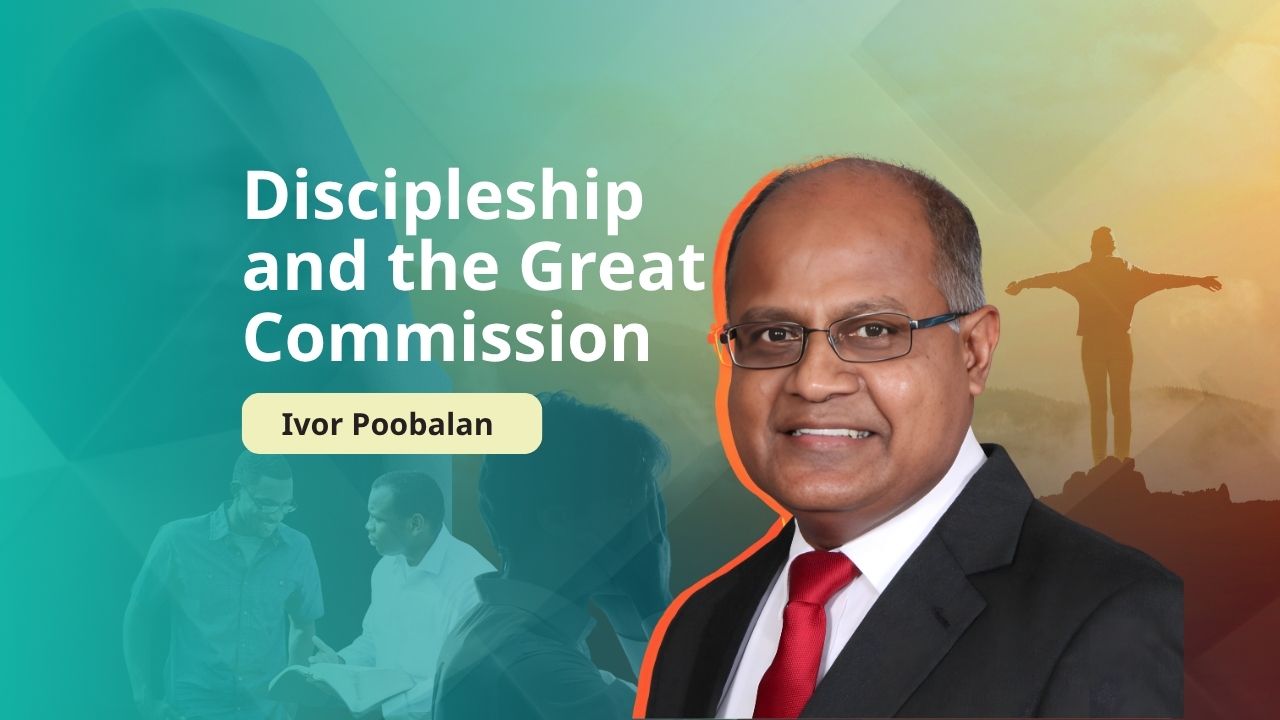
Occasional Paper
Discipleship and the Great Commission
My journey into vocational ministry began as a church-based youth worker. My motivation was to share the good news of Jesus in such a way that young people would be persuaded to trust Christ for their salvation.
Endnotes
- According to the Report (p. 34): ‘The majority of the 1,500 global Christian leaders surveyed believe that less than half of the Christians in their region would be able to say what the Great Commission is.’
- State of the Great Commission – Lausanne Movement, 34. And not surprisingly, the report’s survey of 1,500 global Christian leaders found that ‘Only a small minority of leaders within each region perceived the status of our discipleship efforts as “very good” across all age groups.’ 351
- ‘Leaders in Africa, Asia, and Latin America perceived that 30–40 percent of Christians saw the Great Commission as optional. This number is even higher in North America, Europe and Australia with leaders perceiving that approximately 50 percent of Christians hold the Great Commission as optional.’ State of the Great Commission – Lausanne Movement, 33.
- State of the Great Commission – Lausanne Movement, 351.
- Ivor Poobalan.Discipleship and the Great Commission – Lausanne Movement