

























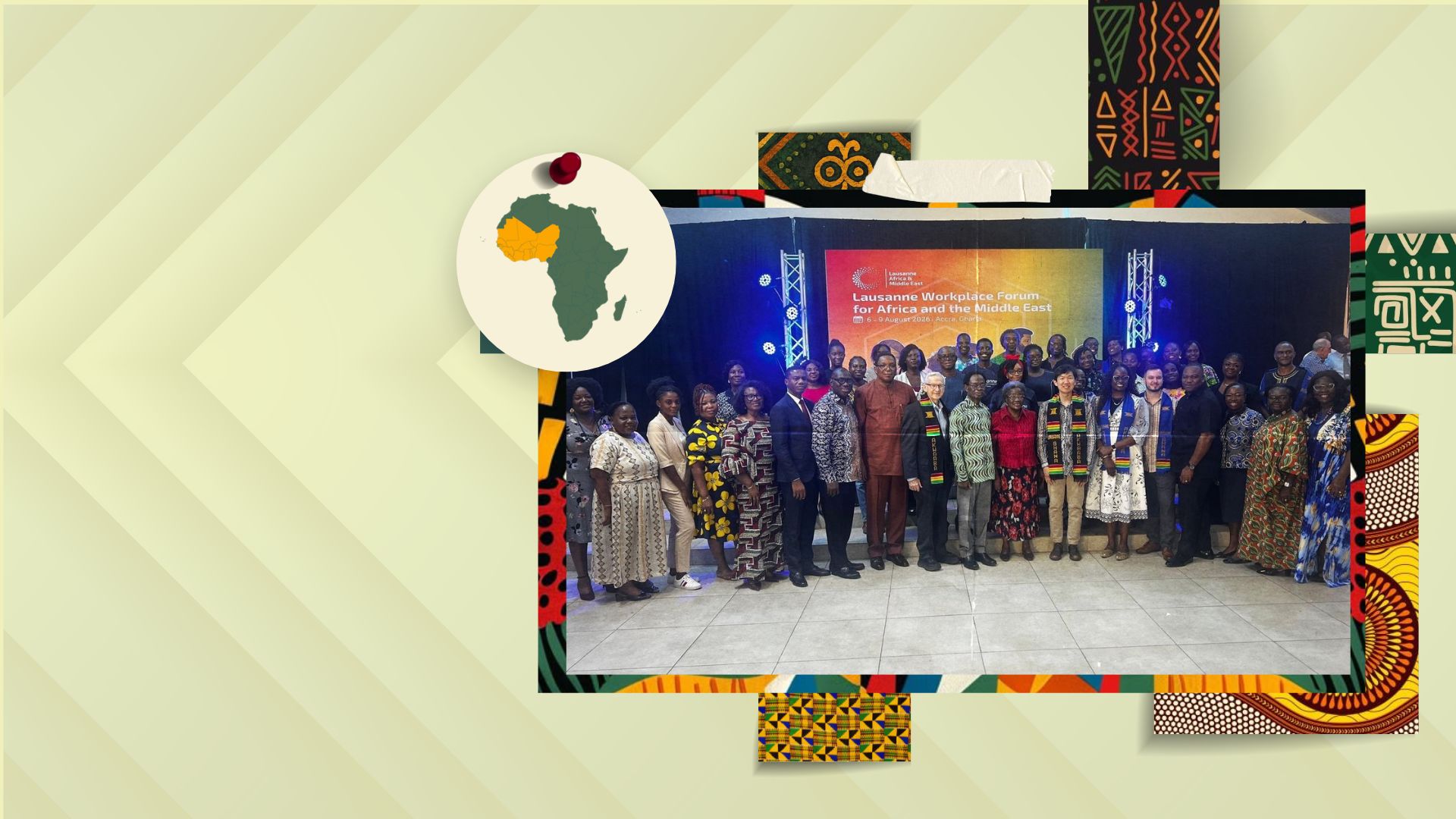

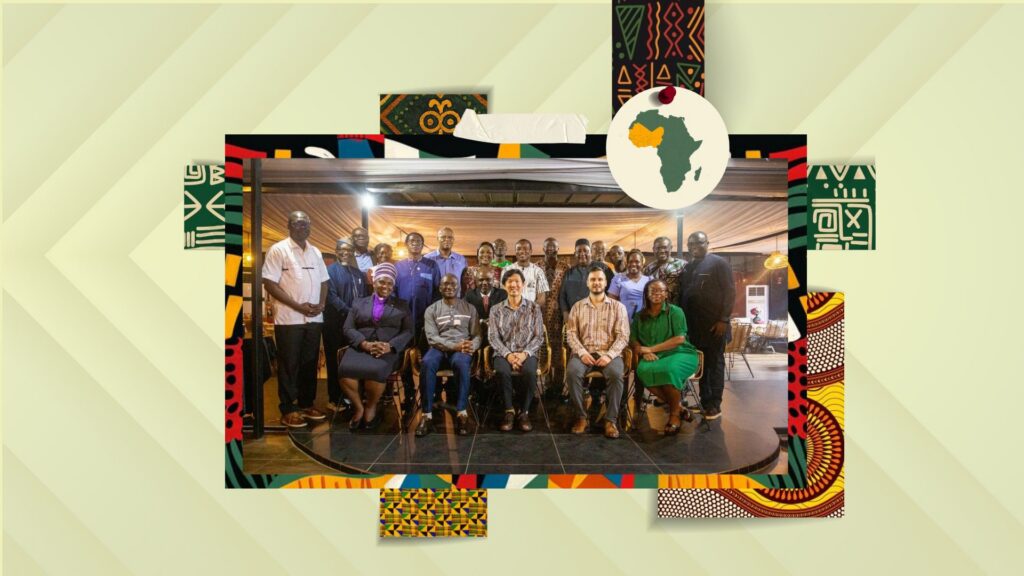
In early March 2026, Michael Oh (Global Executive Director/CEO), together with Attila Nyári (Chief of Staff) and English, Portuguese, and Spanish-Speaking Africa (EPSA) regional directors Stephen Mbogo and Esther Chengo, travelled through Ghana, Nigeria, and Côte d’Ivoire on a pastoral and relational ministry visit. The purpose of this journey was to encourage key leaders and movements across the region, deepening trust and strengthening a shared commitment to God’s mission.
A significant part of Michael’s inaugural visit to West Africa focused on listening to leaders across the Francophone region. Through both small and larger gatherings, leaders shared openly about their contexts, fostering mutual encouragement, deeper understanding, and new opportunities for collaboration.
Michael returned with a deepened conviction: Africa is strategic to the future growth of the church in this generation—and calls for focused attention, shared investment, and active partnership across the global church. With projections suggesting that as much as half of the world’s Christians could be African by 2050, the moment is both significant and urgent. Mission mobilisation and leadership development must grow in step with this reality. Across the region, leaders are stepping forward to shape mission both locally and globally. The opportunity is now.
With a deep sense of gratitude and expectation, Michael shares nine insights from his journey through West Africa.
1. Africa’s Role is Strategic and Significant
Africa is not only experiencing significant growth in the church—it is increasingly shaping the future direction of global Christianity. This shift is not theoretical; it is already visible in the confidence, clarity, and calling of leaders across the region.
What stands out is not just growth in numbers, but a growing sense of ownership. Leaders are no longer looking outward for direction, but stepping forward to contribute meaningfully to global mission. This represents a maturing of the global church—one that is becoming more polycentric, with Africa playing a vital role in what lies ahead.
2. Leadership Rooted in Relationship
One of the defining strengths of the leadership in Africa is the nature of its relationships. Influence is deeply relational, built over years of faithful service, trust, and credibility within local contexts. This forms the foundation for deep collaboration and shared responsibility.
Many leaders in Africa carry significant influence without relying on formal titles or structures. Their authority comes from lived experience, integrity, and longstanding relationships within church and mission networks. This relational leadership creates a unique strength—it allows for broad mobilisation across denominations, sectors, and movements in ways that more hierarchical systems often cannot.
3. A Readiness for Greater Unity
While leaders are rooted in relationship across West Africa, leaders are also honest about the fragmentation present within many national church landscapes. Alongside this reality exists a clear and hopeful desire for greater unity.
Encouragingly, leaders are not only aware of the challenge—they are ready to address it. What is needed is greater support in convening, facilitating, and guiding collaborative efforts. Lausanne serves the global church in this space by offering a trusted, relational platform where leaders can come together, identify shared priorities, and work to dismantle barriers that have long hindered meaningful cooperation.
4. The Need for Contextualised Leadership Development
The need for theological training and leadership development remains significant across West Africa. It is clear that the need is not simply for more resources—but for the right kind of resources.
Leaders from the region express a strong desire for training that is contextualised to their realities—culturally, economically, and spiritually. While global resources can be helpful, they must be adapted to local contexts to be truly effective. In this space, the responsibility lies with the global church to foster sustainable, locally grounded leadership formation. Lausanne has the opportunity to serve as a covener—bringing together institutions, networks, and practitioners to catalyse this work.
5. Listening as a Strategic Practice
One of the most impactful elements of the visit was the intentional posture of listening. Particularly in Côte d’Ivoire, leaders from across the Francophone region were given space to share their realities, challenges, and opportunities.
This approach proved deeply effective. It built trust, surfaced insights that would not have emerged otherwise, and allowed for more meaningful and contextual responses. There is strong potential for this listening model to become a regular rhythm—perhaps engaging multiple regions each year. Leaders shared that even the expectation of such opportunities going forward would be a source of encouragement. The region longs for more opportunities to convene, share, and contribute.
6. National Movements Are Emerging
The Fourth Lausanne Congress in 2024 has acted as a catalyst for the formation and strengthening of national Lausanne committees. In countries where such structures did not previously exist, new leadership bodies are now taking shape.
These emerging movements present a significant opportunity. This moment of formation allows for alignment around shared values and vision—strengthening cohesion across the church in this region while preserving local ownership and contextual expression. As new leaders step into these roles, Lausanne can continue to serve as a platform where alignment and collaboration can take place.
7. An Internalised Vision Leads to Action
The Lausanne Movement’s Fourth Congress theme—“declare and display Christ together”—along with Lausanne’s fourfold vision, has not only been received but embraced in the West African church. Leaders across West Africa reference these ideas naturally, without prompting, indicating that the vision has been internalised rather than simply communicated.
In several contexts, this vision is already being translated into action—through new partnerships, collaborative initiatives, and shared strategic thinking. The fact that this same theme will shape the Nigerian Lausanne Congress later in 2026 further reflects the depth of resonance and the collaborative momentum building across the region.
8. The Power of Physical Presence
Throughout Michael’s journey, leaders frequently expressed how meaningful it was that senior Lausanne leadership had taken the time to visit in person. In a world of digital communication and global connectivity, physical presence still carries profound weight.
These visits are more than symbolic. They communicate care, partnership, and commitment. They affirm that leaders are not alone in their work. This kind of encouragement strengthens morale, reinforces legitimacy, and often reignites momentum in ways that continue long after the visit has ended.
9. Communication Builds Momentum
The visit also highlighted the strategic importance of communication—particularly tools that are accessible, adaptable, and widely shareable.
High-quality video resources prove especially valuable, particularly when translated into major regional languages. These tools enable leaders to communicate vision and alignment within their own networks. At the same time, communication strategies must reflect how information actually flows in the region. Platforms like WhatsApp play a central role, making mobile-friendly, easily shareable content essential for building momentum.
Looking Ahead
The visit concluded at the Movement of African National Initiatives (MANI) Continental Consultation 2026, where Michael affirmed Africa’s vital role in global mission and commended MANI as a key indigenous movement. Throughout the journey, there was a clear sense of growing momentum—strengthening relationships, affirming local leadership, and encouraging the church in West Africa as it continues to shape the future of global mission.
Across cities and nations, through churches, networks, and leaders, the Spirit is stirring a renewed sense of calling, responsibility, and unity. The church in West Africa is not waiting on the sidelines—it is stepping forward, taking its place in God’s global mission with clarity and conviction.
In this moment of growth and opportunity, the call is not to build something new, but to faithfully nurture what God is already doing—to invest in leaders, strengthen relationships, and deepen discipleship so that the church can flourish in both depth and breadth.
As the global church looks ahead, there is much to learn from what is unfolding in this region. There is also a shared responsibility to walk together—supporting, encouraging, and serving one another as one body. In this, Lausanne’s role is simply to serve—to listen, to convene, and to create space for leaders to connect, discern, and act together.
The future of the global church is being shaped in places like West Africa. And by God’s grace, the church is rising to meet the moment.
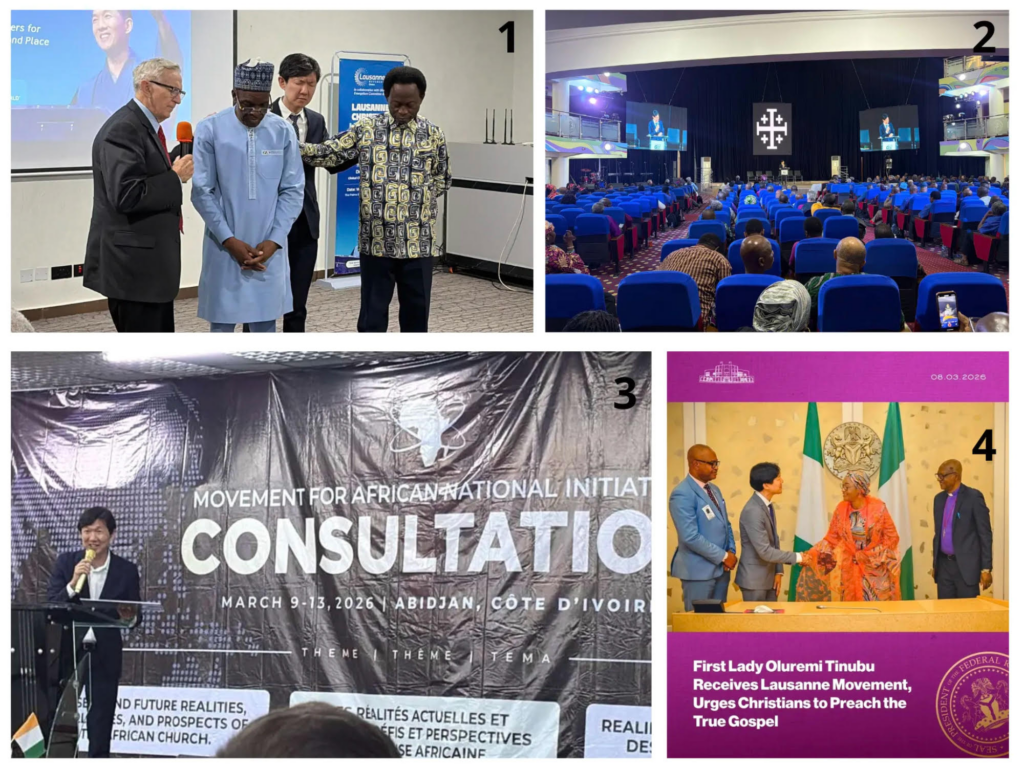
1. Accra, Ghana: Connected with Lausanne leaders, marketplace leaders, and ~80 church and mission leaders; encouraged ~300 student leaders and missionaries.
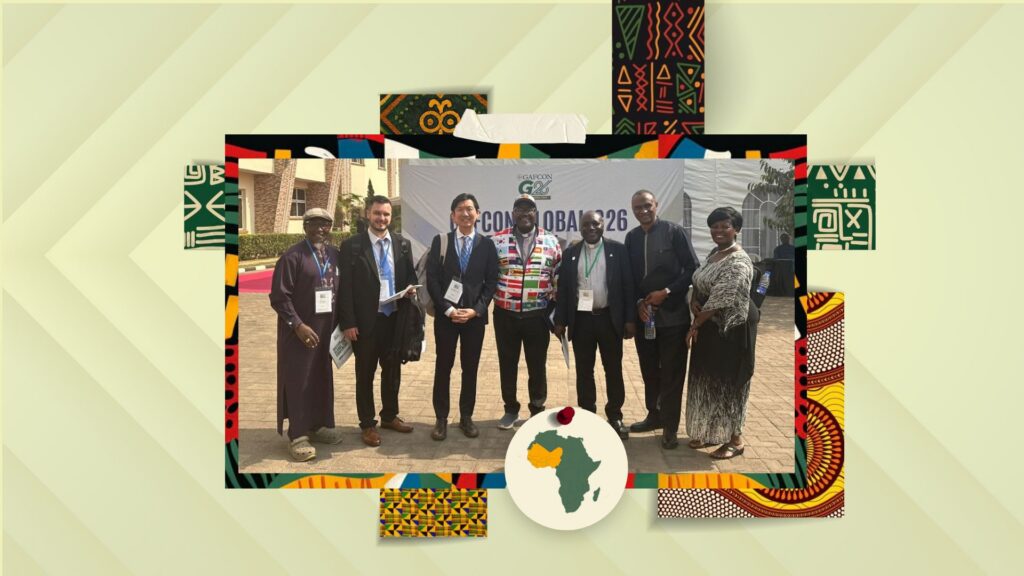
2. Abuja, Nigeria: Delivered plenary at GAFCON 2026 and gathered ~300 leaders, catalysing unity, faithful witness, and Global South mission leadership.
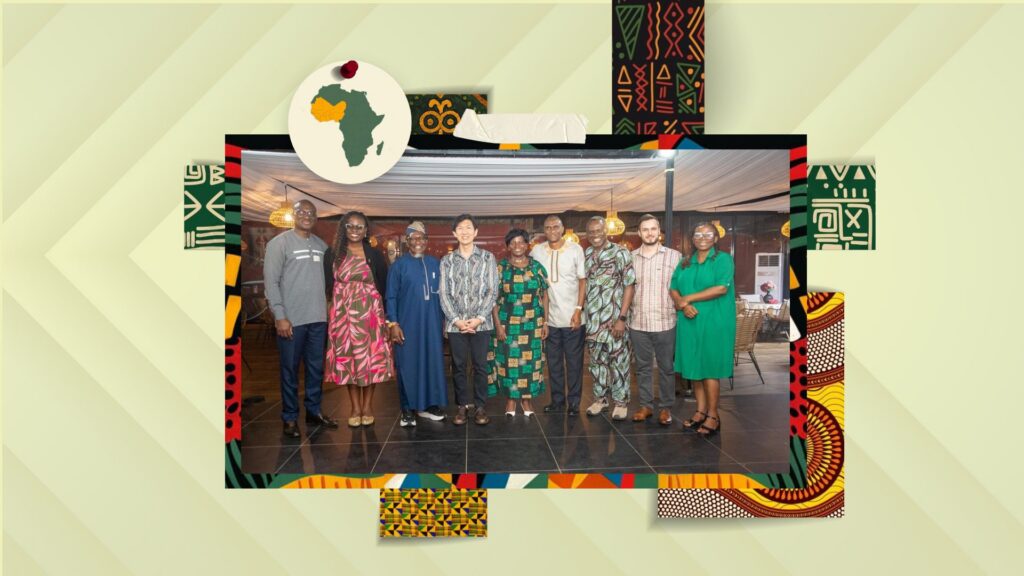
3. Abidjan, Côte d’Ivoire: Reached ~8 million via Light of the World TV (48 nations + France), preached locally, and joined MANI consultation to strengthen Pan-African mission collaboration.
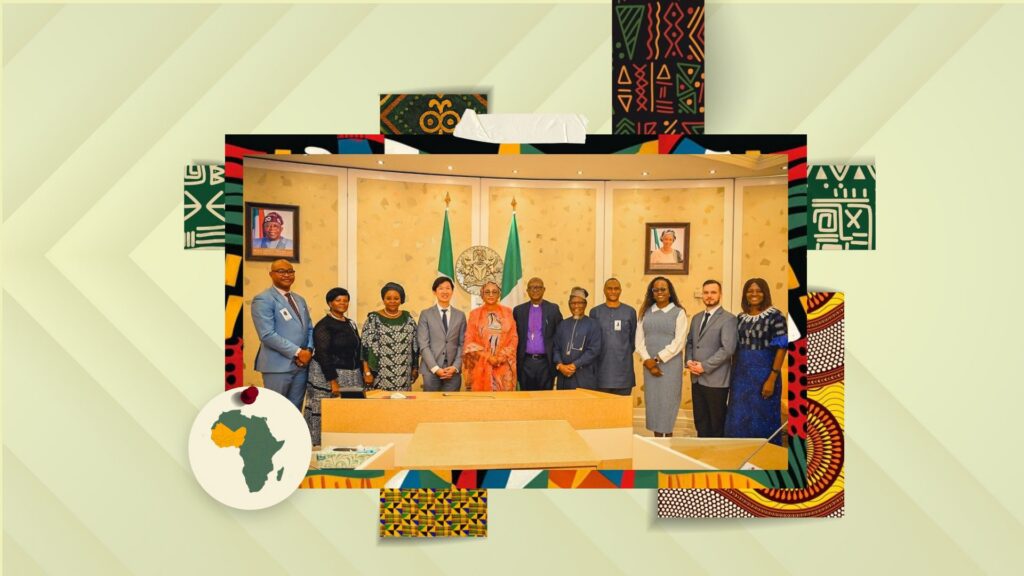
4. Nigeria: Connected with the First Lady, who is expected to attend the Nigeria Lausanne Congress 2026 (~5,000 leaders).