

























Editor's Note
This article is a shortened and adapted version of a Missional Paper. by Gideon Para-Mallam, bringing forward key insights to serve and strengthen the global church. For those who would like to go deeper into this important topic, we encourage you to engage with the full paper, where the context, research, and analysis are explored in greater detail: Thriving in the Midst of Persecution: The Church in Nigeria .
A Visible and Vibrant Church
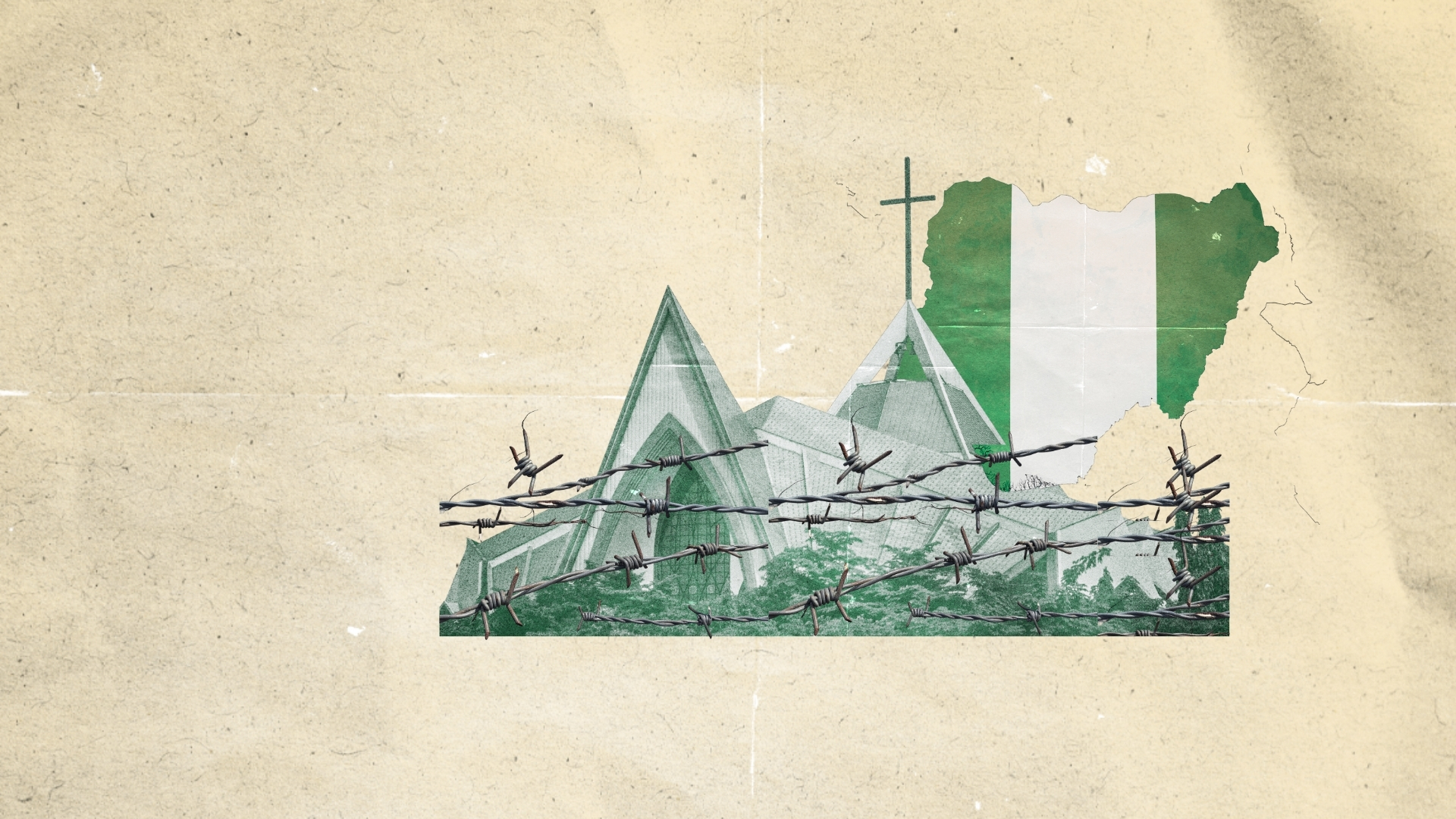
Nigeria is a multicultural, multireligious society characterized by a visible and vibrant Christian presence. Nigeria is also home to world-renowned preachers, hundreds of denominations, and massive church auditoriums such as the “Glory Dome” in Abuja.1 Within the global Christian community, Nigeria is regarded as an important center of Pentecostalism. Nigerian churches have not only opened branches in Western nations but have also become influential in global cities such as London, Houston, and Toronto.2 Televangelism and the popularity of Nigerian contemporary gospel music ministers further contribute to the global visibility of the Nigerian Church.
All of this makes it seem as if Nigeria is a country with a favorable environment for Christians. Unfortunately, this is not the case.
This paradoxical reality of prosperity of the Nigerian Church in the South and the persecution faced by Christians in other parts creates a contradictory reality. Yet this paradox reflects the lived reality of the Nigerian Church.
The Nigerian Church continues to face sustained attacks from extremist Islamists in certain regions of the country. In the Middle Belt and the far North, Christians have been killed and continue to experience structural and systemic forms of persecution. Though attacks on Christians are mostly in the North and the Middle Belt, the attack on St. Francis Xavier Catholic Church in Owo in 2022 indicates that Christians in other parts of the nation are not entirely free from such targeted attacks.3 The freedom enjoyed by Christians in the South sometimes makes the plight of those who face persecution in the far North and Middle Belt overlooked. This paradoxical reality of prosperity of the Nigerian Church in the South and the persecution faced by Christians in other parts creates a contradictory reality. Yet this paradox reflects the lived reality of the Nigerian Church. So, we have a situation in which we have a thriving and bleeding Church. This paradox has been the main reason the subject of Christian persecution in Nigeria is often debated, and sometimes this reality sends conflicting signals to the global Church.
Beyond the Language of “General Insecurity”
A major hurdle in the discussion concerning the persecution of Christians in Nigeria is the conflation of all violence under the neutral umbrella of “general insecurity.” What we must all admit is that the security situation in Nigeria is complex and multifaceted. Yet it is imperative to distinguish between persecution and general insecurity.
Persecution is the intentional and severe deprivation of fundamental rights by reason of the identity of a group or collectivity.4 Charles Tieszen defines persecution as an unjust action of varying levels of hostility perpetrated primarily on the basis of religion, resulting in harm as considered from the victim’s perspective.5 Addtionally, in asylum law, persecution requires:
- serious harm,
- an identity-based motive,
- and a persecutor that the government is unable or unwilling to control.6
In Nigeria, the evidence for all three criteria is overwhelming. When a village is razed, churches and pastoriums are burnt down, and attackers chant religious slogans such as “Allahu akbar,” such ceases to be mere banditry. It indicates that the perpetrators believe they are carrying out a religious cause.
Different splinter groups of extremist Islamist movements, such as Boko Haram and ISWAP, have specifically targeted Christians with violence, and other non-state actors, such as Armed Fulani Herdsmen and bandits, have joined in these attacks.7 The killing of Muslims does not nullify the persecution of Christians in Nigeria today. In a context of broad insecurity, Christians may not be the only victims, but they are still being targeted as Christians and are killed disproportionately.
The Roots of the Crisis & Myths to Debunk
According to its constitution, Nigeria is a secular nation. However, since 1999, Sharia law has been established in 12 northern states, and religion plays a significant role in Nigerian politics. In the culture of violence created by a variety of Islamist terror groups, Christians have for many years been particularly vulnerable to groups such as Boko Haram and ISWAP. The conflict, once mainly about religion, has more recently shifted to ethno-religious warfare by Armed Fulani Herdsmen who target Christians. These attacks destroy churches, homes, food barns, and farmlands, and they leave many Christians as Internally Displaced Persons (IDP). At the end of 2024, Nigeria accounted for 3.4 million IDPs due to violence, many of whom are Christians.8
The “poverty narrative” is another dangerous myth often used to downplay Christian persecution. Poverty may provide a pool of foot soldiers for terrorist groups, but it does not provide the motive. Ideology can be decisive. The case of Umar Farouk Abdulmutallab, the “Underwear Bomber,” who attempted to bomb a KLM flight from Nigeria, involved the son of a Nigerian elite billionaire banker. He attempted an act of terrorism despite coming from a wealthy background. This is evidence that ideology can be a decisive factor 9.
Historically, Nigeria has witnessed violent acts that stem from extremist ideological interpretations of Islam. The Maitatsine riots in the early 1980s stemmed from such ideological views, and this fundamentalist fever was one of the seeds that grew into Boko Haram and ISWAP.10
These groups are not simply criminal gangs driven by greed. They are fundamentalist organizations seeking an Islamic Caliphate governed by a strict interpretation of Sharia law. Their ideology inherently demonizes non-Muslims, and because Christianity is equally entrenched in Nigeria as Islam, Christians easily become the first target of their attacks unless they convert. The widely publicized case of Leah Sharibu, the only girl from the Dapchi kidnapping still held captive since February 19th, 2018, remains in Boko Haram captivity to date, solely for her refusal to renounce her Christian faith, is the definitive proof of this ideological targeting. Leah is not a victim of “poverty” or “communal clashes”; she is a prisoner of religious violence.11
History Still Shapes the Present
To understand the present, one must go down memory lane. The 1804 Jihad of Usman Dan Fodio, which established the Sokoto Caliphate, created a psychological sense of ownership over the region. As Bishop Matthew Hassan Kukah points out, some extremists view Islam as the “indigenous” religion of the North and Christianity as a “Western/Colonial import.”12 This sense of religious “birthright” was institutionalized by British colonialists through indirect rule.
That historical hierarchy persists today in the Middle Belt States. What the media superficially calls “farmer-herder clashes” are often one-sided, large-scale massacres of defenseless Christian farming communities. The result is often the razing of Christian villages, followed by the occupation of their lands by the attackers. This pattern suggests a deliberate strategy of demographic restructuring and territorial control.
Persecution Beyond Physical Violence
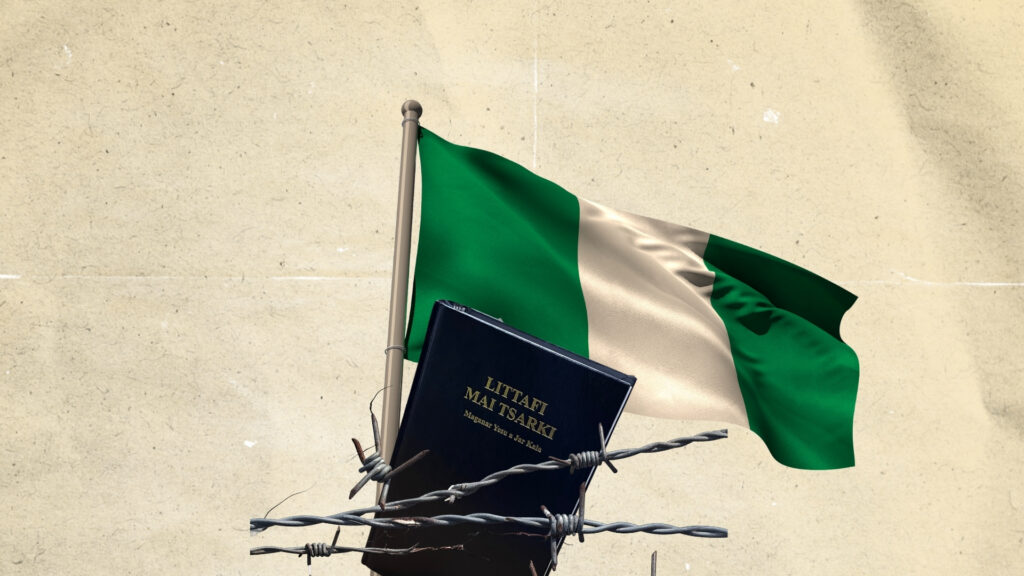
Persecution in Nigeria is not always violent; it is sometimes systemic, structural, and institutionalized. In the 12 northern states that have adopted forms of Sharia criminal law since 1999, Christians face a reality of “second-class citizenship.”13 One of the tools used to weaponize religion in Nigeria is the blasphemy laws.14
The brutal lynching of Deborah Samuel in Sokoto on May 12th, 2022, remains a chilling example. Deborah was killed by her own classmates because, as they alleged, she sent a WhatsApp message deemed blasphemous. The Sokoto state government’s unwillingness to prosecute her killers effectively sends a message of state-sanctioned impunity. In most cases, formal trials are avoided, and mere accusation of blasphemy serves as a catalyst for extrajudicial violence, often leaving victims imprisoned for their own “protection” while perpetrators remain free.
There are also numerous documented cases of underage Christian girls being abducted, forcibly converted to Islam, and married off without parental consent.16
In April 2025, the ECOWAS Community Court of Justice declared certain Sharia-based blasphemy provisions in Kano State incompatible with international human rights standards 17, yet the Nigerian government and some people both in and out of Nigeria deny that there is Christian persecution in Nigeria.
The Reality in Numbers
The claim that Christians are not disproportionately targeted is refuted by direct, primary-source data. The Para-Mallam Peace Foundation, in collaboration with the Observatory for Religious Freedom in Africa, documented a stark disparity. Between 2020 and 2023, out of approximately 30,880 civilians killed in various forms of violence, 16,769 were Christians, and 6,235 were Muslims. This means that for every Muslim killed by insecurity, nearly three Christians are killed.18 These numbers, verified against ACLED data, confirm that while all Nigerians are suffering, Christians are bearing the brunt of targeted identity-based killing.19
A Faith That Refuses to Die
Truth is often uncomfortable. Yet it is a powerful force that prevails regardless of belief, disbelief, or ignorance. The reality of Christian persecution is no less real because the government refuses to acknowledge it or because extremist Islamists also kill and abduct Muslims. These facts do exist. One does not deny the other.
A thriving Church is not a sign of safety; rather, it is a sign of a faith that refuses to die.
A thriving Church is not a sign of safety; rather, it is a sign of a faith that refuses to die. To ignore the ashes of the rural church because the mega-churches in the city are still standing is a failure of both analysis and justice. Only by acknowledging the specific nature of this persecution can we begin to address the root causes of a crisis that threatens the very fabric of the African giant and indeed the advancing missional movement of the global Church.
References
- Festus Owete, “Enenche, the Glory Dome and Critics: One Year After,” Premium Times, 23 November 2019.
- J. Kwabena Asamoah-Gyadu, “The Reverse Mission: African Christianity in the West,” cited in Jacob Kehinde Oladipupo, “Religion Crossing the Frontiers: Nigerian Pentecostal Dynamics in the Western World,” Great Commission Research Journal 10, no. 1 (2018).
- BBC News, “Owo Church Attack: Gunmen Kill Dozens in Nigeria,” 17 June 2022.
- UN General Assembly, Rome Statute of the International Criminal Court, 17 July 1998.
- Charles L. Tieszen, “Towards Redefining Persecution,” International Journal for Religious Freedom 1, no. 1 (2008): 65–80.
- U.S. Citizenship and Immigration Services, “RAIO Training Module: Definition of Persecution and Eligibility Standards,” 2023.
- SBM Intelligence, “A Threat to National Stability: The Convergence of Banditry and Jihad,” 2025.
- Open Doors International, Nigeria Country Dossier: World Watch List 2026, December 2025.
- Peter Walker, “The Gilded Life of the ‘Underwear Bomber’ Umar Farouk Abdulmutallab,” The Guardian, 27 December 2009.
- Aliyu Dahiru, “Maitatsine: The Preacher of Fire (1927–1980),” HumAngle, 2 June 2020.
- Simon Thomas, “Please Pray: Leah Sharibu Still in Captivity after Eight Years,” Open Doors UK, 18 February 2026.
- Matthew Hassan Kukah, “Persecutions of Christians in Africa: Contexts, Contents & Opportunities,” Notre Dame Conference on Contemporary Christian Martyrs, 2012.
- Open Doors, “Nigeria,” World Watch List, accessed 3 March 2026.
- Kelsey Zorzi, “How Blasphemy Laws Are Fueling Persecution in Nigeria and Across the Globe,” Alliance Defending Freedom, 15 December 2025.
- Amnesty International, Instantly Killed! How Law Enforcement Failures Exacerbate Nigeria’s Wave of Mob Violence, October 2024.
- Truth Nigeria, “Nigeria’s Scandal of Underaged Christian Girls Abducted and Forced into Marriages,” 26 January 2026.
- International Christian Concern, “Court Declares Nigeria’s Blasphemy Laws Violate International Human Rights Standards,” 14 April 2025.
- Observatory for Religious Freedom in Africa, Countering the Myth of Religious Indifference in Nigerian Terror (10/2019–9/2023), 29 August 2024.
- ACLED, “Nigeria: Conflict Evolution and Identity-Based Violence Trends,” ACLED Regional Analysis, 2025.