



























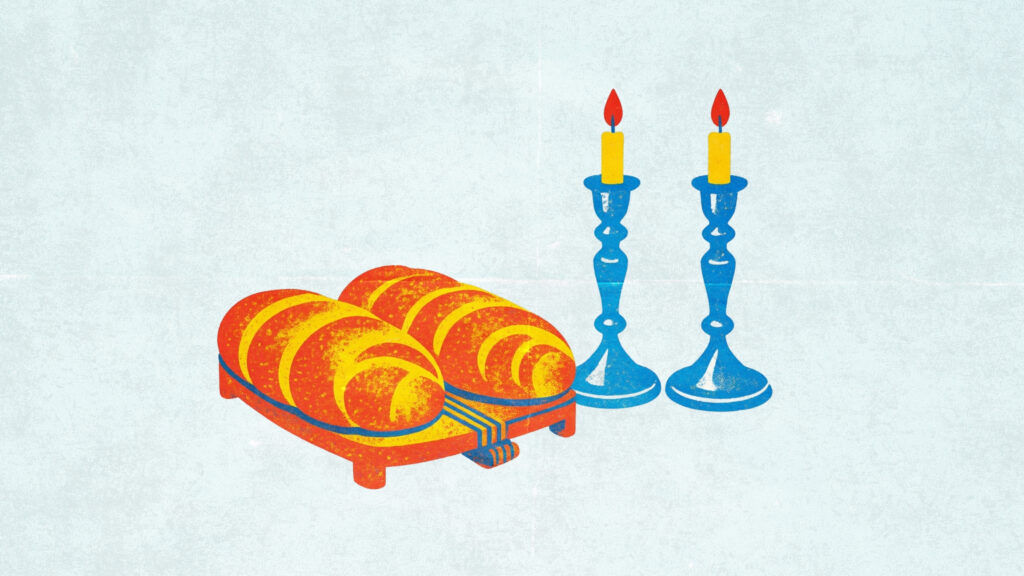
As the sun begins to set on Friday evening in Jerusalem, a quiet shift takes place across the city. Shops close early. The pace of traffic slows. Families hurry home carrying fresh challah bread and flowers. In many homes, candles are lit just before sundown, and the ancient blessing welcoming the Sabbath is spoken.
For the next twenty-four hours, Jewish families around the world enter into Shabbat, a weekly day of rest that has shaped Jewish life for thousands of years.
While many of the Jewish holidays come once a year, Shabbat arrives every week. From Friday evening until Saturday evening, work is set aside, and ordinary routines pause. Time is given instead to prayer, family meals, worship, and rest.
Shabbat is more than a tradition. It is a rhythm built into the biblical story itself, one that reaches all the way back to the opening chapters of Scripture.
The Biblical Origins of Shabbat
The concept of Sabbath first appears in the creation account. After six days of forming the world, Genesis tells us that God rested on the seventh day and blessed it, setting it apart as holy.
The Hebrew word connected to this rest means “to cease” or “to stop.” God was not resting because he was weary, but because his work was complete. The seventh day became a moment to delight in what had been made and to enjoy fellowship with the Creator.
Later, when God gave the Ten Commandments to Israel at Mount Sinai, this pattern became part of Israel’s covenant life. The Fourth Commandment says: “Remember the Sabbath day, to keep it holy. Six days you shall labor and do all your work, but the seventh day is a Sabbath to the Lord your God” (Exod 20:8–10).
Shabbat continues to be a way to enter into a deeper awareness of God’s presence and actively learn to trust him
Throughout this series, we have been focused on the Feasts of the Lord as found in Leviticus 23. These God-“appointed times” create the rhythm of the Hebrew calendar and begin with the weekly feast of Shabbat (23:3) before moving on to the six yearly festivals. It is also the only feast the Lord commanded in the Ten Commandments.
For the people of Israel, Shabbat was meant to shape an entire way of life. One day each week they would step away from the constant work required to sustain life and instead remember that God Himself is the provider and sustainer of all things.
In this sense, Shabbat was not merely about stopping activity. Instead, it was, and continues to be, a way to enter into a deeper awareness of God’s presence and actively learn to trust him.

Welcoming the Sabbath
Over centuries, beautiful traditions developed around the arrival of Shabbat. In Jewish homes the Sabbath is often welcomed almost like a royal guest.
Before sunset on Friday evening, the house is prepared and the table is set for the Shabbat meal. Candles are lit and a blessing is recited thanking God for the commandment to kindle the Sabbath lights. Afterwards comes the Kiddush, a blessing over wine, followed by the breaking of challah (a special braided bread). These simple rituals mark the transition from the busyness of the week into sacred time.
Meals during Shabbat are often unhurried and joyful. Families sing traditional songs, read Scripture, and bless their children. Friends and guests may gather around the table, sharing conversation late into the evening. It is common to greet one another during this time with the phrase “Shabbat Shalom” (“Peaceful Sabbath”).
Synagogue services also play an important role. Worshippers recite ancient prayers such as the Shema (Deut 6:4–9, 11:13–21; Num 15:37–41), declaring the oneness of God, and the Amidah, a series of blessings spoken both silently and aloud. A portion of the Torah is read publicly each week, so that over the course of the year the entire Torah (Genesis through Deuteronomy) is read in the synagogue.
Through these rhythms, Shabbat has helped anchor Jewish life in Scripture and community for generations.
Shabbat in the Time of Jesus
Jesus himself lived within this rhythm of Shabbat. The Gospels describe him attending synagogue regularly on the Sabbath, participating in the worship life of the Jewish people. Luke 4:16 tells us that visiting the synagogue on the Sabbath was his custom. In those gatherings, Jesus often taught the Scriptures, much like other Jewish teachers of his day. Yet his teaching carried a unique authority, offering interpretations that revealed the true meaning of the Law and the Prophets, because the one speaking was not merely a rabbi but the very Word of God.
Yet the Sabbath also became a point of debate between Jesus and some of the religious leaders of his day. Over time, many detailed regulations had developed about what could and could not be done on the Sabbath.
Shabbat was intended to bring blessing, restoration, and life to God’s people
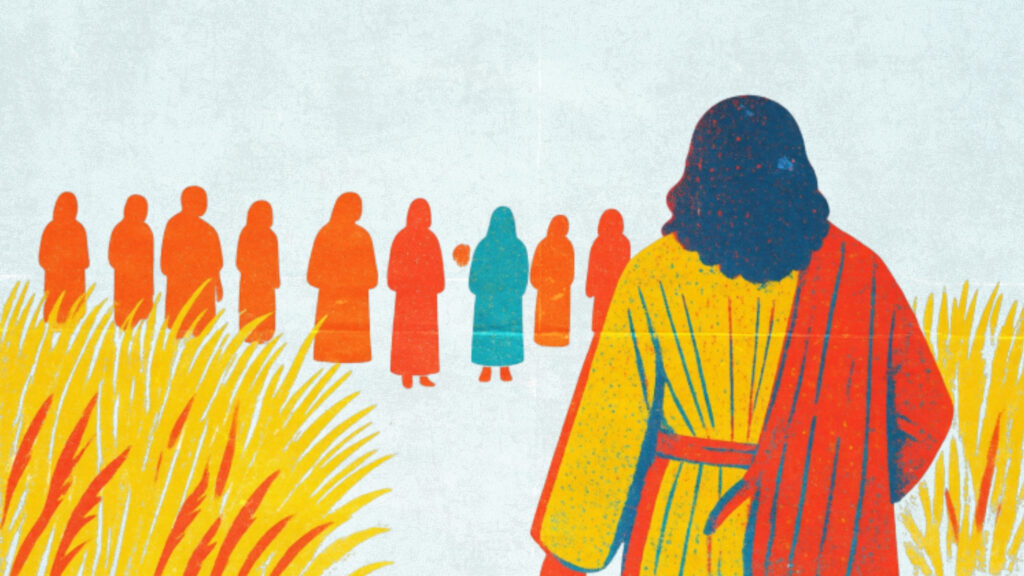
When Jesus’ disciples plucked grain on the Sabbath and were criticized for it, he responded with words that revealed the heart of the commandment: “The Sabbath was made for man, not man for the Sabbath” (Mark 2:27). Jesus was not rejecting the Sabbath. Instead, he was restoring its original purpose. Shabbat was intended to bring blessing, restoration, and life to God’s people.
This is why Jesus often chose the Sabbath as the moment to heal those who were suffering. Acts of mercy and restoration reflected the very heart of what the Sabbath was meant to represent.

The Rest That Shabbat Points Toward
Shabbat provides a day of rest each week. But the Scriptures also point toward a deeper kind of rest that God offers to all of humanity.
In one of his most well-known invitations, Jesus said: “Come to me, all who labor and are heavy laden, and I will give you rest” (Matt 11:28). The writer of Hebrews later reflects on this promise, describing a “Sabbath rest for the people of God” that goes beyond a single day each week (4:9).
In this way, Shabbat becomes a picture of the greater rest that God desires for his people. It reminds us that life with God is not sustained by constant striving but by trusting in his finished work.

The Gift of Rest
The rhythm of setting aside time for rest and worship is not only a Jewish practice. It reflects something deeply woven into God’s design for human life.
From the opening pages of Scripture, the pattern of work and rest reminds us that we are not sustained by our own effort alone. Shabbat teaches us to pause, to remember the Creator, and to recognize that our lives ultimately depend on him.
Followers of Jesus have understood this rhythm in different ways throughout history. Some observe a day of rest on Sunday, the day of the resurrection, while others choose different rhythms for worship and rest. The New Testament does not prescribe a single day that all believers must observe in the same way.
What remains constant, however, is the wisdom of setting aside regular time to step away from the demands of work and turn our attention back to God. In a world that celebrates constant productivity and endless activity, choosing to rest becomes an act of trust.
When believers pause regularly for prayer, Scripture, worship, and fellowship, they rediscover something central to the biblical vision of Sabbath: that true rest is found not in escaping life’s responsibilities, but in renewing our relationship with the God who sustains us.

A Bridge for Gospel Conversations
Because Shabbat is such a central part of Jewish identity, it can also open the door to meaningful spiritual conversations with Jewish friends. Be aware that not all Jewish people observe a weekly Shabbat. But you can enter into a conversation with a Jewish friend with curiosity. Your simple questions about the meaning of Shabbat may lead naturally to deeper reflection about rest, trust in God, and the hope of redemption.

A Weekly Reminder of God’s Faithfulness
For thousands of years, Jewish families have welcomed the Sabbath week after week. Through times of joy and hardship, through exile and return, Shabbat has remained a steady reminder of God’s faithfulness.
Each week it invites people to stop striving, to remember the Creator, and to enter again into the peace that comes from him.
For followers of Jesus, that weekly rhythm also echoes a deeper promise: that the true and lasting rest our hearts long for is found in the Messiah himself.
Yet the story of Shabbat does not end with Israel alone. From the beginning, God’s purposes have always been larger than one nation. The Sabbath rhythm given to Israel was meant to point toward a restored humanity living in peace with God.
For followers of Jesus, that weekly rhythm also echoes a deeper promise: that the true and lasting rest our hearts long for is found in the Messiah himself.
Through the Messiah, that invitation to rest now extends to people from every nation and language. As the gospel goes out to the ends of the earth, it carries with it the same promise at the heart of Shabbat: that weary people everywhere can find true rest in the God who created them and in the salvation he has provided through Jesus the Messiah.
This is the final article in my series, Understanding Your Jewish Neighbour. As I wrote these reflections on the Jewish holidays, my prayer has been that understanding would lead to love for your Jewish neighbour. My hope is that you would be moved to pray for the salvation of the Jewish people and to share the gospel with your Jewish friends, neighbours, family members, or coworkers who have not yet come to know the Messiah.
Of course, the Jewish community is wonderfully diverse, and there is always more to learn about the history, traditions, and perspectives that shape Jewish life today. If you would like to explore further, I invite you to visit the resources of the Lausanne Consultation on Jewish Evangelism (LCJE) or consider taking a free Jewish Evangelism Seminar through LCJE or Jews for Jesus. Thank you for reading this series and for engaging Jewish people with the good news of the gospel.