

























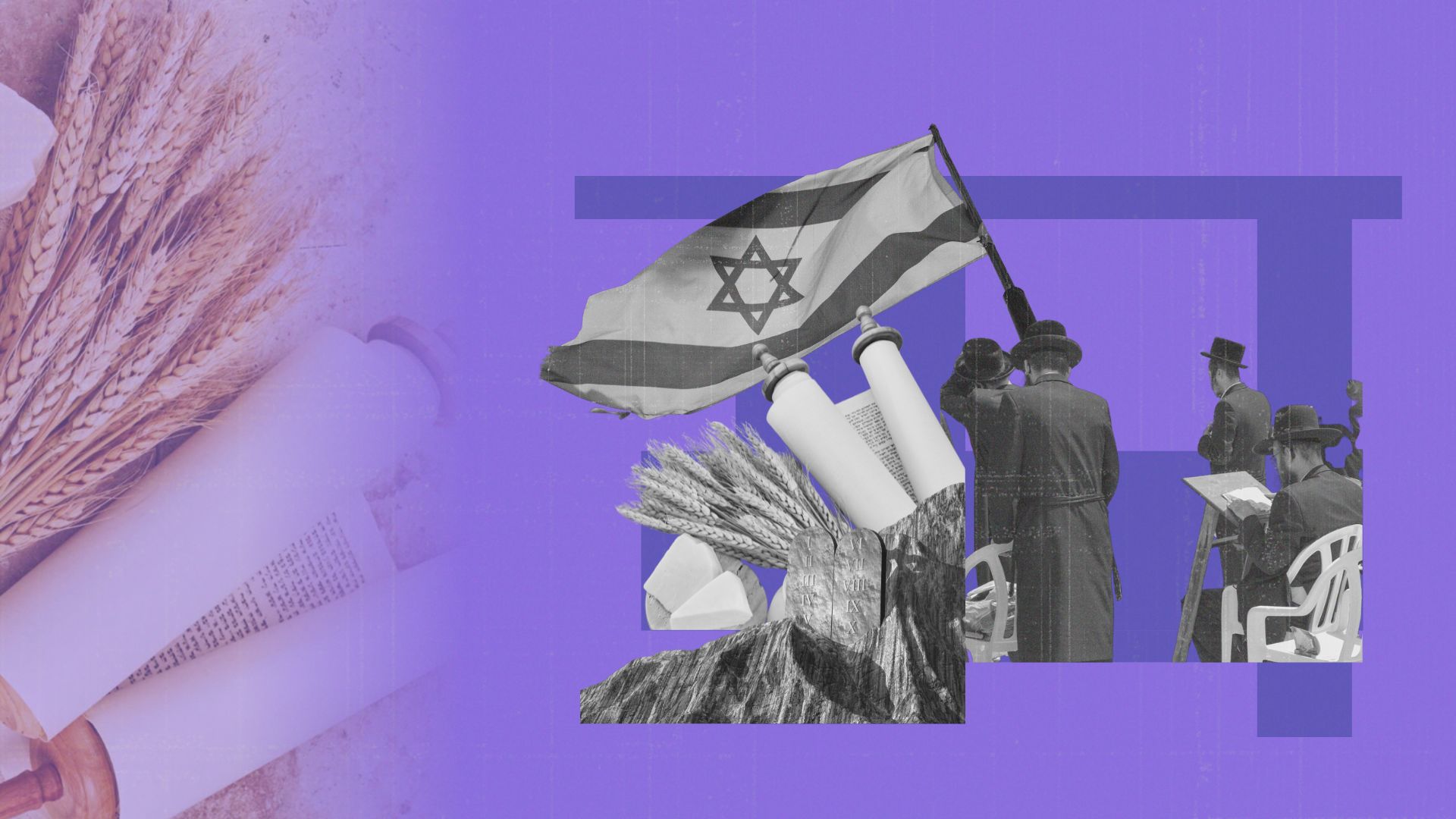

The Feast of Weeks
Church calendars mark Pentecost fifty days after Easter. Why is that fifty-day period significant? What did it mean to the first disciples? And why does it matter to us?
In the Bible, Shavuot (pronounced shah-voo-OHT) is more than a date on the calendar. It marks a pattern of redemption that unfolds across the story of Scripture. What began as a celebration of the firstfruits of Israel’s harvest later became associated with the giving of the Torah at Mount Sinai. In the New Testament, it becomes the moment when the Holy Spirit is poured out, and the message of the Messiah begins spreading to the nations.
After his resurrection, Yeshua (Jesus) appeared to his disciples over a period of forty days before ascending to heaven. During that time, he told them to remain in Jerusalem until they received the gift of the Holy Spirit. The Spirit would empower them to proclaim the truth about their risen Savior to the world (Acts 1:3–9). Acts 2 describes how that promise was fulfilled when the Holy Spirit was poured out on those gathered in Jerusalem for Shavuot, the holiday on the Hebrew calendar that occurs fifty days after Passover. The word pentecost itself comes from the Greek word meaning “fifty.”
This year, Shavuot begins at sunset on 21 May.
Why Shavuot Matters
Jesus’ command to remain in Jerusalem was reason enough for the disciples to stay, but there was another important reason. Even if they had chosen to leave the city after Jesus’ ascension, they would have returned shortly afterward for Shavuot, also known as the Feast of Weeks.
God had established three pilgrimage festivals during which the people of Israel were called to assemble in Jerusalem for worship. These were the fall feast of Sukkot1 (Booths) and the spring feasts of Passover2 and Shavuot.
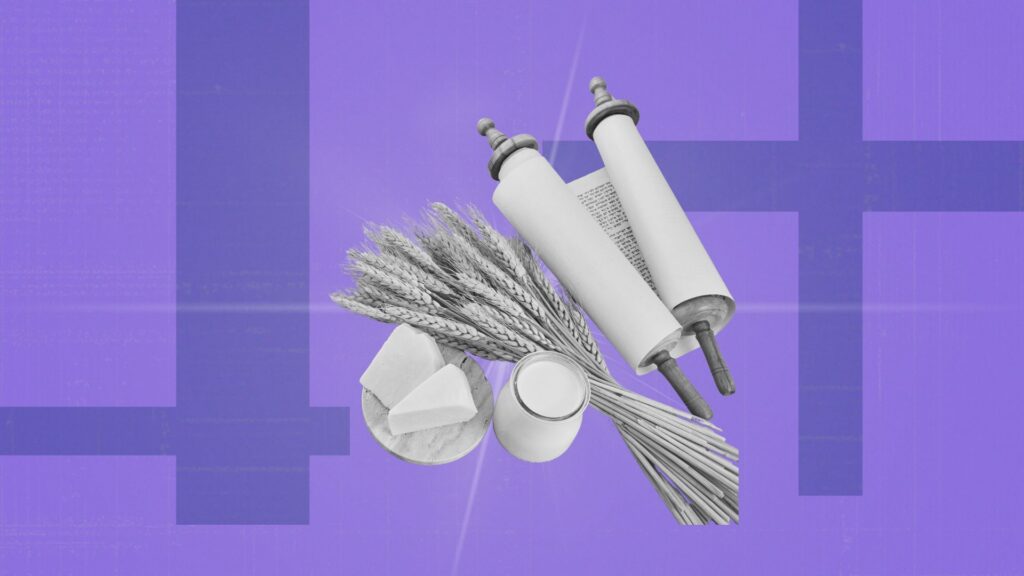
Originally, Shavuot was an agricultural festival. Worshipers brought the firstfruits of the wheat harvest to the Temple (Lev 23:15–22; Num 28:26–31; Deut 16:9–12). God instructed the Israelites to count fifty days, beginning with the offering of the omer (OH-mer), an ancient measure associated with the barley harvest, which began immediately after Passover.
These offerings were more than expressions of gratitude
These offerings were more than expressions of gratitude for the land’s bounty. They reminded Israel that their ability to harvest the land flowed from God’s redeeming work in bringing them out of Egypt and into the land he had promised them.
The harvest pointed back to redemption.
From Redemption to Covenant
After the destruction of the Temple in AD 70, rabbinic authorities expanded the holiday’s meaning to commemorate the giving of the Torah at Mount Sinai. Jewish tradition associates this event with the same fifty-day period following the Exodus from Egypt. This understanding draws in part on Exodus 19:1.
At Sinai, the people who had been redeemed from slavery in Egypt entered into a covenant with the God who had rescued them. The giving of the Torah was not simply the moment when Israel received commandments. It was the moment when a redeemed people were called to become a holy nation set apart for God.
Because the Hebrew word Shavuot is related to the word for “oath” or “covenant,” some Jewish sages likened the giving of the Law to a wedding that sealed the covenant between God and the people of Israel.
Yet the story of Sinai also revealed humanity’s deeper need for transformation. Soon after receiving the Law, the people turned to idolatry through the worship of the golden calf. The covenant people needed more than commandments written on stone. They needed hearts that were changed.
The book of Ruth is traditionally read in many synagogues on Shavuot. The story contains harvest imagery (Ruth 2:1–3:5) and culminates in a covenantal marriage (Ruth 3:6–4:16), themes that resonate with the meaning of the holiday.
The Shavuot/Pentecost Connection
The idea of firstfruits would have been familiar to Jewish people in the first century. The apostle Paul later used this imagery when writing to early congregations, applying it to both the person and work of Jesus and to those who follow Him (Rom 8:23; 11:16; 1 Cor 15:20, 23; James 1:18; Rev 14:4).
These ideas form the backdrop for Peter’s sermon in Acts 2. The crowd in Jerusalem witnessed a rushing wind, tongues of fire, and the proclamation of God’s works in many languages as the Holy Spirit was poured out on those gathered for Shavuot.
The imagery of fire would have been deeply meaningful to the Jewish people present. When God gave the Torah at Mount Sinai, Scripture describes the mountain covered with smoke and fire as the Lord descended upon it (Exod 19:16–18). At Sinai, fire marked the giving of God’s Word to his people. At Pentecost, flames rested on the followers of Jesus as the Holy Spirit was poured out, signaling that God was now writing his Word on human hearts.
Pentecost also reveals a powerful pattern of redemption and reversal within the biblical story.
At the tower of Babel, human pride led to confusion and the scattering of languages (Gen 11:1–9). At Pentecost, that confusion began to be reversed as people from many nations heard the good news of the Messiah proclaimed in their own languages.
At Mount Sinai, when Israel sinned through the golden calf, about three thousand people died in judgment (Exod 32:28). At Pentecost, when Peter proclaimed the risen Messiah, about three thousand people believed and received new life (Acts 2:41).
At Pentecost a new community emerged, empowered by the Holy Spirit and sent to carry the message of redemption to the ends of the earth.
And while Israel had been called to be a light to the nations, that calling often remained only partially fulfilled. At Pentecost, a new community emerged, composed of Jews and Gentiles together, empowered by the Holy Spirit and sent to carry the message of redemption to the ends of the earth.
The international crowd present in Jerusalem that day already hinted at the global scope of this mission. Acts 2 lists Jewish people from many nations who heard the good news in their own languages.
What began among Jewish pilgrims gathered for Shavuot quickly spread outward to the nations, fulfilling God’s promise that through Israel his blessing would reach the whole world.
Pentecost fulfilled prophetic hopes for deep spiritual renewal (Ezek 36:24–36; Isa 4:2–6; 66:22–23). Through the resurrection of Jesus and the outpouring of the Spirit, God writes his law not merely on tablets of stone but on human hearts.
An Opportunity for Reflection and Conversation
Today, Shavuot is widely celebrated in Israel, where Jewish holidays shape the rhythm of national life. However, among many Jewish communities in the diaspora, it is not observed as widely as festivals such as Passover3, Rosh Hashanah4, Yom Kippur5, or even Hanukkah6.
Some suggest that this is partly because Shavuot lacks the strong home-centered rituals associated with other holidays. There is no Passover-style Seder meal and few widely recognized symbols like the Hanukkah menorah.
Among religiously observant Jewish communities, however, Shavuot remains meaningful. Many people stay up late, and sometimes all night, studying Torah as an expression of gratitude for God’s gift of the Law.
Another popular tradition is enjoying dairy-based foods such as cheesecake and blintzes. Some link this custom to the idea that the Torah is “sweet” like milk and honey (Song of Songs 4:11). Others note practical connections to the dietary laws given to Israel.
For Christians, Shavuot offers a meaningful opportunity to reflect on the gift of God’s Word and the redemption God has accomplished through the Messiah.
Consider reading Exodus 19:1–20:21, the account of God giving the Ten Commandments at Mount Sinai. What does this passage reveal about God’s character? How does he call his people to respond?
Reflect on the covenant love God extends to us through the Messiah.
You might also read the book of Ruth, perhaps in a translation or paraphrase different from the one you usually use. Reflect on the covenant love God extends to us through the Messiah.
Unless they are religiously observant, many Jewish people you know may not celebrate Shavuot. Yet the holiday still provides a natural opportunity for conversation.
Pray for your Jewish friends through the power of the Holy Spirit, the same Spirit who was first poured out on the Jewish people gathered in Jerusalem during Shavuot in the first century.
Pray especially for those who remain the most unreached and unengaged with the gospel among the Jewish people, the Ultra-Orthodox community7. You can download a Prayer Guide, in ten different languages, to help lead you in praying for this community.
Sometimes, even a small moment of hospitality, perhaps sharing a sweet dairy treat such as cheesecake, can open the door to a deeper conversation about God’s Word, his promises, and the hope of redemption we have in the Messiah.
Endnotes
- Understanding Your Jewish Neighbour: Sukkot
- Understanding Your Jewish Neighbour: Passover
- Understanding Your Jewish Neighbour: Passover
- Understanding Your Jewish Neighbour: Rosh Hashanah
- Understanding Your Jewish Neighbour: Yom Kippur
- Understanding Your Jewish Neighbour: Hanukkah
- Haredi Ministry: Ultra Orthodox Jews