

























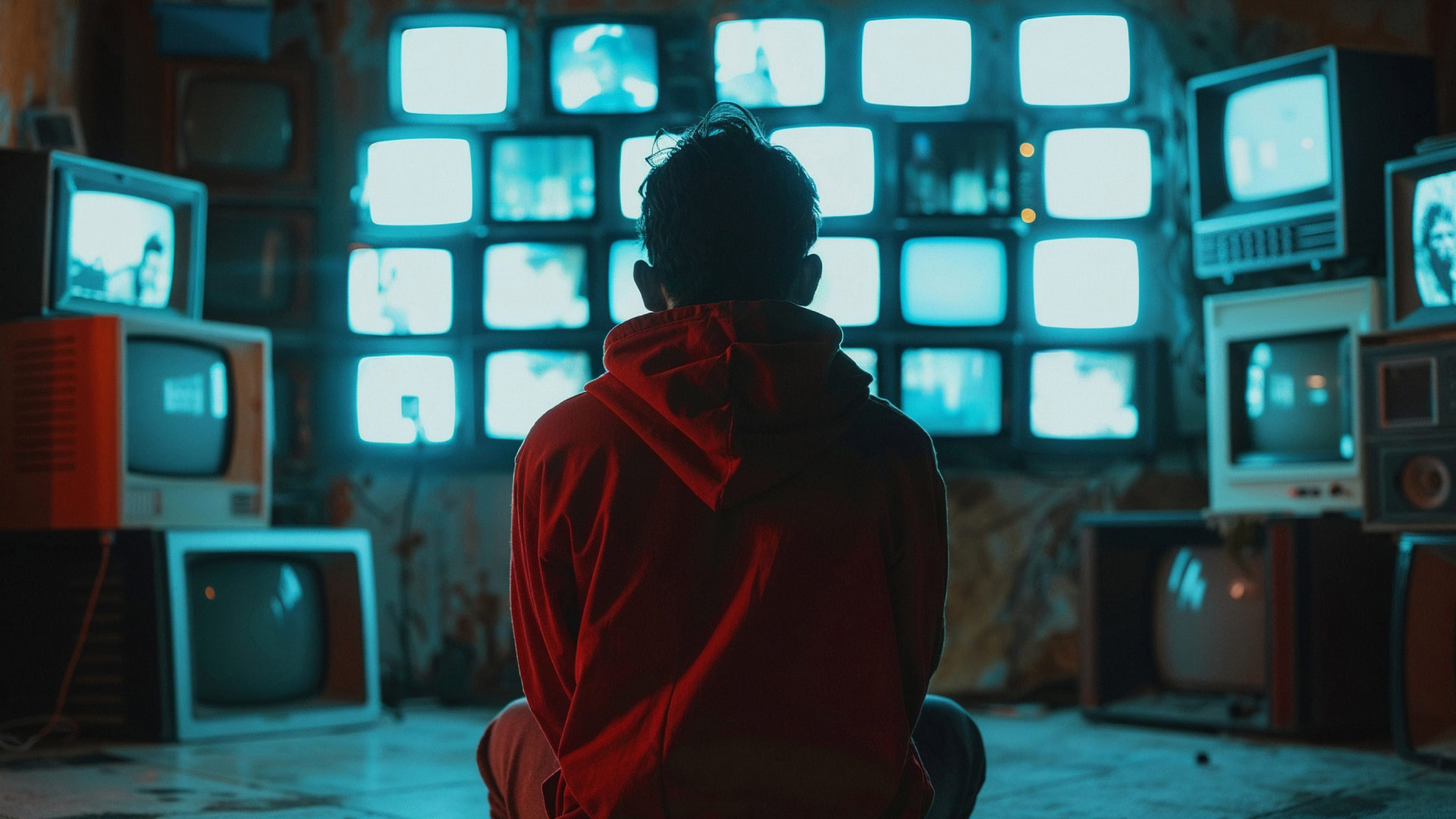

The rise of digital connectivity has brought huge possibilities for mission and ministry. Take, for example, the ability to reach countries closed to the gospel, or the ability to pastor a young person while they are distant from you. Rather than writing a letter, connections are now instant. Digital means have intensified and increased what already existed. For all the positive aspects of this new availability come the negative aspects. The possibilities for doing greater good also bring the possibilities for doing greater harm. When it comes to pornography, what was limited to photos in magazines, carefully controlled in most countries, has become a live-action, full-view possibility in your pocket.

Viewing Figures
Sexually explicit internet material (SEIM) is a problem of pandemic proportions. Among young people, the statistics vary but suggest it is close to ubiquitous, often beginning in childhood. It is consistently violent and deeply exploitative, particularly of young girls. As a business, it makes thousands of dollars a second, making it more difficult for governments and charities to take effective action.
“…Viewing persons as instruments to be used rather than people made in God’s image to be respected and appreciated.”
SEIM directly targets the consumer’s desires, offering an experience that cannot be delivered on a screen, thus separating the participant from intimacy and any embodied involvement. The nature of what is being viewed, therefore, trains the desire on what is dehumanizing, removing the personal connection: I–Thou becomes I–it. Names are rarely known, faces are often unseen, and women are treated as objects. This sets a habitus, an unconscious custom and way of thinking and being, of viewing persons as instruments to be used rather than people made in God’s image to be respected and appreciated.
This issue is not limited to Western countries. The nature of digital connectivity means that content from any location can be accessed in almost any nation. There is a growing trade in African and Asian SEIM, although the financial scale differs, and restrictions on youth access in some impoverished areas affect this.
Instead, SEIM needs to be seen in the same way that slavery was considered 200 years ago—as a blight on the treatment of humanity, a trade in lives, and the victimization of the most vulnerable. If evangelicals gained the same desire for justice that abolitionists had in the nineteenth century, then steps may begin to be taken to end this market in people and body parts. This generation needs more people like Laila Mickelwait, who risk safety and reputation in their dogged pursuit of justice for the sexually victimized.

Online Generations
The changes that have occurred deserve closer scrutiny. The digital landscape has evolved such that, in affluent countries, smartphones are considered ‘transportal homes’, spaces where young people live. This is where shopping, banking, gaming, filming, interacting and watching occur. Where older generations speak of ‘going online,’ this divide does not occur to emerging generations. Their existence is a hybrid of online/offline, seamlessly weaving communications and interactions. This hybridity of their online and offline existence presents both discipleship challenges and opportunities. Ministry and mission should not be viewed solely as offline activities but must seamlessly integrate into both aspects of young Christians’ lives. And this is particularly true when it comes to their sexual lives.
If young people can grasp a vision for a good hybrid life that seeks righteousness and justice, then the opportunities for the kingdom online are enormous.
This change in understanding can be difficult for those ministering in this space. Older generations often view technological advances through a lens of suspicion, with a desire for young people to come off social media rather than learn to live right online. Such changes can leave older ministers disoriented and feeling unable to engage. If young people can grasp a vision for a good hybrid life that seeks righteousness and justice, then the opportunities for the kingdom online are enormous.
This will mean reaching out to those caught up in the production and consumption of SEIM. This will involve creating digital communities that meet people in their shame and their hurt, hearing confessions as well as harrowing horrors. This will include hearing stories of hope and healing as lives are put back together and justice is sought against the oppressor.
Christians have always prioritized ministry to the oppressed and have been the first to go to places others would not. This is a digital space where the gospel must be proclaimed, and liberation declared for those imprisoned by SEIM. Can there be a new movement of mission to the most despised places and people? This will require vocal and financial support. It will not be glamorous, and it may not appeal to fundraisers, but it is vital.
Evangelical Futures and the Great Commission
Advances in technology will enable greater physical presence in online spaces through prosthetics. This may completely change how SEIM is consumed. While the potential benefits of this will need to be assessed, it is likely to be exploited in the greater sexual abuse and exploitation of younger generations. Although some Western countries, such as the UK, have begun implementing age-verification schemes for online sexual content, the effectiveness of these measures has yet to be assessed.
One hopeful thing I have seen as a minister and practitioner is that young people are often more thoughtful in their use and adoption of technologies than older generations. They frequently appear to be keenly aware of the mistakes made by their forebears. Consider the popularity of platforms with disappearing messages in light of the scandals surrounding the release of private WhatsApp messages.
The search for online intimacy will only leave emerging generations disappointed.
The search for online intimacy will only leave emerging generations disappointed. The possibilities for Christians to be salt and light in caring for survivors of online sexual abuse, and to speak on their behalf, demonstrate a kingdom attitude that should show the thirsty they can drink from the well that is Christ and find satisfaction.
This will require digital leaders among Christians who show authenticity and integrity in this space. This may require honesty and openness about previous failings. This appears to be the era of leaders being exposed and called to account on social media. Perhaps a new generation can learn these lessons well and become a shining light in a digital world.