


























‘We’re raising funds to plant churches in Africa.’
‘Help us feed the orphans of Africa.’
‘Partner with us to translate the Bible for unreached African communities.’
If you’ve spent any time reading fundraising appeals from international ministries and mission agencies based in the Global North, these phrases will sound familiar.
Perhaps too familiar.
For decades, if we’re honest, for centuries, Africa has been considered a continent waiting to receive what wealthy countries have to give: the good news of Jesus, financial resources, discipleship materials, leadership training, imported solutions to its problems.
Open the glossy ministry brochures. Read the email campaigns. Watch the donor videos. And you will see a remarkably consistent narrative: Africa receives. The Global North sends. Africa learns. The Global North teaches. Africa needs. The Global North provides.
Sadly, this pattern extends beyond fundraising appeals into the resources created to help churches grow in stewardship and generosity. Ministries based in the Global North develop generosity curricula, then they invite African churches to ‘contextualise’ them. Which typically means: translate them into your language, adapt the examples to your culture, and use them in your context.
The assumption, often unstated but unmistakably present, is that the theological lens, the pedagogical approach, and the strategic direction have already been determined elsewhere. African friends and ministry partners, you are welcome to adjust the packaging . . .
But here’s the question that should make us uncomfortable: Have we ever stopped to pay attention to what African churches and ministries are already doing?
Have we ever paused long enough to ask what theologies of generosity African Christians have developed from their own engagement with Scripture and their own lived experience?
Have we ever seriously investigated what mission impact African churches are already having through their fundraising efforts, their giving, their strategies for sustainability?
The honest answer has largely been NO.
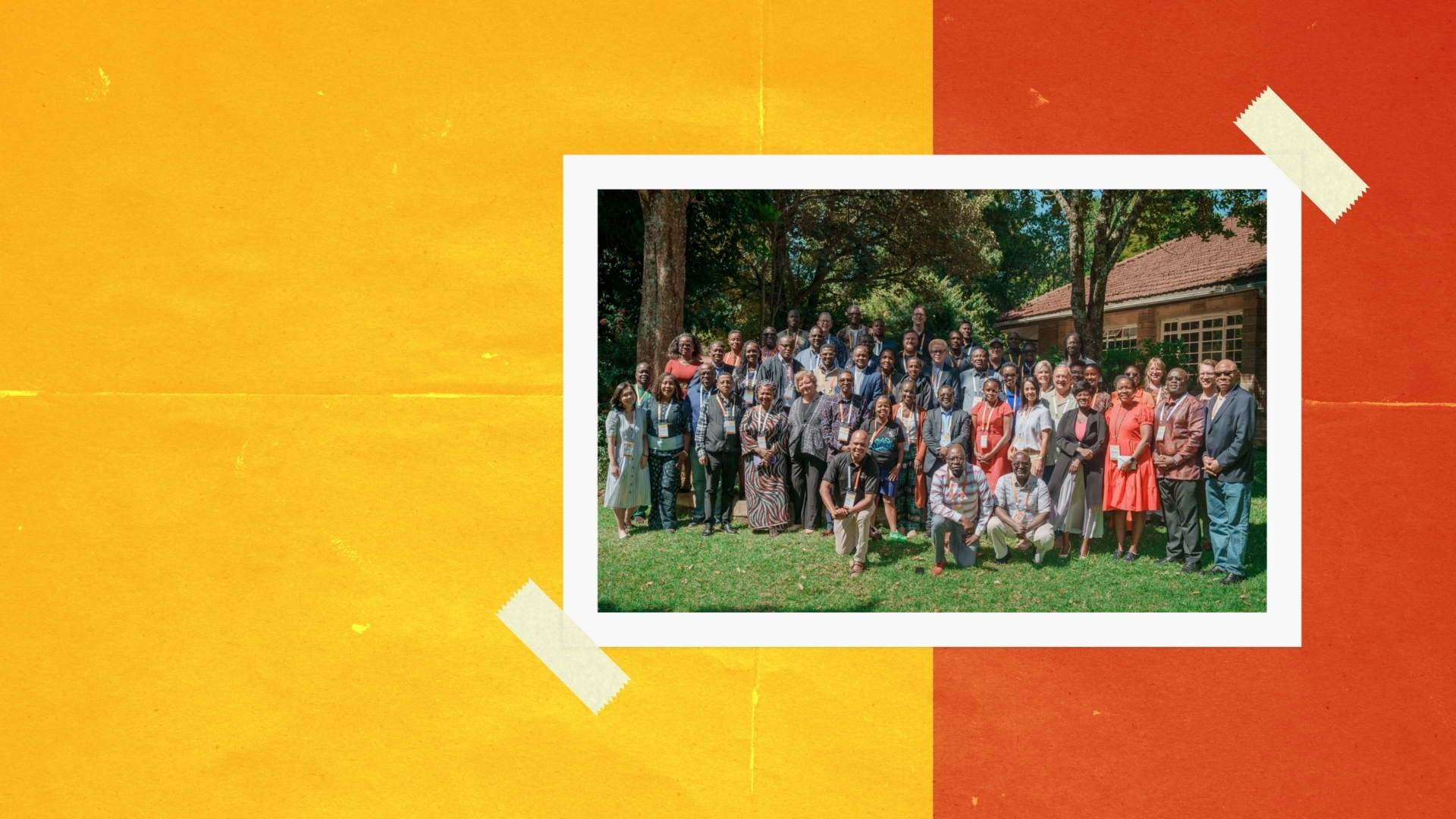
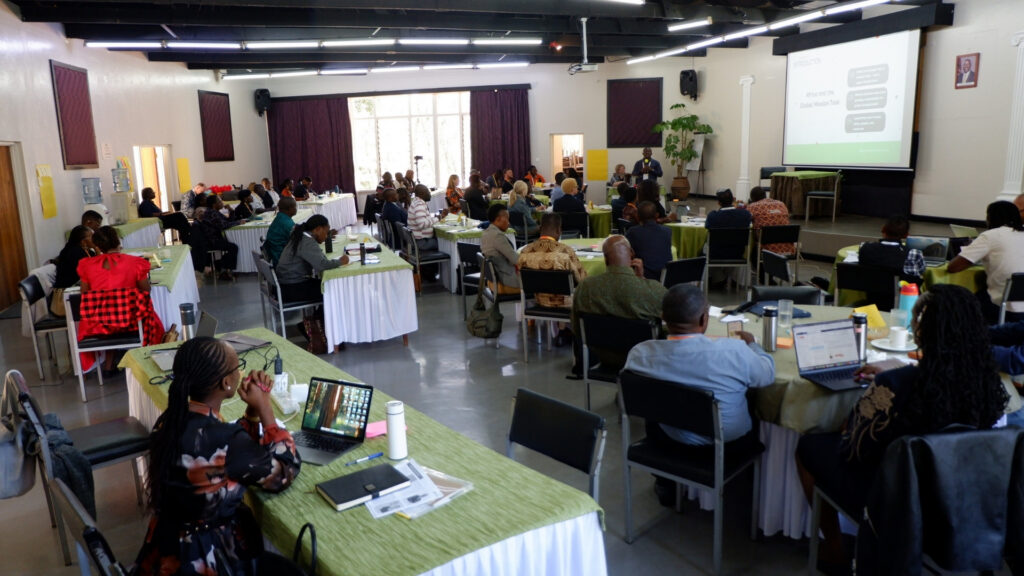
And that is why the Lausanne Ministry Fundraising Network (MFN) decided to do something fundamentally different by hosting the Africa Roundtable on the Theology of Generosity and Fundraising in Limuru, Kenya from 2–6 February 2026.
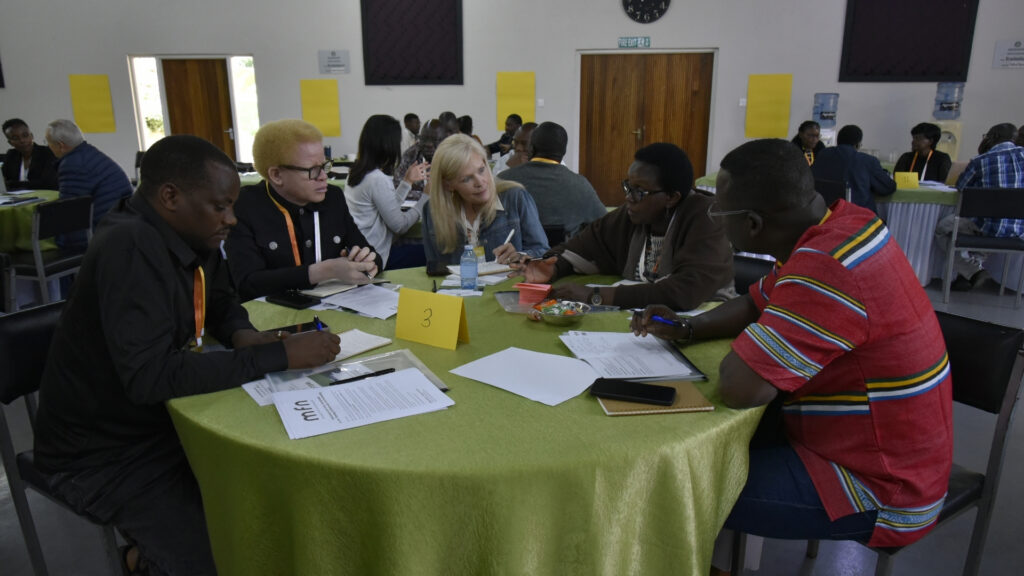
The design of the Roundtable was intentional and countercultural. The event was by invitation only. All the presenters and almost all participants were African church and ministry leaders, theologians, university lecturers, mission mobilisers, and fundraising strategists from 12 African countries.
MFN hosted and convened the gathering but did not control or direct it.
We did not want to host an event where foreign experts flew to Kenya to teach Africans how to do generosity and fundraising ‘properly’. We set out to create a space for African leaders to articulate their own theologies, share their stories, reflect on their data, celebrate their successes, name their own challenges, and share valuable insights, not just for Africa, but for the global church.
This distinction matters profoundly to all the members of the MFN core team, because it expresses our vision for promoting a polycentric approach to resource mobilisation, a vision of a world where all kinds of resources, time, skills, money, ideas, and innovation flow from everywhere to everywhere for the fulfilment of the Great Commission.
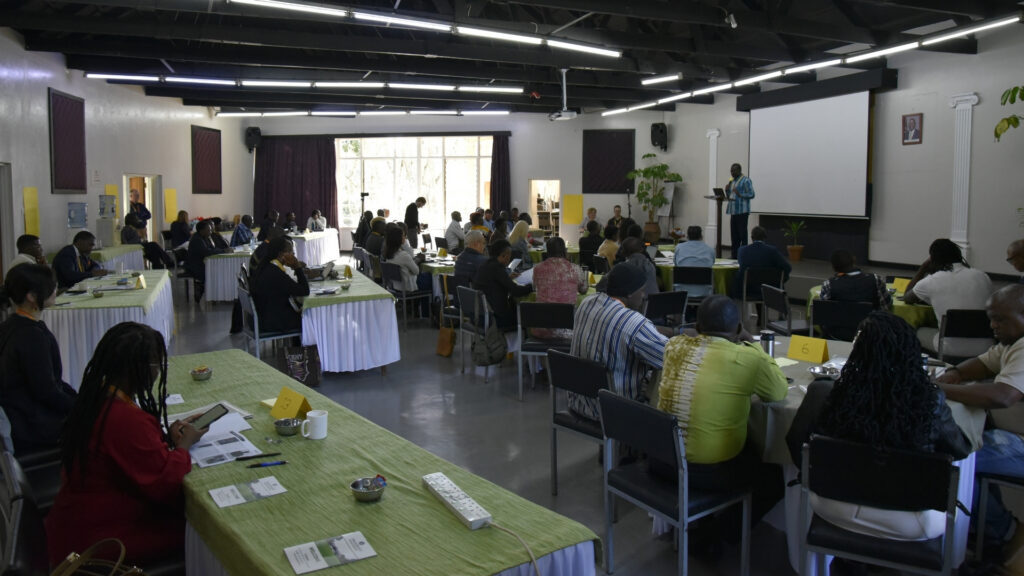
As participants began to arrive from Angola, Ethiopia, Malawi, Nigeria, Kenya, South Africa, Ghana, Uganda, Burkina Faso, Chad and beyond, the atmosphere was warm and expectant. And as we settled into our first sessions, listening to stories from churches and ministries across the continent, one powerful truth emerged with stunning clarity: The African people and the African church are sacrificially and joyfully generous.
The African people and the African church are sacrificially and joyfully generous.
As participants began to arrive from Angola, Ethiopia, Malawi, Nigeria, Kenya, South Africa, Ghana, Uganda, Burkina Faso, Chad and beyond, the atmosphere was warm and expectant. And as we settled into our first sessions, listening to stories from churches and ministries across the continent, one powerful truth emerged with stunning clarity: The African people and the African church are sacrificially and joyfully generous.
The Generous Africa We Don’t Talk About
As conversations between new and old friends flowed over coffee or lunch, we began to bear witness to what God is already doing in Africa. And, the stories that emerged were breathtaking in their scope and their beauty, backed by research that challenges many of the stereotypes about African Christianity and resource mobilisation.
Dr Rosemary Mbogo from Kenya shared important statistics from The Charities Aid Foundation’s World Giving Index (2025) that places Nigeria as the most generous country in the world, closely followed by Kenya and Ghana.
Yetu Initiative (2018) found that 93 % of Kenyans surveyed reported giving in some form, with 92 % engaging in informal giving to individuals and 64 % donating to organizations, indicating very high levels of household generosity across both informal and formal channels.
Even more remarkably, she stated, the Yetu Initiative (2018) found that 93 % of Kenyans surveyed reported giving in some form, with 92 % engaging in informal giving to individuals and 64 % donating to organizations, indicating very high levels of household generosity across both informal and formal channels.
Another recent East Africa study revealed that 22-31% of monthly income goes to church and community giving, with 80-90% of that giving flowing through relational and informal channels rather than institutional structures.
The statistics and stories paint a vibrant picture of African Christianity that rarely makes it into the global conversations about mission funding. A picture of friends, families and local communities gathering funds for medical emergencies and funerals, believers supporting families fleeing conflict and persecution, church leaders taking orphans into their homes and providing for their education, communities building wells and maternity wards, local churches creating economic opportunities for the marginalised, and much more.
These are not one-off acts of kindness and compassion. They are sustained patterns of generosity woven into the very fabric of church life in Africa, grounded in the belief that God’s people are called to reflect his heart of love, justice, mercy, and provision.
When God Calls a People, He Calls Them to Provide for Their Families, Their Churches and For the Future of God’s Mission
It was against this backdrop of lived and documented stories of African generosity that Professor Nimi Wariboko from the University of Boston, delivered the opening plenary address. What he offered was a robust theological reframing of wealth, economy, and mission that many of us had never heard, articulated quite so clearly or powerfully.
‘Let me begin by saying this clearly,’ Wariboko told us. ‘An economy exists to make provision for the future.’
This simple sentence landed with tremendous weight because most conversations about generosity in ministry reinforce God’s role as the Owner and Provider, and our role as stewards. They rarely focus on wealth creation or on the future of mission.
Across Africa and elsewhere we live in ‘the urgent now’, where families struggle to make ends meet and ministries constantly scramble to fund the next project or pay staff salaries. But Wariboko insisted that Scripture invites us to lift our eyes from the present to the horizon, one that spans beyond months, years but generations.
He took us back to the very beginning, to the Creation narrative, reminding us that God is the Creator, and that as human beings made in his image we are invited to participate in his creative work, by cultivating the earth, labouring to create wealth, stewarding resources, supporting mission, and shaping systems that sustain life and enable flourishing over time.
This is not capitalism or socialism, Wariboko insisted, but theology, rooted in who God is and who he calls his people to be.
Drawing carefully from Deuteronomy 28, he shared valuable insights many of us might have read dozens of times but perhaps never fully absorbed: God blesses assets, land, livestock, tools, skills, etc. These assets produce fruit, and the fruit is stewarded into surplus, and surplus creates capacity to lend, to share, to build, to send, to invest in what lies ahead.
This is not the instant prosperity some preachers promise, divorced from discipline and detached from reality. This is slow, patient, generational faithfulness that understands wealth not as a means for personal comfort but as a tool for increasing missional capacity, as seed for future harvest, as an act of stewardship that extends across time.
‘The Bible does not imagine a people who live permanently from miracle to miracle . . . . Manna was never meant to be an economy.’
‘The Bible does not imagine a people who live permanently from miracle to miracle,’ Wariboko said with characteristic directness. ‘Manna was never meant to be an economy.’
That sentence lingered in the room long after he sat down because it named something many ministry leaders and fundraisers experience but struggle to articulate: the tension between trusting God for daily provision and the biblical mandate to plan, to save, to build, to create structures that endure beyond the lifespan of a single leader or generation.
Mission Happens Across Time, Not Only Across Geographical Locations
One of Wariboko’s most transformative contributions to the Africa Roundtable was his insistence that mission must be understood not only spatially but also temporally. In other words, mission involves taking the good news of Jesus from one place to another, as well as from one generation to the next.
‘Mission is not only from Africa to the nations,’ he told us. ‘It is also from this generation to the next.’
Quoting Proverbs 13:22, ‘A good person leaves an inheritance for their children’s children’—Wariboko challenged the participants to rethink inheritance not merely as personal wealth passed down within families but as missional capacity entrusted to the church, as financial resources and relationships that enable the gospel to advance after today’s leaders have finished their race.
He spoke frankly and without judgment about how many African ministries, and indeed ministries across the Global South and Global North alike, rise and fall with their founders, collapsing or fragmenting when founding leaders step aside or pass away, not because God was unfaithful but because planning was absent, succession was neglected, assets were never built, and dependency on external funding or charismatic leadership was never addressed. This pattern, he suggested, is not faithfulness but fragility, and it dishonours the mission God has given us and the generations that will come after us.
‘Provision for the future is not a lack of faith,’ Wariboko said. ‘It is faith extended through time. It is obedience to a God who thinks in centuries, not quarters.’
Are we building something that can outlast us, or are we simply keeping the lights on until we retire?
The room fell silent as leaders from across the continent reflected on these questions: What are we leaving behind? What structures, what assets, what systems, what passion for seeing the gospel proclaimed to future generations are we passing on?
And perhaps more uncomfortably: Are we building something that can outlast us, or are we simply keeping the lights on until we retire?
‘What Do You Have in Your House?’
That long-term theological vision became beautifully grounded in everyday reality through the contribution of Rev Dr Barnabe Anzuruni from Tearfund Africa, who took us back to one of Scripture’s most tender stories, the widow in 2 Kings 4 who came to the prophet Elisha, facing the loss of her sons to creditors, with seemingly nothing left to give.
Elisha’s response to her crisis was not what we might expect. He did not promise a miracle detached from her participation. He did not summon resources from elsewhere. Instead, he asked her a simple question: ‘What do you have in your house?’
Not ‘What do you lack?’ Not ‘Who will rescue you?’ Not ‘How much do you need?’ But ‘What has God already placed in your hands?’
The widow’s answer was honest and heartbreaking: ‘Your servant has nothing there at all except a small jar of olive oil.’ And yet, as the story unfolds, that tiny jar becomes the path to her freedom, through obedience to God and community participation, the provision of the jars, her debts are paid and her future is secured.
Anzuruni explained how this question: ‘What do you have in your house?’ sits at the heart of Tearfund’s church and community mobilisation work in Africa. This question has led to amazing transformations in hundreds of communities because it shifts the conversation from scarcity to stewardship, from dependency to dignity, from passivity to participation.
‘Poverty is not only about resources,’ Anzuruni said with gentle conviction. ‘It is often about lost confidence and lost imagination. It is about communities believing the lie that they have nothing to contribute, that transformation must always come from outside, that they are objects of mission rather than agents of it.’
When churches and communities begin by asking what God has already given them, eg skills, relationships, time, land, trust, creativity, spiritual gifts, people feel empowered.
People stop waiting for outside help and begin participating in transformation. Small contributions become shared investments. Communities begin to see themselves not as recipients of aid but as stewards of God’s provision, as partners in mission, as bearers of solutions that emerge from within rather than being imposed from without.
When Faith Learns to Plan: Assets for Mission and Long-Term Stewardship
That same question: ‘What do we already have, and how might we steward it more faithfully?’—took a more institutional shape in the presentation by Rev Dr Moses Bushendich from CMS Africa, who spoke with remarkable honesty about a tension many Christian leaders experience but rarely name publicly: the fear that asset development, or financial diversification might somehow contradict trust in God’s provision.
‘I don’t believe faith and stewardship are enemies,’ Bushendich said firmly. ‘I believe they belong together. I believe that trusting God absolutely and planning carefully are not opposites but partners in faithful mission.’
He described how CMS Africa has pursued sustainability by diversifying its funding streams: by promoting grassroots giving and local church participation, by creating assets including income-generating properties, and strategic partnerships with other African ministries based on shared mission outcomes rather than perpetual rescue narratives.
One story in particular captured the imagination of the room, the development of a CMS property in Nairobi into a multi-storey building in order to generate rental income. That income is supporting missionary work across the region, providing a steady, predictable stream of funding that reduces vulnerability to international donor cycles and currency fluctuations.
‘Assets . . . give leaders freedom to discern God’s direction rather than simply react to whoever offers funding. They . . . allows you to say no to partnerships that don’t align with your calling and yes to work that might not attract donors but is clearly what God is asking you to do.’
‘Assets give ministries breathing space,’ Bushendich explained. ‘They give leaders freedom to discern God’s direction rather than simply react to whoever offers funding. They create stability that allows you to say no to partnerships that don’t align with your calling and yes to work that might not attract donors but is clearly what God is asking you to do.’
This was Wariboko’s theology of future provision translated into bricks and mortar, policies and governance structures, kingdom investment strategies. This perspective resonates deeply with leaders who feel weary of living month to month, tired of writing endless proposals, frustrated by the power dynamics embedded in traditional funding relationships between Global South leaders and Global North funders.
Tentmaking, Entrepreneurship, and Marketplace Mission
The Roundtable also explored innovative approaches to mission funding that honour both African creativity and biblical patterns. Victor Agbonkpolor, a medical doctor from Nigeria and Lausanne Catalyst of the Tentmaking Network presented the Apostle Paul’s model of integrating vocation and mission, where work provides not only income but also a platform for sharing about Jesus and skills for community transformation.
Highlighting Paul’s mission strategy in Corinth and beyond, Agbonkpolor showed that work and mission are integrated, that economic independence builds credibility, that workplaces can become mission fields, and that income can support the ministry of others.
The worker, Agbonkpolor emphasised, is the missionary, not someone pretending to work but someone pursuing excellence and integrity in their profession while intentionally crossing cultural borders for the gospel.
Septi Bukula, a business leader from South Africa, took this idea further by presenting entrepreneurship itself as a form of generosity, a whole-life engagement where Christian entrepreneurs fund God’s mission through innovation, collaboration, and sustainable giving. Drawing from his own journey from rural Mbizana in South Africa’s Eastern Cape, where he first learned that ‘to be rich, you start a business’ and that community giving came before selling, Bukula demonstrated how entrepreneurship becomes a vehicle for vertical worship and horizontal generosity, caring for teams, supporting local ministries, and much more.
Generous Women, Accountability, and Gospel Witness
As the conversations continued, the participants of the Africa Roundtable turned repeatedly to questions of integrity, accountability, and the role models of generosity in local churches and communities.
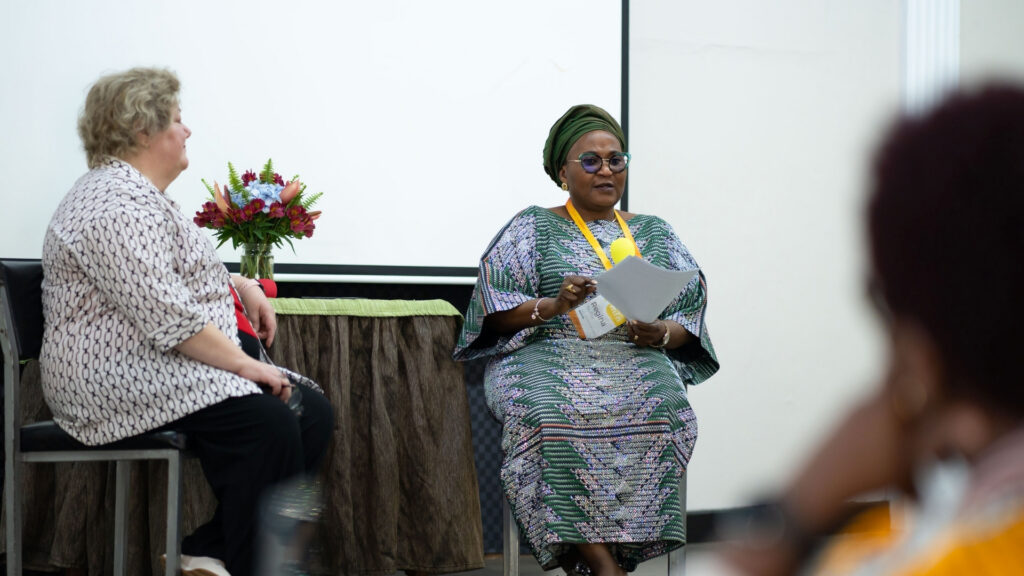
Rev Ann Wang’ombe from Kenya offered a contribution that was both gentle and piercing, reminding us of what Scripture and church history clearly demonstrate: women play a key role in sustaining the work of God through giving, serving, and volunteering.
From the women who supported Jesus and his disciples ‘out of their own means’ in Luke 8, to Lydia opening her home and offering business resources for the early church in Acts 16, to the Shunammite woman who built a room for Elisha in 2 Kings 4, to countless African women who offer care, hospitality, set up prayer networks, and giving circles, often unseen, often unrecognised, often without platforms or titles.
‘If you remove women’s generosity from the church,’ Wangombe said with unmistakable conviction, ‘much of our ministry would simply stop functioning.’
Her stories from Deliverance Church Kahawa Sukari illustrated this beautifully: the late Sarah, a believer who faithfully served in Vacation Bible School since 2005 helping cook hundreds of meals each day, the ‘Goldeners’ (retired ladies) from her church who take fruit baskets to the sick and bereaved, the women’s thanksgiving breakfasts that raise funds for Christmas gifts for needy families and paid hospital bills for a detained mother, women who have fundraised to purchase church furniture and construct essential facilities.
if women, who statistically give more consistently, more sacrificially, and more relationally than men across most contexts, are sidelined in our conversations about generosity, then our theology is unjust and incomplete.
The pattern of women’s generosity, she said, is repeated across denominations, the Anglican Mothers’ Union, the Presbyterian Women’s Guild, the Catholic Women’s Association, and other networks of African women who serve in practical ways by cooking, cleaning, hosting events and who fundraise to support church projects and to support vulnerable children.
What Rev Wangombe and other women leaders like Rev Regina Nuhu from Nigeria shared are not a side conversation. Their insights are central to the creation of any practical theology of generosity because it forces us to ask: Whose giving do we celebrate? Whose contributions do we recognise? Whose leadership in stewardship do we empower and resource? And if women, who statistically give more consistently, more sacrificially, and more relationally than men across most contexts, are sidelined in our conversations about generosity, then our theology is unjust and incomplete.
Accountability and Oversight
Woven throughout the conversations about giving in local churches and to God’s mission work was the theme of accountability, summed up by Rev Daniel Vermeulen from South Africa, who framed it with elegant simplicity: ‘Generosity opens doors for the gospel. But misuse of generosity closes them just as quickly.’
Mrs Pauline Kamau from the Africa Council for Accreditation and Accountability (AfCAA) focused on the damage caused to African churches and ministries by weak governance, founder-centered structures with insufficient oversight, blurred boundaries between personal and ministry funds, and coercive or manipulative fundraising practices that prey on people’s faith and guilt. She and others at the Roundtable shared painful stories of broken trust, of ministries that collapsed because of financial scandals and of communities that were exploited by their leaders in the name of God.
The consensus in the room was clear and unequivocal: accountability is not a Western imposition or a bureaucratic burden but biblical discipleship, practical obedience, and missional necessity. Where trust is broken, generosity dries up. Where integrity is practiced consistently, generosity grows, deepens, and multiplies across networks and generations.
To wrap up the discussions about promoting generosity in African churches Rev Dr Peterson Wang’ombe outlined practical lessons learned over years of pastoral ministry:
- pray because God’s work is spiritual
- teach and preach on generosity regularly
- adopt a positive attitude when you talk about money and finances in the church
- involve church members and communicate generously
- build trust through integrity and transparency
- demonstrate and encourage generosity
- appreciate generous givers of all ages
- empower people, cultivate social capital, and remain contextually relevant.
He also named challenges honestly: giver fatigue from being asked to give too often, dependency syndrome, manipulation, the high cost of paid ministry, lack of integrity, and growing individualism, all of which require intentional leadership responses.
The Roundtable’s Message for the African Church and the Global Church
One of the decisive reversals that occurred during the Africa Roundtable was this: African leaders in the room felt that they were not just learners but teachers, not just a case study but a confident voice offering wisdom.
This shift was named explicitly by Yaw Perbi in his closing plenary on Afrinnovation and Afriparticipation. He presented a challenge to the dominant narrative that still lingers, perhaps unconsciously, in global Christian discourse: the idea that Africa is a mission field, rather than a mission force, that Africa has needs while the Global North has solutions, capital and strategic thinking.
Perbi pointed instead to the extraordinary creativity, resilience, and innovation already flourishing across the continent, grassroots economic models rooted in community and trust, ministries blending faith with entrepreneurship and social transformation, leaders mobilising people, skills, and capital in ways that do not depend on external permission or validation.
‘What is often missing,’ Perbi suggested,‘is not generosity or capacity but theological validation and worldwide recognition of what is already happening in Africa.’
Dr Rosemary Mbogo’s research reinforced this point by demonstrating that theological education has a critical role to play. As she noted, many African universities and theological colleges today lack formal curricula addressing stewardship, and where it exists, it’s often treated administratively rather than theologically.
Yet empirical evidence shows that graduates exposed to stewardship education demonstrate stronger accountability and entrepreneurial initiative in ministry. The gap between lived generosity and formal theological education persists, underscoring the need for curricular reform that reflects Africa’s giving realities.
Generous Generations: Africa’s Gift to the World
One of the most compelling responses to the Roundtable’s emphasis on intergenerational wealth transfer and mission across time came from Cherise Vermeulen from South Africa, who reminded us that if we are serious about leaving an inheritance for our children’s children, we must begin teaching our children to be generous now.
Cherise and her husband Danie (who spoke at the Roundtable about generosity as gospel witness) asked a provocative question: Why do we wait until adulthood to instill the life-changing values of generosity?
At the Roundtable Cherise shared her beautiful and audacious vision: a world of generous generations from diverse backgrounds. A global movement of children, youth, and young adults who model the love of Christ through the transformative impact of biblical generosity.
This conviction led them to found Generous Generations, a movement born in March 2023 in São Paulo, Brazil, when Cherise partnered with the Global Children’s Forum to explore ‘Children’s Generosity’ resources.
mission is not only across geographical locations but also across time, and the most strategic investment we can make is in the generous hearts of the generation rising behind us.
What began with 14 volunteers brainstorming ideas for a week has grown into a worldwide network of volunteers and translators who are creating state-of-the-art, interactive Generosity Discipleship Experiences (GDEs) uniquely crafted for children, youth, young adults, and adults.
The work and resources of Generous Generations showcase one the most valuable insights of the Africa Roundtable: mission is not only across geographical locations but also across time, and the most strategic investment we can make is in the generous hearts of the generation rising behind us.
Where Do We Go from Here?
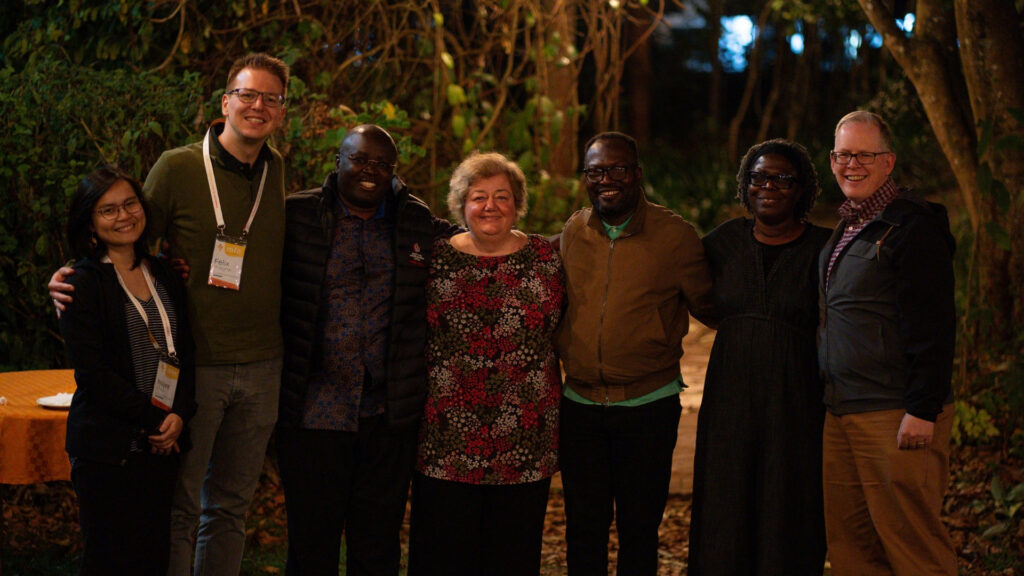
As the Africa Roundtable drew to a close, there was no manifesto or a declaration, neither did we distribute a ten-point action plan. What both speakers and participants wished for is this: to continue these conversations about generosity and fundraising and to live out the learnings and insights shared.
The MFN team will publish the papers presented at the Africa Roundtable in the coming months, and short videos of key presenters will be uploaded shortly on MFN’s YouTube channel so that the stories and the learnings can travel beyond Kenya, reaching ministry leaders, theological educators, denominational leaders, and mission practitioners across Africa and around the world.
In addition to this, we are launching an MFN Africa learning hub as a space for ongoing theological reflection, learning and creating authentic resources and training on biblical generosity, stewardship, and sustainable mission funding.
If you are interested in joining this learning community, engaging with the resources as they become available, or participating in future MFN conversations, we warmly invite you to reach out and connect with us at: hello@mfn.global
We believe that the question before the Global Church is no longer simply: ‘How will we fund God’s mission?’
The deeper, more searching, more faithful questions are:
- Who are we becoming as God’s stewards, today and for future generations?
- What are we leaving in the hands of those who will follow us?
- How might the extraordinary generosity already flowing through the African church teach us about the character of God and the nature of His mission in the world?
From ‘What do you have in your house?’ to ‘What will you leave behind?’— this is the journey African Christian leaders are inviting the global church to walk with them. Not as learners catching up, but as teachers leading the way in faithful, sacrificial, joyful generosity that flows from hearts captured by God’s grace and communities participating in his mission.