

























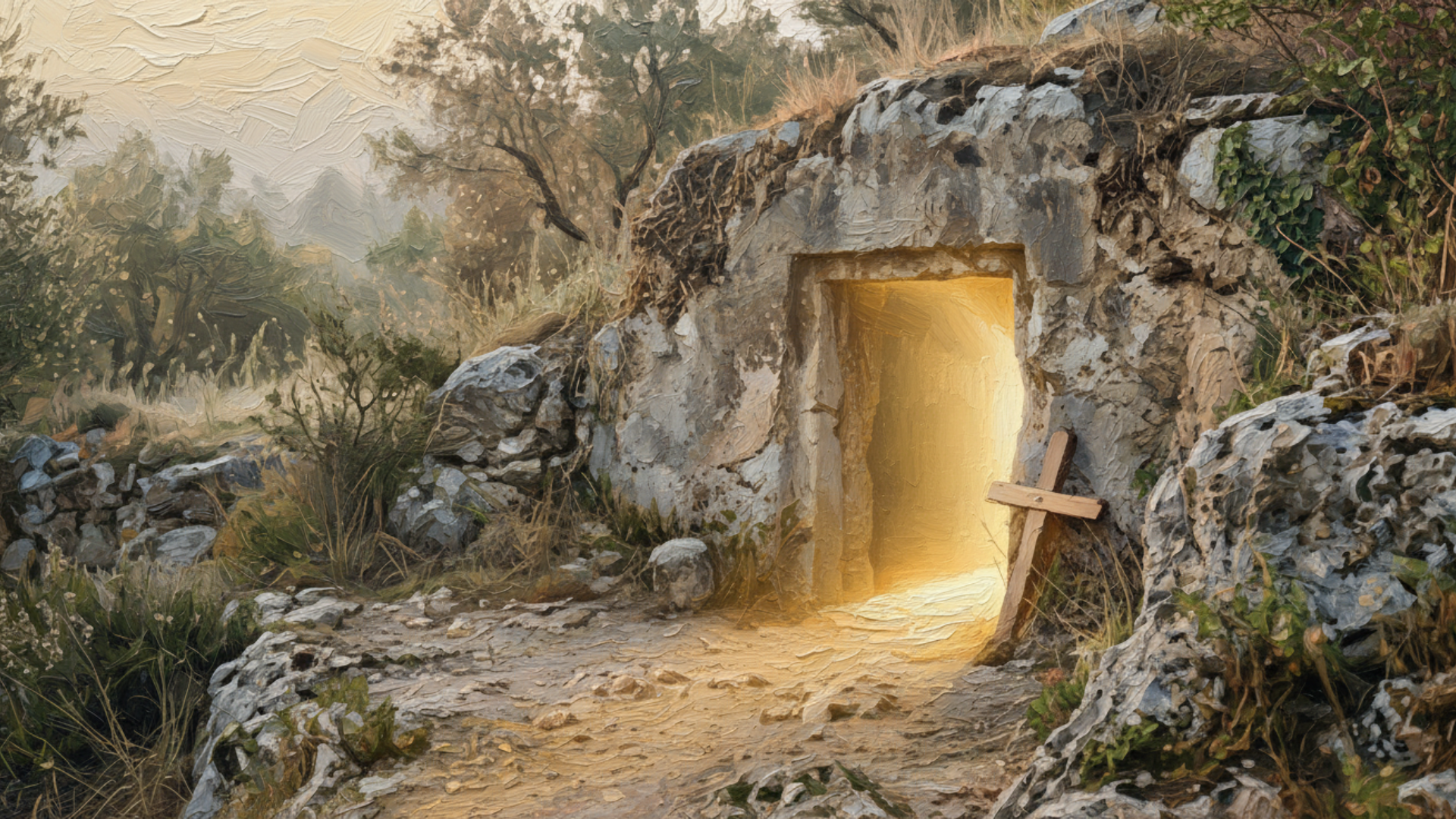

As we reflect on the hope of Easter, this message from Michael Oh invites us to consider the gift we have received—and the good news we are called to share.
In Revelation 2:17, Jesus gives a remarkable promise:
To the one who is victorious… I will give that person a white stone with a new name written on it.
At first, it is a mysterious image. But at Easter, it becomes a deeply meaningful one. The white stone helps us see the good news of Jesus more clearly. In him, we are given a new verdict, a new welcome, and a new name.
Imagine standing in a courtroom. The room is silent. The weight of truth fills the air. You know the reality of your life, and so does the Judge. Every regret. Every compromise. Every sin. Every moment you wish you could undo.
There is nothing left to say.
Then the verdict comes, and someone places a stone in your hand.
It is white.
In the ancient world, stones could be used to signify judgment. A black stone meant guilty. A white stone meant innocent. Acquitted. That is the picture Jesus gives us. He takes the guilt that was ours and gives us the verdict we could never secure for ourselves.
This is the heart of Easter.
Jesus stood where we should have stood and received what we should have received. He took our sin upon himself in death at the cross. He bore judgment in our place. And in his resurrection, God declares that his sacrifice was sufficient. Sin has been paid for. Death has been defeated. The verdict stands.
Not guilty.
This is not something we achieve through effort, religion, or self-improvement. It is grace. Jesus takes our black stone and places a white one in our hands.
But the white stone means more than acquittal. It also speaks of welcome.
Picture another scene. Not a courtroom, but a great celebration. A feast full of joy, life, and laughter. Yet there is someone at the entrance. You do not simply walk in. You need something that marks you as one who belongs.
Then you remember what is in your hand. The same white stone. You show it, and the way is opened.
In the ancient world, white stones could also be associated with honor, victory, and admission to a banquet. That makes the Easter picture even richer. Jesus is the Victor. He has triumphed over sin, death, and the grave. And he does not keep that victory to himself. He shares it with us.
His victory counts for us.
That means Easter is not only the announcement that we are forgiven. It is also the announcement that we are invited. Through Christ, we are not only pardoned and sent away. We are welcomed and brought near. We are invited into the joy of God. We are invited into personal relationship with Jesus.
The white stone is both a verdict and an invitation. Not guilty. Welcome to the feast.
And then Revelation gives us one more detail: on the stone is written a new name.
This may be the most personal part of the promise. Many people live under names they never chose. Names shaped by failure, shame, rejection, fear, or the expectations of others. Sometimes those names are spoken over us by the world. Sometimes we repeat them to ourselves until they feel permanent.
But Jesus gives a different name.
Not a name defined by your past. Not a label formed by your worst moment. Not an identity built around what others have done to you or what you have done wrong. A new name, given by the one who knows you completely and loves you fully.
A name that says: you are known, you are loved, you are mine.
That is part of the hope of Easter, too. In Christ, your deepest identity is no longer determined by guilt or shame. It is determined by his grace.
So Easter asks each of us a question: What are you holding?
Many of us still live as though we are carrying the wrong stone. We hold onto guilt Christ has already paid for. We cling to shame he has already borne. We live with the quiet fear that we are not enough and never will be.
But Jesus offers something different.
A white stone.
A new verdict.
A new identity.
A new future.
The gospel is wonderfully simple. You do not have to clean yourself up first. You do not have to earn your way in. Because of the cross, your sin is paid for. Because of the resurrection, the door is open.
All that remains is to receive it by grace.
And if you already belong to Jesus, Easter is also a call to remember. Remember what you are holding. Remember what Christ has done. Remember who you are in him.
Then remember the world around you.
There are still so many people standing in that courtroom, unsure of what verdict will fall. There are still so many standing outside the door, wondering whether there could ever be a place for them.
And we have the privilege of telling them the good news:
There is a stone for you.
There is a place for you.
There is a Savior for you.
Christ is risen.