



























Editor's Note
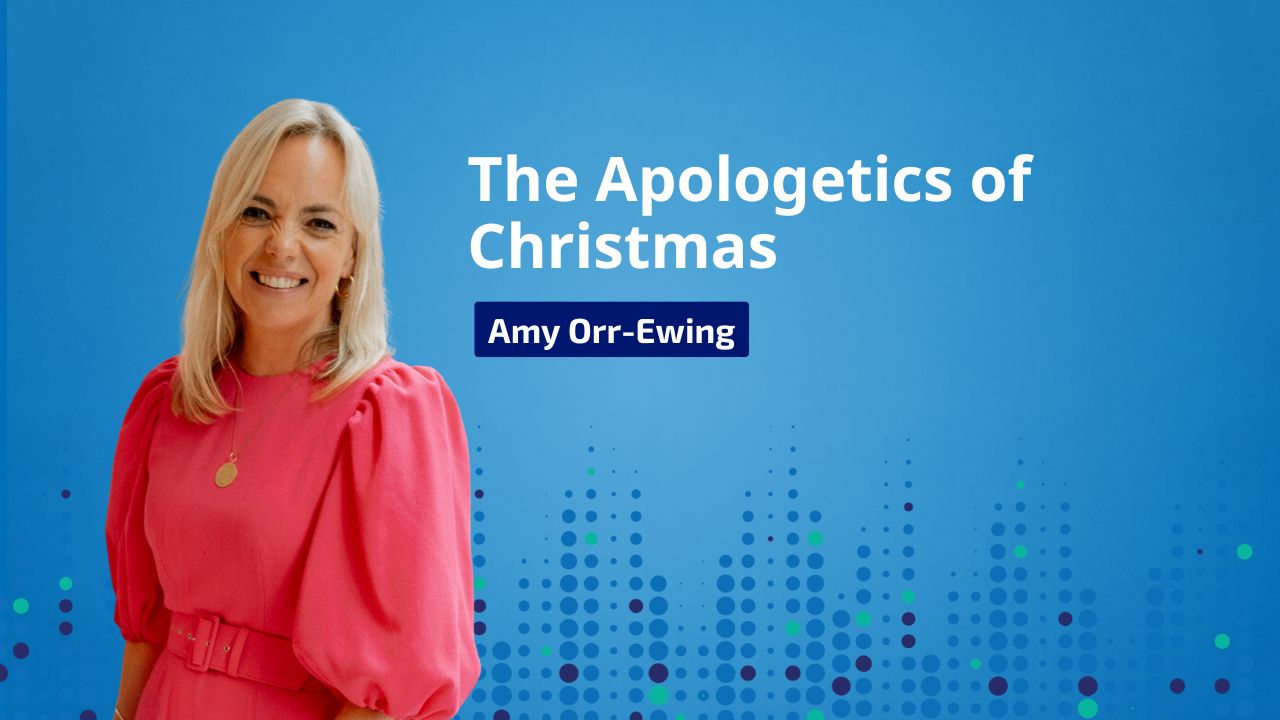
These reflections are drawn from my interview with apologist Dr Amy Orr-Ewing on the Lausanne Movement Podcast. In this Christmas conversation, Amy examines the credibility of the Christmas story and its cultural and historical roots. She invites believers to reclaim and proclaim Christmas as a season of wonder, joy, and gospel witness.
As I spoke with Amy, I was reminded how Christmas time can stretch those of us in ministry. It is a season rich with meaning and yet demanding, as we seek to proclaim the incarnation with freshness and faithfulness year after year.
My hope is that these insights from Amy will rekindle that sense of wonder in you and encourage you to share the miracle of Christmas with your family, your friends, and your community with renewed conviction and joy. If you would like to delve deeper, Amy reflects further on the season's themes in her Advent devotional, ‘Mary's Voice: Advent Reflections to Contemplate the Coming of Christ’.
Some people argue that Christmas has pagan origins. How do you respond to those claims as a theologian and apologist?
Amy Orr-Ewing: The earliest Christians didn’t actually celebrate Jesus’ birth. Their focus was on his death and resurrection. The New Testament doesn’t provide a specific date for his birth, and early church writers in the second and third centuries offered estimates that ranged from March to November.
By the fourth century, the Western church had chosen December 25 as the date to commemorate Christ’s birth. That happened to coincide with existing Roman festivals, which meant Christians could take time off work and participate in the cultural calendar of the society in which they lived.
Those festivals—the Sol Invictus (‘Unconquered Sun’) and Saturnalia—were both about light, renewal, and the turning of the winter solstice. Because of that overlap, some people claim that Christmas was ‘taken from’ paganism.
But that’s not how the early Christians saw it. Rather than a compromise, it was a reframing. They celebrated the birth of Jesus—the true Light of the World—at the very moment pagans were marking the return of the sun. It was a theological statement: that Jesus Christ is the Son of Righteousness who overcomes darkness.
Christmas became the time in the church calendar when we celebrate the incarnation—God entering history as Jesus. The earliest recorded Christmas sermons, from Augustine, John Chrysostom, and Leo the Great, focus entirely on the mystery of the Word made flesh.
In our own cultural moment, we can do something similar. We still have this season, in much of the world, when ‘Christmas’ lingers in the air even among the secular. Like the early Christians, we can use that as an opportunity to proclaim the incarnation and the message of Emmanuel—God with us.
We don’t need to fear the solstice or Santa or the trappings of the season. The gospel has always been preached in contexts full of rival worldviews. The question is not whether those exist—it’s what we do with them. The early church saw them as opportunities to preach the true gospel, and so should we.
How should Christian parents approach Santa Claus and the commercialization of Christmas?
Amy Orr-Ewing: I’ll be honest—I didn’t always get this right! We didn’t do the Santa thing with our children. My twins are twenty now, and my youngest is seventeen, so we’re long past that stage. But when they were little, I explained to them that ‘Santa’ was actually a historical person—St Nicholas, a follower of Jesus.
We got out the map and looked at Turkey—where Constantinople used to be—and I told them that it was once a great centre of the early church. St Nicholas loved Jesus so much that he gave gifts to children, often poor ones, to celebrate Christ’s birth.
I tried to frame the story through the lens of Christ. But I made a mistake. The next day, one of my sons went to school and told all the four-year-olds in his class, ‘Father Christmas is dead!’ Children were crying in the corridors, and I was summoned to the school to be told off. We laugh about it now!
If I were doing it again, I’d say something like this:
‘Some people celebrate Christmas through the idea of Santa, and that’s fine. He was a Christian who lived a long time ago, and for many families, it’s a fun game. We can enjoy the game, but we don’t want to ruin it for others.’
That’s the part I missed.
The reason I didn’t ‘do’ Santa was that I wanted my children to be able to trust me when I told them something. I didn’t want them to discover later that the person I said existed wasn’t real and then transfer that doubt to their faith.
We still enjoyed the traditions. We did stockings and gifts, but the children knew those were from us. It was playful, joyful, and centered on Jesus.
Christians can also be overly negative about the commercialization of Christmas. Yes, it’s commercialized—but the celebration itself is good. Jesus participated in feasting and rejoicing. Christmas belongs to the church. If we are dreary and frugal at the very season celebrating God’s incarnation, we send the wrong message.
Christmas belongs to the church. If we are dreary and frugal at the very season celebrating God’s incarnation, we send the wrong message.
In our home, we go all out: family, friends, hospitality, and generosity with food and gifts. If the world does celebration better than we do on the day we celebrate the birth of Christ, that’s sad.
And one more thing: when people show up at church only once a year—at Christmas—don’t scold them. Don’t say, ‘You only come once a year.’ Instead, build a bridge. Christmas is that bridge.

For those who struggle to believe in the ‘crazy’ miraculous aspects of the Christmas story—the virgin birth, angels, and signs—how would you help them see the credibility and beauty of these events?
Amy Orr-Ewing: I wouldn’t call it ‘crazy’. Everything in the story has a good evidence base. Yes, it’s wondrous—but that doesn’t mean it’s unbelievable.
Take the virgin conception. When Mary is told she will bear the Son of God, she pushes back. She asks, ‘How can this be, since I am a virgin?’ Mary understood biology! She knew where babies come from.
The text includes her critical question to show that this was not naïveté. The writer acknowledges that what’s being described is a miracle—a divine intervention by the Creator into his creation.
It’s also crucial that Mary is asked and that she gives her consent. She says, ‘May it be to me according to your word.’ In the ancient world, that’s astonishing. A young woman is given agency. She’s not a passive recipient; she’s a willing participant.
Scripture expects us to engage both heart and mind. It presents evidence, invites investigation, and yet leaves room for wonder.
And there’s another apologetic dimension: if someone says, ‘I don’t believe this,’ they’re dismissing a woman’s own testimony of her experience. The Bible records and honours that testimony. That’s remarkable.
Even Joseph initially assumes a natural explanation for her pregnancy. Only after an angel appears to him in a dream does he believe. So the Bible itself anticipates skepticism—it allows for it.
Then think of the shepherds. They were ordinary working men on the night shift. The angels appear and tell them, ‘This will be a sign to you: you will find a baby wrapped in cloths and lying in a manger.’ That detail—a baby in a feeding trough—was an odd and specific sign. It’s written into the story as evidence for them.
These details show that Scripture expects us to engage both heart and mind. It presents evidence, invites investigation, and yet leaves room for wonder.
What advice do you have for pastors or preachers who are preparing to preach and teach during this season?
Amy Orr-Ewing: What I’ve been trying to draw out is that Christmas holds this wonderful combination of evidence and wonder—a preacher’s dream!
The New Testament uses the Greek word sēmeion—‘sign’—to describe something tangible that points beyond itself to deeper truth. The incarnation is full of such signs. They’re not abstract; they’re rooted in reality, yet they point us to divine mystery.
So at Christmas, whether we’re highlighting prophecies fulfilled hundreds of years before or drawing attention to the way ordinary people—Mary, the shepherds, the Magi —responded to what they saw, we’re engaging both evidence and faith.
The Magi were philosophers and astronomers, deep thinkers who studied signs in the heavens. They followed those signs to the child Jesus and became convinced of his divine identity. Their story shows us how God meets thoughtful people where they are and leads them to truth.
Preachers can use Christmas to explore how human beings come to know and believe what we do. How do we discern truth? How do we recognize God’s revelation? The Christmas story provides a framework for addressing those questions.
The Christmas story should never feel small or sentimental. It should be shocking, confronting, and beautiful. It should evoke reverence and amazement.
And then there’s wonder. If we as preachers can’t communicate the awe of the incarnation—God becoming man—we’ve lost something vital. The problem isn’t the text or the world; it’s our own familiarity.
The Christmas story should never feel small or sentimental. It should be shocking, confronting, and beautiful. It should evoke reverence and amazement.
For pastors who feel weary at Christmas—and it’s understandable because there are so many services, events, and logistics—this might be the moment to bring in a gifted evangelist. Some of my friends who lead churches invite me to preach at their carol services so they can focus on preparing their congregation and welcoming guests. That’s a wise and strategic approach.
You’ve mentioned that Christmas can be one of the most fruitful times for outreach. Why do you think this season opens such unique doors for evangelism?
Amy Orr-Ewing: In over thirty years of ministry, I’ve found that the first two and a half weeks of December are the most evangelistically fruitful of the entire year. People are open. They’re reflective. They want to celebrate, and they’re far more likely to accept an invitation.
There’s also a spiritual tenderness at Christmas. The season stirs up memories of loved ones who have died, of childhood—happy or painful—of family and belonging. Even in a highly commercialized world, Christmas touches the deepest parts of the soul.
So while everyone complains that it’s ‘too commercial’, beneath that surface, there’s genuine openness. For many people, Christmas can be a painful experience. Grief, loneliness, and nostalgia surface—and in those moments, hearts are open to hope.
Every year, I’m invited to speak at events in London—banks, universities, churches—and every year, people respond. Some pray a prayer of commitment to Christ for the first time; others sign up for Alpha or a follow-up course. It’s an extraordinary time of harvest.
I would encourage everyone to think of ways to create opportunities in their own context. Consider hosting a small gathering at home, inviting neighbors or colleagues, and sharing a five-minute reflection on the meaning of Christmas. You could also invite them to join you at church.
If every Christian did something like that—in their workplace, neighborhood, or community—thousands would hear the gospel. It’s such a time of opportunity.
And for those in business or leadership, think creatively. Maybe you can host a workplace carol event. Have a few carols, some refreshments, and invite a preacher. Keep the message short—five to ten minutes—but make it clear and Christ-centered.
That’s what I do when I’m invited into these environments: I prepare something that’s deeply rooted in the Christmas story but accessible, beautiful, and focused on the incarnation.

Encouragement for weary and overwhelmed church leaders and Christians during the Christmas season
Amy Orr-Ewing: For those of us who have been in ministry for many years, it’s easy for Christmas to start feeling like just another thing to organize or get through. I want to encourage you to keep going and stay faithful.
My prayer is that this Christmas, our ministry, our outreach, our preaching, and even our family celebrations would all overflow from intimacy with Jesus.
Christmas is not just a season to work through; it’s a season to worship through.
Christmas is not just a season to work through; it’s a season to worship through.