


























God is the God of Abraham, the God of Isaac, and the God of Jacob (Matthew 22:32).
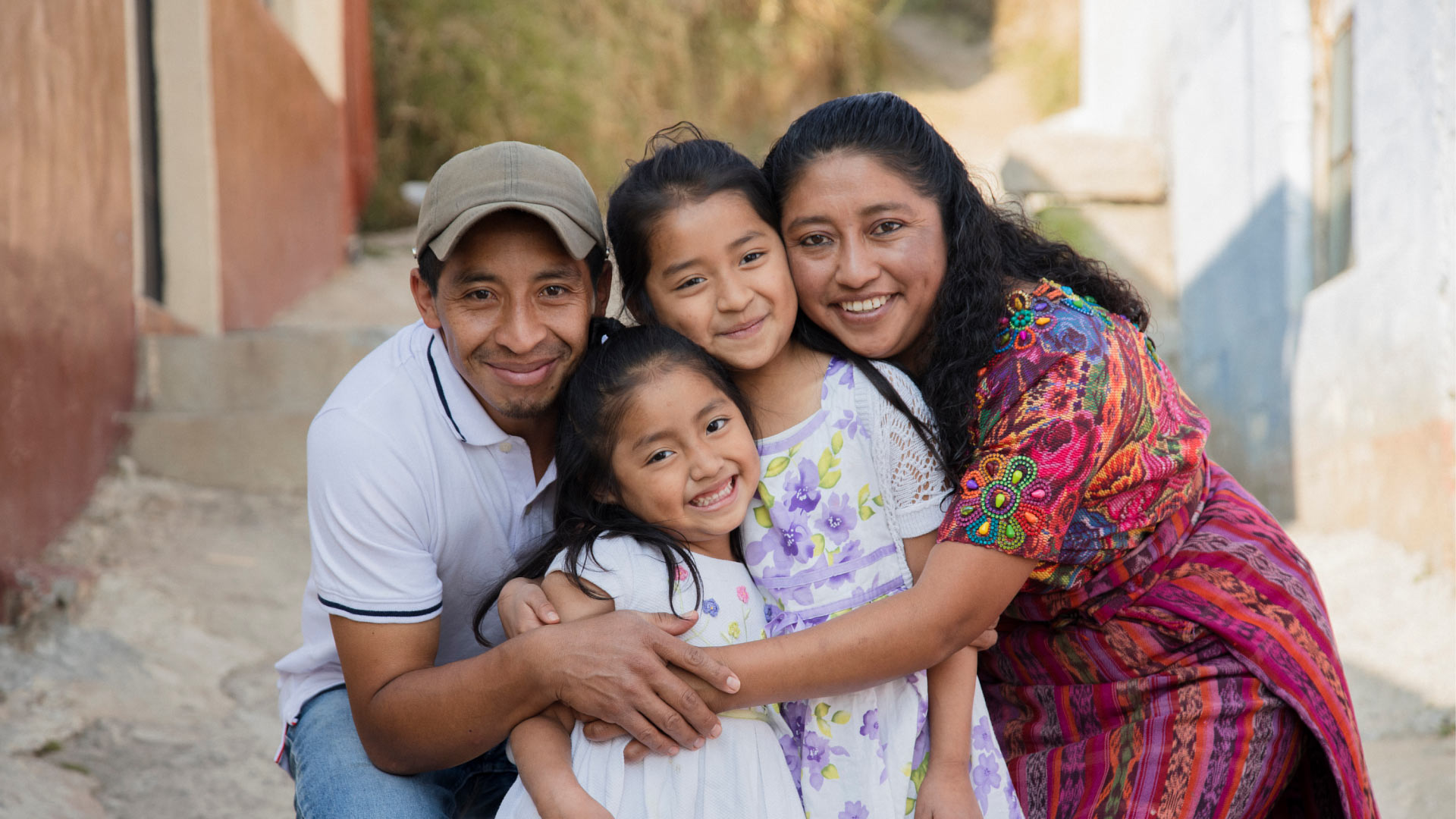
God is a God who spans generations and is interested in each of them. From the beginning to the end, he made a promise with Israel and with the whole world through Jesus Christ. Therefore, there is no generation less or more loved by God. It is his covena-
ntal faithfulness expressed over time and the generations are invited to pass on the faith to the next generation (Psalm 145:4).
And as generations pass, the Word of God says, ‘A generation goes, a generation comes, but the earth remains forever (Eccles 1:4).’ God will still be there.
“God is a God who spans generations and is interested in each of them…”
The Bible is written for generations to come, and each generation is invited to follow Jesus Christ and put into practice what they have received from him—into their cultural contexts.
When the Bible talks about generations, it often represents a 30- to 40-year period, representing the cycle from parent to child, with a strong emphasis on passing down faith as is written in (Deuteronomy 6:6-7), ‘These commandments that your children. Talk about them when you sit at home and when you walk along the road, when you lie down and when you get up.’

Generational Theory
Generational theory is the idea that people born around the same time tend to share similar attitudes, values, and behavior because they grow up shaped by the same social, political, economic, and technological events. It is a social construct or framework which can help understand and explain generations and their differences as well as similarities. It can be perceived as history leaving a stamp on age groups thus influencing their worldview later in life.
In the European context the Berlin Wall is one of these shaping events, but also more recently Covid and the Russia-Ukraine war. The implications of these are often not seen immediately but in the long run will shape the way people view work and authority, communication styles, family life, politics and social values and religion.
Within this theory, a generation spans between 15 and 25 years. According to Generational theory, for the first time we have six different generations in the workplace together, causing both joy and challenges. The most common Generational theory in the Western world comes from William Strauss and Neil Howe.1 They describe recurring generations as Boosters, Baby Boomers, Generation X, Millenials /Gen Y, Generation Z and the youngest one as Generation Alpha.
“…for the first time ever we have six different generations in the workplace together…”
Strauss and Howe propose a cyclical theory, meaning that history moves in repeating turnings or cycles (High, Awakening, Unraveling, Crisis), and each generation plays a different role in these cycles. For example, the way we have addressed the
Covid crisis will play out differently in the generations.
Limitations of Generational Theory
Though this generational theory has limitations as not everyone will agree to being put into categories and stereotyping can be falsely claimed, it does help to understand workplace dynamics, to explain value clashes, educational purposes, marketing
structures and reflect on social change over time. However, if it is used uncritically, generational labels can unintentionally divide people rather than helping them to understand one another better.
The purpose should always be to foster empathy and better communication rather than to reinforce differences. Therefore, leaders in general need to ask themselves if such categories are used as a tool for understanding or as a rigid classification.
Additionally, we must know Generational theory itself is largely shaped by Western historical developments—other parts of the world will have their own decisive events shaping their generations. When applying generational frameworks, we need to be careful and consider that global contexts may shape generations in different ways.
Another issue that we need to be aware of is that in many churches and mission organisations, leadership positions are still mostly occupied by older generations, while younger leaders sometimes struggle to find spaces to contribute their perspectives and ideas. Younger generations also tend to challenge established structures or traditions more quickly. We must therefore consider how leadership can be shared across generations in such a way that it honors both experience and innovation.

Implications for the Great Commission
The Great Commission calls the church to make disciples of all nations, teaching them to follow Jesus Christ. Implicit in this calling is the responsibility to pass on the faith from one generation to the next. Throughout Scripture, we see that God’s work unfolds across generations and that each generation plays a vital role in continuing the story of God’s faithfulness.
Mission movements that intentionally invest in the next generation contribute to a lasting legacy. When younger believers are discipled, empowered, and invited into leadership, the mission of God continues beyond the lifespan of any single generation. Therefore, intergenerational mentorship remains essential for mission today.
Scripture itself gives examples of mentorship between generations. Paul and Timothy, for example, illustrate how an older leader intentionally invests in a younger one, preparing him to carry on the work of ministry. Other biblical examples are Elijah and Elisha as well as Naomi and Ruth.
Moreover, understanding generational dynamics can help the church communicate the gospel in ways that connect with the cultural realities of different age groups. The message of the gospel remains unchanged, but the ways in which people hear, understand, and respond to that message are often influenced by their generational context. In this way, generational awareness can strengthen the church’s participation in the Great Commission in such a way that we communicate it effectively within the realities of each generation and in working together across generations to proclaim the good news of Jesus Christ.
Conclusion
The Bible shows that God works through generations and calls each generation to pass on the faith to the next. While generational theory helps us understand cultural differences between age groups, the mission of the church remains unchanged. The challenge for the church today is to build communities where generations learn from one another and work together in God’s mission. In doing so, the church continues the biblical pattern of proclaiming God’s works so that the next generation may know him.
Endnotes
- William Strauss and Neil Howe, Generations: The History of America’s Future, 1584 to 2069. (New York, NY: William Morrow Paperbacks, 1992).