

























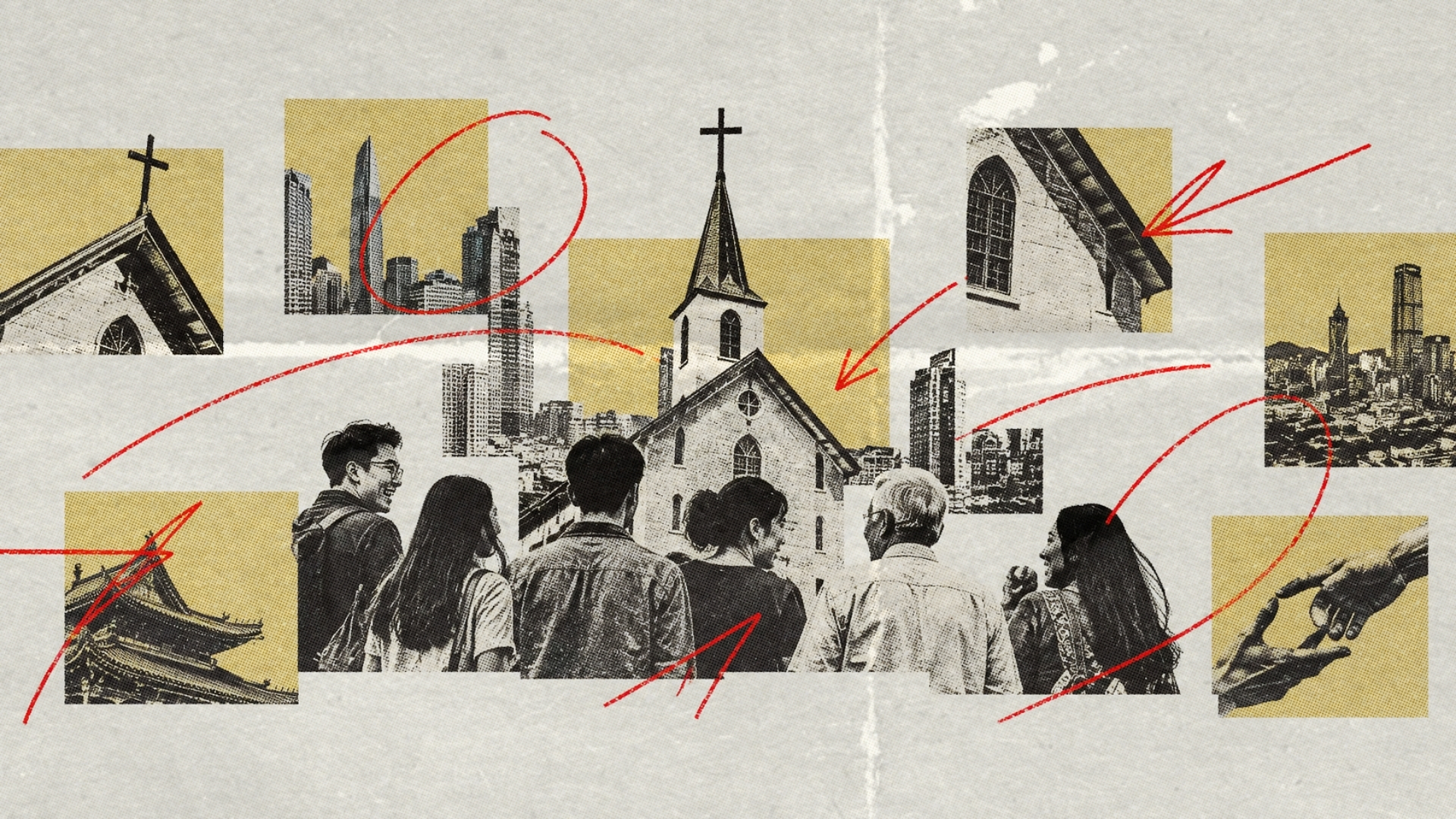

At the Fourth Lausanne Congress on World Evangelization, held in South Korea in 2024, ‘collaboration’” was highlighted as a central theme. Participants representing the global church reaffirmed a shared commitment to work together across diverse areas of Great Commission engagement.
Although Christian mission in Asia predates the Lausanne Movement, which began fifty years ago, the Movement has continued to exert a significant influence on Asian churches. It has nurtured a vibrant sending vision, provided theological grounding, and offered a global framework for cooperation in gospel ministry.
Today, Asia is increasingly participating in the global sending movement.
In regions of Asia once regarded primarily as mission fields, the gospel has expanded significantly. Today, Asia is increasingly participating in the global sending movement, including to the West and to unreached peoples. China’s declaration to send a large number of missionaries by 2030 can be understood as part of this broader movement.
A major turning point for the churches in Asia came after World War II, with the independence of former colonies and the arrival of Protestant missionaries from Europe and North America. In countries where evangelism began soon after the war, more than eighty years have passed. As a result, the first generation of believers has grown elderly or has already passed away, and churches have become multi-generational. In many of these countries—including Japan—gospel witness has stagnated.
By contrast, in countries where the spread of the gospel was delayed due to persecution or civil war—such as China and Mongolia—significant gospel advances occurred later and continue today. In these contexts, the average age of Christians is lower, and the generational gap within churches is relatively small.
While the situation of intergenerational collaboration in Asia is too diverse to be summarized under a single category called “Asia,” there are nevertheless some common patterns. Furthermore, even in countries that currently have a younger Christian population, intergenerational collaboration will inevitably become a challenge in the future. In this article, I will focus on Japan, where multi-generational ageing is already advanced and where intergenerational collaboration has become an urgent issue.
Statistically, Christians in Japan account for 0.7–1% of the population1, while the number of active Christians is often said to be 0.2–0.5%, making Japan the second-largest unreached people group in the world2. The situation of Japanese churches is critical: the average worship attendance per church is under 403, and the average number of baptisms per year is less than one4. Consequently, ageing is accelerating. The average age of pastors is estimated to be between 65 and 705. Japanese churches are characterized by a large number of older members and very few younger ones. Sadly, churches without successors for pastors, churches without children, and churches without pastors are increasing6.
However, this situation cannot simply be described as a failure of evangelistic effort on the part of the Japanese church. Japanese society as a whole is ageing, and similar trends can be observed in other religions. Many Shinto shrines, Buddhist temples, and new religious movements are disappearing due to declining membership.
intergenerational collaboration has become an urgent theme.
Over the past twenty years, the phrase most often heard in Japanese churches has been “faith transmission.” Why do young people leave the church? How can the faith of the next generation be nurtured? Are there problems with the imposition of faith by older generations or with church styles? These questions have been repeatedly discussed. In recent years, however, as the number of children to whom faith can be transmitted has declined, urgent attention has shifted toward responding to pastor-less churches and reaching the next generation.
In this context, intergenerational collaboration has become an urgent theme for the Japanese church and, I argue, should represent a paradigm shift in mission. I would like to offer three reasons.

1. From Transmission to Collaboration
First, emphasizing collaboration rather than transmission opens new possibilities. In Asian cultures, the concept of generations is strongly hierarchical—from top to bottom. Older generations pass down not only responsibilities but also methods to younger generations. This ‘accumulative’ model of transmission has strengths, but it often ignores generational differences and societal change, placing heavy burdens on younger people and easily becoming outdated.
In Japan, the social and economic conditions of the postwar high-growth era differ vastly from those of today. Methods that once worked no longer do. Whereas younger generations once endured being “told what to do,” today there is strong resistance to one-sided imposition. Intergenerational collaboration offers a breakthrough beyond the limitations of generational transmission. Rather than remaining divided by age, generations work together for the sake of the Great Commission engagement. Through collaboration, younger generations can learn from the wisdom and experience of older believers, while older generations can draw out the potential of the next generation. In a context like Japan, where young believers are few and often feel isolated, relationships with older believers can become a source of liberation from loneliness. If nothing changes over the next ten years, and Christians simply age another decade, many churches in Japan will close or become pastor-less. Beyond anxiety about the next generation, now is the time to emphasize collaboration between older and younger generations. Fifteen years ago, while studying at a seminary in the United States, I interned at a Japanese American church with nearly a hundred years of history. The English congregation numbered several hundred, but the Japanese congregation had about thirty members, with an average age of over sixty; the youngest member was thirty. The church called a fifty-year-old pastor (a former missionary). Many around the church were pessimistic about its future.
However, the new pastor began inviting Japanese international students to his home weekly, creating a place of belonging through shared meals and evangelism. Older members supported this ministry by bringing Japanese food each week and by inviting students into their own homes. As a result, young people came to faith, and the Japanese congregation grew to over one hundred attendees. Not only were young people saved, but older friends who saw the vitality of elderly believers also came to faith. Young and old began to express love to one another through visits and shared meals.
This experience became, for me, a model of what intergenerational collaboration in Japan and Asia could look like. Collaboration, not mere transmission, creates possibility. Scripture also presents many examples of generations working together. Moses and Joshua labored together; while Moses prayed, Joshua fought the Amalekites (Exod 17:8–13). Paul worked with Timothy, devoting himself to the Word while Timothy supported the ministry (Acts 18:5), and later sent Timothy to Macedonia (Acts 19:22). Intergenerational transmission normally does not occur without intergenerational collaboration first, and Scripture encourages multiple generations to work together.

2. ‘Togetherness’ as an Asian Strength
Second, the concept of ‘togetherness’ is an inherent strength of Asian culture. Asia is often contrasted with the ‘individualism’ of the West as being more ‘collectivism’. Multi-generational households, limited geographical mobility, and stable local communities contribute to this. Community activities—such as neighborhood cleanups or local sports festivals—remain common.
While contexts differ, ‘togetherness’ remains a defining Asian value that should be preserved and utilized.
This cultural emphasis on ‘togetherness’ can become a powerful asset for collaboration in the church. Asian churches often idealize Western models, but greater emphasis should be placed on Asian distinctiveness. Kosuke Koyama, in Water Buffalo Theology7, highlights the communal life of rural Thailand—living, working, and bearing burdens together. While contexts differ, ‘togetherness’ remains a defining Asian value that should be preserved and utilized. At the same time, rapid ageing in Japan has led to increased isolation, including solitary deaths, and weakened community ties. Similar trends are likely occurring elsewhere in Asia. Churches can walk ‘together’ with the elderly through visitation and ministry.
Another major issue in Japan is hikikomori—individuals, typically under fifty, who withdraw from society, do not work, and often live isolated lives dependent on games or online worlds. Their number has surpassed 1.4 million, representing about 2% of the working-age population8. Similar issues are emerging in South Korea and Taiwan. Churches must walk ‘together’ with these isolated younger generations, creating places of belonging and encouragement. Intergenerational collaboration enables the church to reach both the elderly and the young, integrating mission with social engagement.
3. Humility and the Stewardship of Generational Gifts
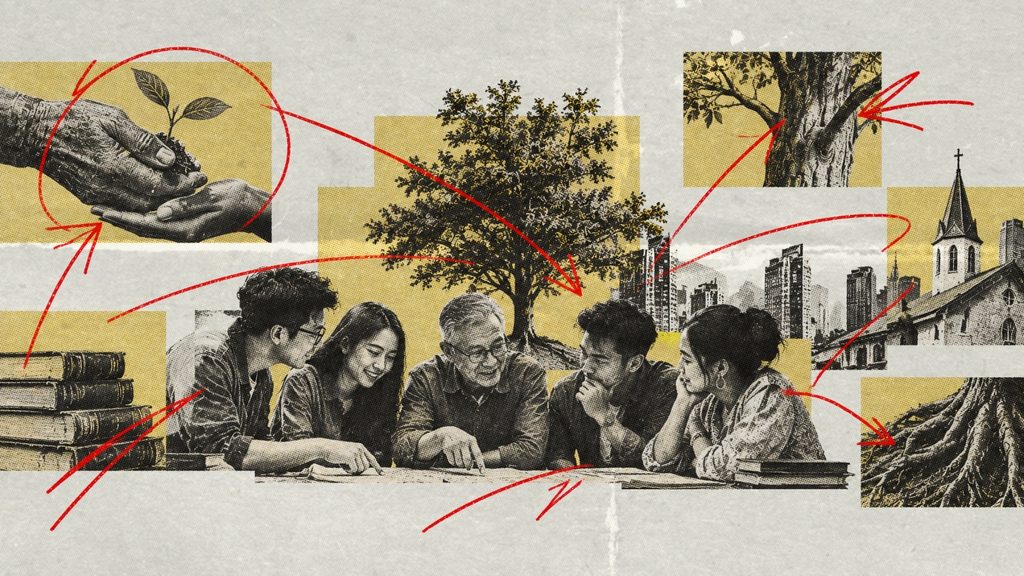
Finally, intergenerational collaboration requires humility and the intentional use of generational strengths. Differences in values, lifestyles, and skills certainly exist. Yet through collaboration, each generation’s gifts can be maximized.
When generational wisdom and strengths are combined without division, tremendous potential is unlocked.
Recently, during a youth BBQ event at my church, I forgot to prepare a questionnaire. I planned to create one by hand, but a youth quickly created a digital survey on his smartphone, generated a QR code, and collected responses instantly. All participants completed the survey, and the data—event feedback and contact information—was immediately sent to me. This experience highlighted the creativity of digital-native Generation Z. When generational wisdom and strengths are combined without division, tremendous potential is unlocked.
However, intergenerational collaboration presupposes mutual recognition and respect. Asian cultures value humility and respect for others. While this can sometimes suppress self-expression, respect becomes the foundation for mutual understanding. A weakness, however, is the historical expectation that younger generations simply obey older ones. In such a framework, genuine collaboration becomes difficult. How can older generations show respect toward younger ones and work together with them?
First, each generation must seek to understand the strengths of the other and acknowledge one another’s value. Older generations can contribute to ministry through spiritual maturity, theological depth, and long-term faithfulness. Younger generations, on the other hand, can bring creativity, initiative, new technologies, and approaches that can effectively reach today’s younger generation.
Intergenerational collaboration begins when older leaders intentionally give opportunities to younger leaders, walk alongside them, and seek to understand them. Rather than simply demanding obedience from above or leaving younger leaders entirely on their own, older and younger generations should think together, pray together, and serve side by side in ministry. Through this kind of shared journey, younger generations are encouraged and empowered, while also developing a willingness to learn actively from the experience of older generations.
Peter exhorts elders to shepherd God’s flock willingly, not by domination but by example (1 Pet 5:2–3). Younger believers, in turn, are called to respect and honor their elders (1 Pet 5:5). Christ himself came to serve, humbling himself to the utmost degree (Phil 2:7–9). Humility is a defining characteristic of Christ and should richly shape the church. Regardless of national or cultural contexts, intergenerational collaboration is a biblical principle. As we, the global churches, collaborate for the sake of the gospel, we can manifest the richness of God’s kingdom on earth.
During the Fourth Lausanne Congress, the Lausanne Movement launched ‘INTERACT’, an initiative for intergenerational collaboration within the Lausanne Issue Networks, across nations and continents, and throughout global mission efforts. Members from different continents, generations, and genders have come together and begun working collaboratively. As one of its members, I believe this global movement can make a significant contribution in this area as well.
This is because Lausanne has already demonstrated the possibility of unity and cooperation in global mission by overcoming at least two major ‘Inters’: ‘international’ and ‘interdenominational’. I believe that the Lausanne spirit is equally effective for this third ‘Inter’ — ‘intergenerational’ — and may become a key to major advances in global mission in the future.
Endnotes
- According to the 2023 Religious Yearbook published by the Agency for Cultural Affairs, Government of Japan, Christians account for 0.7% of the population. This figure includes Protestants, Roman Catholics, and some heterodox groups. On the other hand, since some churches are not registered as religious corporations, this article refers to the Christian population as 0.7–1%.
- When comparing the current total population of each country (based on U.S. Census Bureau data) with the Christian population (based on Operation World research), Japan ranks as the country with the second-largest non-Christian population in the world, following Bangladesh.
- Databook 2023: For the Expansion and Deepening of the Kingdom of God, International Mission Research Center, Tokyo Christian University & Japan Mission Research, 2023.
- According to the above-mentioned Databook 2023, the 2021 statistics indicate an average of 0.8 baptisms per church per year.
- According to Kiristo Shimbun statistics from 2015, the average age of clergy at that time was 67.8 years. In the most recent Databook 2023, statistics from several denominations indicate an average age of 62.2 years. However, when including independent churches and other groups not covered by these statistics, the average age of pastors is estimated to be between 65 and 70 years.
- According to statistics from Pastor-less Ministries (Japan), there are already 300 pastor-less churches in Japan. When churches under shared or part-time pastoral leadership are included, the total reaches approximately 1,000 churches.
- Kosuke Koyama, “Water Buffalo Theology”, 1999, ORBIS BOOKS.
- According to the 2022 Survey on the Awareness and Living Conditions of Children and Young People, published in 2023 by the Cabinet Office of the Government of Japan, the number of people classified as hikikomori is approximately 1.46 million. According to the same survey, when limited to the 15–64 age group, approximately 2% of the working-age population falls under the category of hikikomori.