


























Introduction
From Genesis to Revelation, God’s redemptive work begins in a garden and ends up in a city. The biblical story begins with two people in Eden and culminates with multitudes gathered in the New Jerusalem, the city of God. Cities, then, reflect the directional purpose of God’s mission through history; they are central to the way his kingdom takes root in human community and are now a primary focus for gospel acceleration.
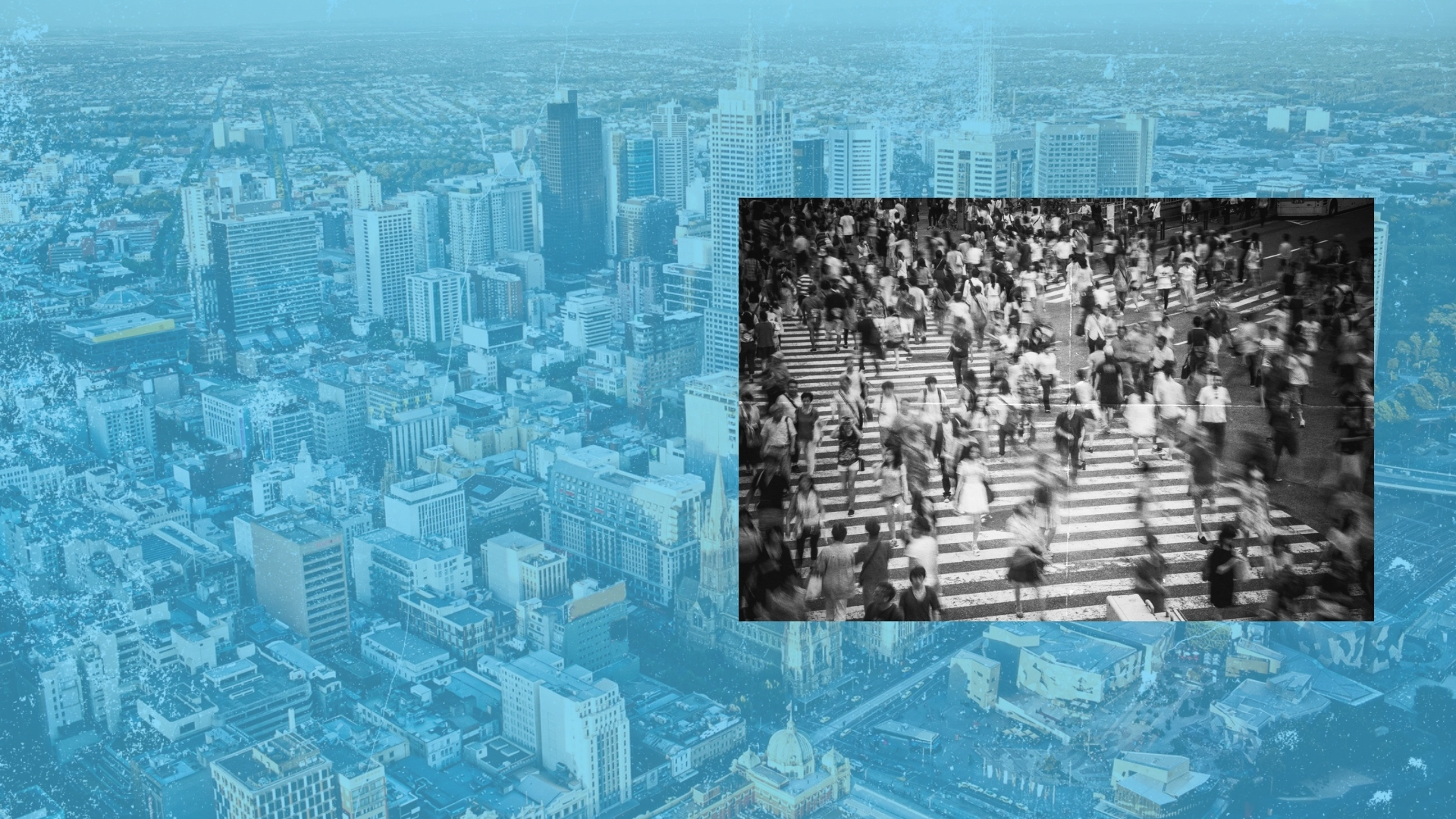
Today, the world is rapidly urbanizing. The image-bearers of God are concentrating themselves together in cities where all their beauty and brokenness are on display. All that happens in the city radiates outward, shaping culture, economics, technology, and the everyday lives of people far beyond city limits. As hubs of commerce, communication, innovation, and community, what happens in cities eventually spreads everywhere.
If the church desires to accelerate global mission, we must learn to love and serve our cities together.
If the church desires to accelerate global mission, we must learn to love and serve our cities together. The opportunities in cities are extraordinary, and so are the challenges. The God who ‘determines the exact places and times where people should live’ (Acts 17:26) is orchestrating migrations to the great urban centers of our age so that the nations might seek and find him. Therefore, the church must be ready for the world as it comes to the city.
What Do We Mean by ‘Cities’?
In mission terms, a city is more than a dense population center identified by a collection of tall buildings and expressways. It is a seedbed of culture and a convergence of peoples—a place where ideas are exchanged, networks are formed, and innovations are born. Cities turbocharge both good and evil: they amplify injustice and isolation, but they also multiply creative solutions and pathways for the gospel. Cities are ‘the epicenter of culture, power, economy, and technology,’1 the places where national trends begin and from which they diffuse. Through travel, trade, study, and work, people cycle in and out of cities, carrying beliefs and practices that they were exposed to in the city back to their neighborhoods, regions, and nations. In Acts 19, the city of Ephesus functioned exactly this way: as the gospel took root in that trading center, ‘everyone in Asia heard the word’ within two years. That pattern still holds: what takes root in the city can reshape life across a country.
Cities have the potential to be mission multipliers. They gather the peoples God loves, concentrating the problems the gospel addresses. But when the church is in the city, the gospel can be leveraged to bring transformation that reaches to other cities and beyond.
Biblical Background
Scripture consistently presents a theology of cities from Genesis to Revelation. Consider this biblical roadmap of cities:
- From Garden to City: As noted earlier, redemptive history begins in a garden and ends in a city where people are gathered for the praise of God’s glory. This trajectory reveals God’s ultimate purpose to gather people into a flourishing, multiethnic, worshipping community.
- Babel and Pentecost: Human attempts to build identity apart from God (Babel, Genesis 11) are answered by God’s refusal to abandon the city and his unifying work at Pentecost (Acts 2). Pentecost is an intentional reversal of Babel that gathers nations and cultures to hear the mighty works of God.
- Jerusalem and Rome: In the Old Testament, Jerusalem becomes the city of the great King; in the New Testament, Jesus goes to Jerusalem and Paul to Rome, the religious and political capitals of that day. In going to these cities, Jesus and Paul embody a mission that shows the importance of cities for the gospel.
- Nehemiah’s City Prayer: Nehemiah’s petition to the Persian king Artaxerxes to send him to rebuild the walls of Jerusalem models a heart for his city. His passion for Jerusalem resulted in a calling that moved from lament to leadership for the good of the people and the nation of Israel.
- Seek the Shalom: In Jeremiah 29, God commands his people to seek the shalom, that is, the holistic well-being of the city, promising that in its flourishing, we too will flourish. Similarly, a biblical picture of a healthy city in Isaiah 65:17–25 includes long life, just work, stable families, responsive prayer, and reconciled communities.
- A City-to-City Gospel: The book of Acts unfolds as a gospel movement that flows from city to city. One third of the New Testament books are addressed to churches in cities, and Revelation addresses seven cities as representative lampstands.
This biblical witness compels the church to take cities seriously: not only as fields to be harvested, but as communities to be loved, served, and renewed in Jesus’ name.
Why Cities Matter for Global Evangelization
Three missiological realities converge in cities that impact the spread of the gospel:
- Density of Image-Bearers: As previously noted, cities hold the highest concentration of people—and therefore the greatest concentration of God’s image bearers per square meter. With the density of population comes both compounded human need and multiplied gospel opportunity.
- Diffusion of Influence: Cities are launchpads. As the gospel advances in a city, its impact flows regionally and globally through networks of commerce, education, migration, and media.
- The Nations Next Door: Today, the Great Commission often runs in reverse: the nations are coming to us—to our cities. Multinational, multilingual neighborhoods give the church unprecedented proximity to peoples we once crossed oceans to reach.
These realities underscore the urgency of reaching cities. By 2050, most of the world will live in cities, with Africa and Asia carrying enormous urban growth. Unless the church adapts and multiplies in urban contexts, Christian presence and influence will decline. But if it adapts, then the potential for global gospel acceleration becomes much more possible.
How Do We Engage Cities for Gospel Acceleration?
Here are three applications that align with Scripture and the wisdom of practitioners serving cities around the world.2
1) Know and Love Your City
Become a student of your city. Loving your city begins with understanding your city: its history and hurts, its people and potential, its ‘stubborn realities’, and its unique blend of opportunities and threats. Ask city leaders questions, listen widely, and research deeply because you cannot love what you do not know.
One simple practice can catalyze this learning posture: talk with 50 leaders across the sectors of education, business, health, faith, arts, government, and neighborhoods. Those conversations will show you how your city really works and where kingdom seeds might best be planted.
Pray together for your city. United prayer builds trust across denominational, ethnic, and organizational lines and lays a spiritual foundation for shared mission. In New York City, a simple invitation to pray across differences sparked decades of collaboration and a significant increase in the percentage of Christians there. In many cities today, a monthly rhythm of united prayer among the Body of Christ is a vital ‘first step’ that creates shared vision, increases faith, and accelerates the spread of the gospel.
Practice incarnational presence. Cities feel loved when the church shows up for the common good—serving schools, addressing food insecurity, supporting first responders, caring for vulnerable women and children, and answering real needs with real service. Such love can open doors in city halls and emergency operation centers, to the point where officials might even ask Christian leaders to bring together organizations or mobilize volunteers to meet urgent needs on behalf of the city.
2) Collaborate Across the Body of Christ—and Beyond
Adopt a city-church mindset. In the New Testament, the most common expression is the church of the city. When we see the other congregations in our city not as competitors but teammates, everything changes. We must move from siloed efforts to a spirit of oneness that Jesus both prayed for and commanded.3
When we see the other congregations in our city not as competitors but teammates, everything changes.
Build ‘ecosystems’ and meta-networks. Cities require more than one strong church or one effective nonprofit. They need an ecosystem—a network of networks—that connects pastors, nonprofit leaders, marketplace leaders, educators, and civic servants around shared priorities. If there are no city-wide gospel efforts such as Movement Day in your city, start one.
Explore the needs of the city together. Leaders with a heart for their city must ask and answer these kinds of questions:
- What are the greatest needs of our city?
- What do we want to be true for our city ten years from now?
- What must we do in the next twelve months?
God often ‘breathes’ on such unity, animating imagination and accelerating impact. How and when might you gather leaders from various sectors in your city to collaborate and address these questions?
3) Multiply the Church and Reimagine Witness
Plant new churches. New churches are often dramatically more effective at reaching new people than older congregations, and some city churches are now pursuing church-planting goals to raise the overall percentage of Christians in their city. One city movement in South Asia has envisioned planting thousands of new churches nationwide to see the Christian population grow to 10 percent. Think of the light that will be turned on in that challenging context!
Pursue holistic mission. Jeremiah’s call to seek the city’s shalom reframes success for the church. Success is not about elevated attendance or higher budgets, but about tangible spiritual and social well-being—more jobs, affordable housing, family stability, public safety, racial reconciliation, and responsiveness to God in the city. Some churches are rethinking the use of their buildings and opening their facilities for community needs; others are redesigning ministries to ensure women—who comprise roughly half of every city—are safe, heard, and equipped to flourish.
proclamation flows more freely when credibility has been earned.
Go where the gospel is dim. In every city, there are sectors where Christian witness is faint—the arts, sports, tech, industry, and slums or specific neighborhoods. In those spaces, Christians must identify the influencers and leaders, build relationships with them, and work for responsive, reproducible, and culturally sensitive gospel outreach. Remember, cities often respond first to love expressed as good deeds; proclamation flows more freely when credibility has been earned.
Start small; multiply simple. Urban complexity demands scalable methods that can be understood, replicated, and adapted. Many city movements began with a handful of leaders simply praying together. God rejoices to see the work begin—and he often multiplies what starts small.
Conclusion
Cities are where the world lives—and where God loves to work. Scripture calls us to seek their shalom. History shows the gospel radiating from key urban centers. Today’s realities offer unprecedented opportunities for gospel acceleration: the nations gathered next door; technology that enables better collaboration through networks as cities become more interconnected; and a rising chorus of leaders willing to pray, plan, and plant together.
Let’s become students of our cities, not their critics. Let’s love them before we try to ‘reach’ them. Let’s convene the whole church of the city—across traditions, generations, and sectors—to serve the common good and proclaim Christ with humility and courage. And let’s multiply new communities of faith while renewing existing ones, so that the light of the gospel burns brighter in every neighborhood.
The Lausanne Movement has many resources available to learn about cities, the latest of which is the Lausanne Global Classroom on Cities. In this video episode, members of the Lausanne Cities network were interviewed to get their insights, ideas, and best practices for more effective and fruitful outreach and ministry to cities. Watching the video will help you catch a vision for how you might engage your city. There is also a downloadable User Guide containing discussion questions, suggested activities, academic syllabi, and a bibliography on cities.
The Great Commission will be fulfilled as the great cities of the world are influenced by the good news of Jesus through a united church that prays, collaborates, and serves in love. Start with your city. Start now.
Endnotes
- Quoted from Jerince Peter, Lausanne Global Classroom on Cities, Introduction. – https://www.youtube.com/watch?v=MyHuOJIjWJE&t=7s
- See the Lausanne Global Classroom on Cities.
- See John 17.